Ozempic, Mounjaro and retatrutide: the difference
In short: three molecules of one class, differing in how many receptors they act on. Semaglutide acts on one (GLP-1), tirzepatide on two (GIP and GLP-1), retatrutide on three (GIP, GLP-1 and glucagon). The first two are authorised medicines; the third is not, anywhere.
The names that get confused
Most of the confusion comes from there being more brand names than molecules. Ozempic and Wegovy are the same active substance, semaglutide, authorised by Novo Nordisk under two names for different indications. Mounjaro is Eli Lilly’s brand name for tirzepatide. In Russia the same tirzepatide is registered under local names: Tirzetta (Promomed), Sedzharo (Geropharm) and Tirzero Slim (PSK Pharma). Retatrutide has no brand name at all: it is in clinical development and is not authorised as a medicine anywhere.
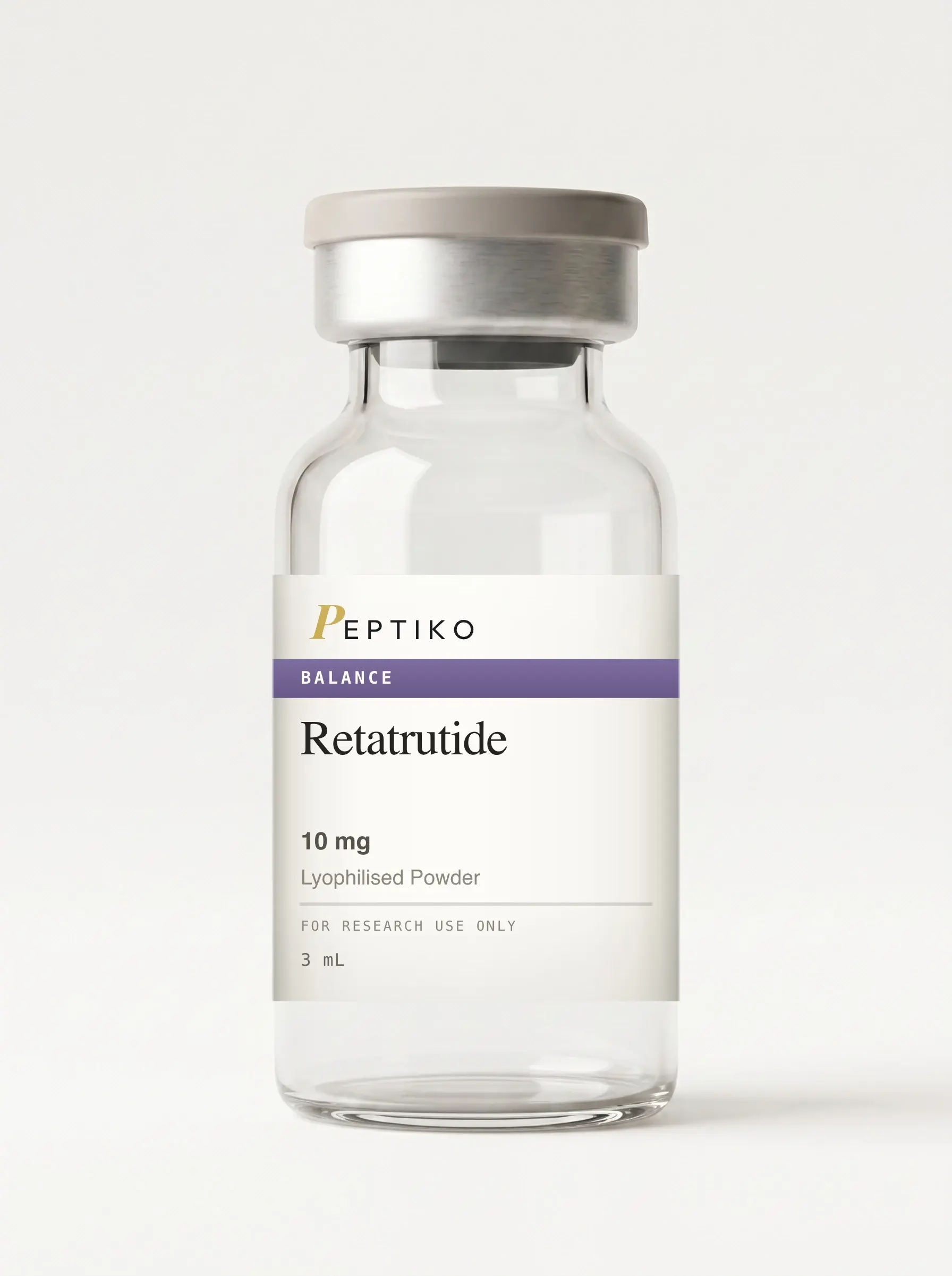
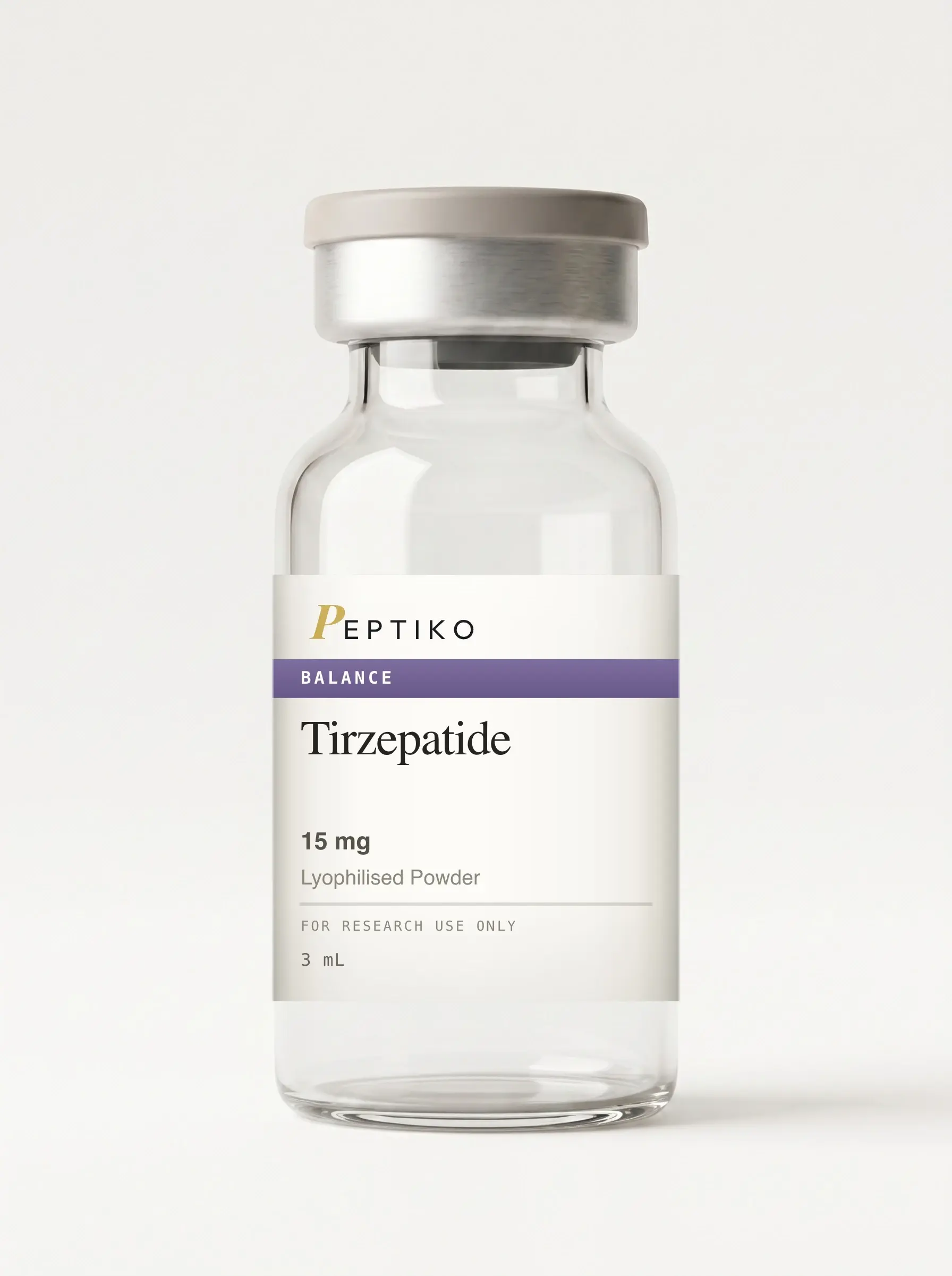
Peptiko supplies tirzepatide and retatrutide as laboratory reagents for in-vitro research. They are not the medicines above. We do not supply semaglutide.
How many receptors
- Semaglutide — GLP-1 receptor agonist. One target.
- Tirzepatide (CAS 2023788-19-2) — dual agonist: GIP and GLP-1 receptors.
- Retatrutide (CAS 2381089-83-2) — triple agonist: GIP and GLP-1 plus the glucagon receptor.
Adding targets one at a time is the main reason the class is still being studied. But none of the papers below is mechanistic: there is no receptor-binding, cAMP or β-arrestin data in them, and the words “dual” and “triple” rest on characterisation published elsewhere.
The head-to-head, and there is only one
Tirzepatide and semaglutide were compared directly in the phase 3 SURMOUNT-5 trial (N Engl J Med, 2025): 751 adults with obesity but without type 2 diabetes, 72 weeks, each compound at its maximum tolerated dose. Mean weight change was −20.2% on tirzepatide against −13.7% on semaglutide, with waist circumference moving the same way.
The caveat the authors record themselves: the trial was open-label — participants and investigators both knew what they were getting. That is the weakest of the controlled designs, and for an endpoint partly shaped by behaviour it matters.
What is known about each
Tirzepatide. The SURMOUNT programme. SURMOUNT-1 (NEJM, 2025) followed 2539 participants with obesity for three years; among those who also had prediabetes, type 2 diabetes was diagnosed far less often than on placebo. Steatohepatitis (NEJM, 2024) and a Chinese population (JAMA, 2024) were studied separately. Gastrointestinal events were the most common adverse events throughout.
Retatrutide. The published record is markedly thinner: one completed phase 2 trial in 338 participants over 48 weeks (NEJM, 2023), where weight reduction was dose-dependent and greater than placebo at every level. The phase 3 TRIUMPH programme is described in Diabetes Obes Metab (2026), but that is a design paper: it reported no results.
The difference most often forgotten
It is not in the receptors but in the status. Semaglutide and tirzepatide have been through authorisation, are dispensed on prescription and are used under medical supervision. Retatrutide is approved by no regulator for any indication: everything known about it in humans is one mid-stage trial and a plan for studies still running.
The gap between “three years in 2539 participants” and “48 weeks in 338” is not a detail. It is the substance of what separates an authorised medicine from an investigational compound.
What Peptiko supplies
Tirzepatide and retatrutide, as lyophilized reagents for in-vitro laboratory research, with CAS number, formula, mass and PubChem record stated on each compound page. They are not Mounjaro, Ozempic or Wegovy, they carry no marketing authorisation, and they are not substitutes for them. We do not advise on use, dosing or protocols.
For in-vitro research and laboratory use only. Not for human or animal consumption.