Retatrutide vs tirzepatide: the difference, plainly
In short: tirzepatide and retatrutide are synthetic peptides that act on the receptors of incretin hormones. Tirzepatide switches on two receptors: GIP and GLP-1. Retatrutide switches on the same two plus a third, the glucagon receptor. That is the main difference. We supply both for in-vitro laboratory research only.
The two compounds are often confused: the names are similar, both peptides are long, and both belong to the same family. Below is how they are alike, how they differ and how laboratories use them. No clinical conclusions here: the results of retatrutide's clinical trials have their own article.
First, three words
- A receptor is a protein on the surface of a cell that takes in a signal. Think of it as a lock that fits one particular key.
- An agonist is a key molecule that does not just enter the lock but turns it, meaning it switches the receptor on.
- Incretins are gut hormones released after a meal that take part in regulating blood sugar. The main ones are GLP-1 and GIP. A related hormone is glucagon, made by the pancreas.
The main difference
Tirzepatide is a dual agonist. One molecule switches on two receptors: GIP and GLP-1. Retatrutide is a triple agonist. It switches on the same two receptors and a third, the glucagon receptor.
All three receptors belong to one class: class B G-protein-coupled receptors (GPCRs). That is why they set off a similar chain of signals inside the cell. But the two compounds weight each receptor differently: how strongly and how selectively the molecule switches each one on.
| What we compare | Retatrutide | Tirzepatide |
|---|---|---|
| What it is | Synthetic peptide, lyophilised | Synthetic peptide, lyophilised |
| Receptors it switches on | GLP-1 + GIP + glucagon | GIP + GLP-1 |
| Number of receptors | 3 (triple agonist) | 2 (dual agonist) |
| Receptor class | Class B (GPCR) | Class B (GPCR) |
| Signal inside the cell | Gs → adenylate cyclase → cAMP; its own β-arrestin profile | Gs → adenylate cyclase → cAMP; its own β-arrestin profile |
| Chain length | About 39 amino acids | About 39 amino acids |
| Fatty-acid "tail" | Yes, C20 | Yes, C20 |
| Research code | LY3437943 | LY3298176 |
| CAS | 2381089-83-2 | 2023788-19-2 |
| Our purity | ≥99% by HPLC-MS | ≥99% by HPLC-MS |
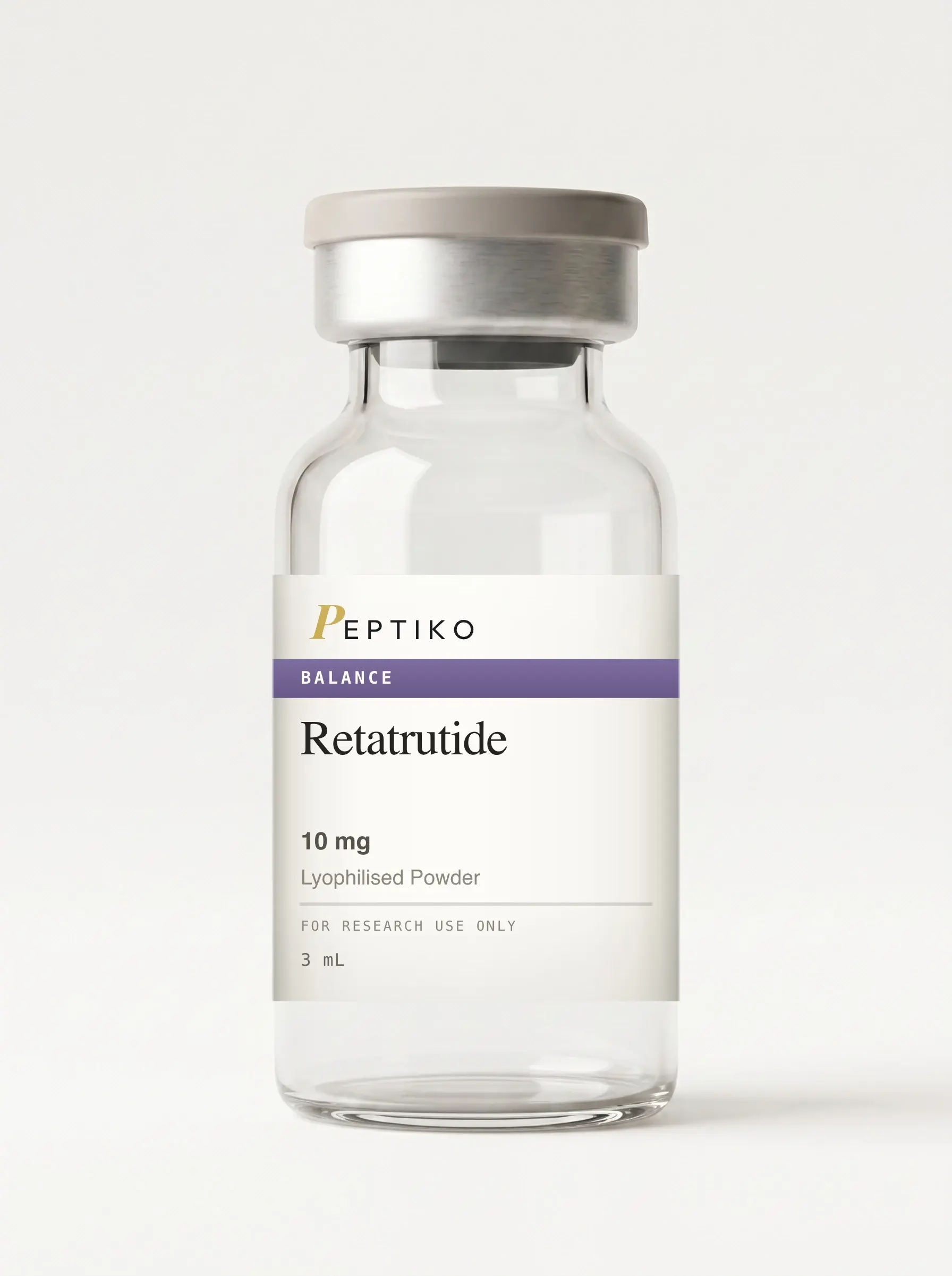
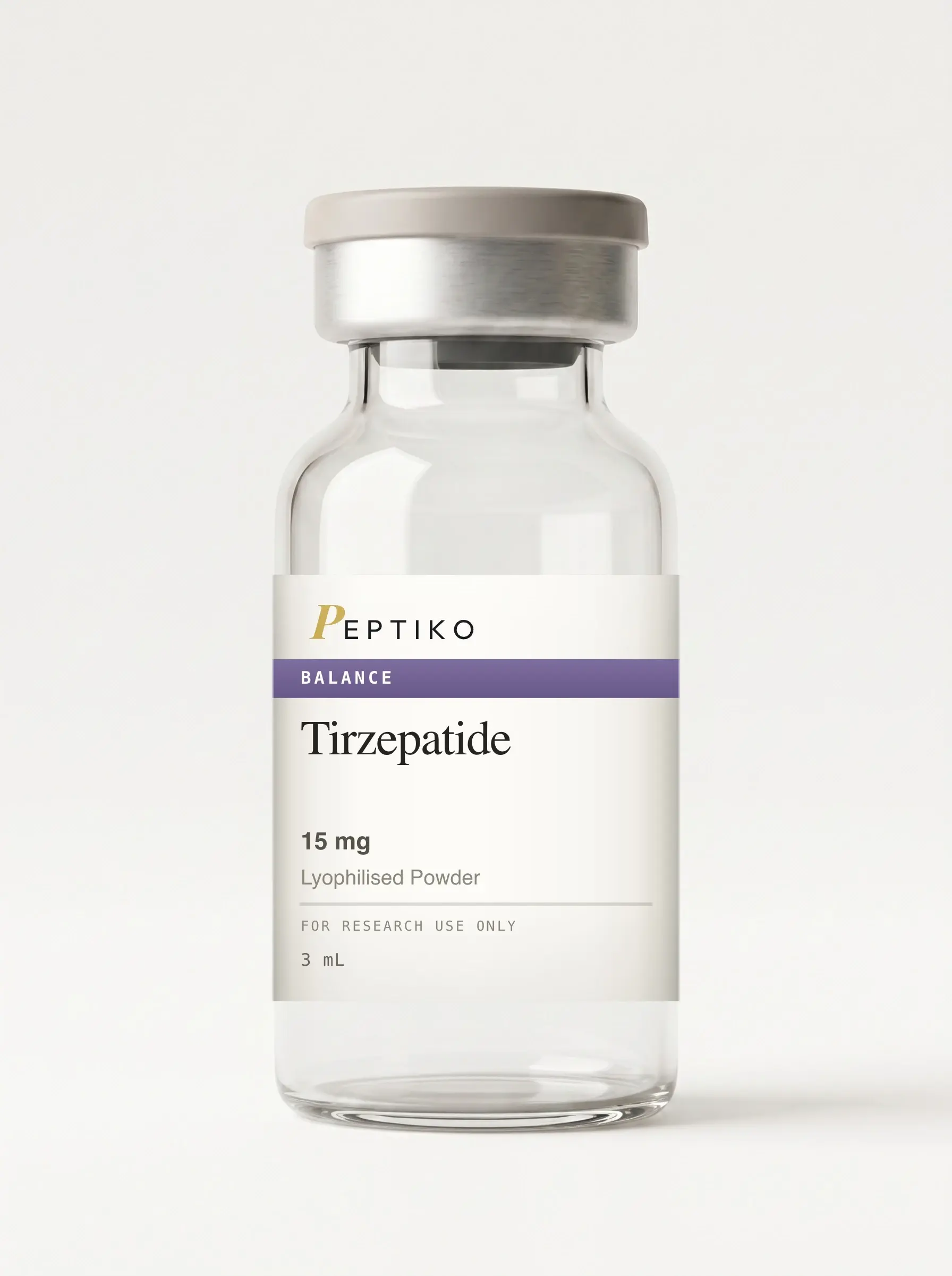
| Our vial | 10 mg, lyophilised | 15 mg, lyophilised |
How the molecules are built
Both compounds are a single chain of about 39 amino acids. Each carries a fatty-acid residue with 20 carbon atoms (C20, a fatty diacid). In laboratory models this "tail" is studied as the part that helps the molecule bind to albumin, the main protein in blood plasma.
Their starting points differ. Tirzepatide is built on the sequence of the natural hormone GIP. Retatrutide was engineered so that action at the glucagon receptor is added to action at GIP and GLP-1. That third target is exactly what separates the "dual" profile from the "triple" one.
What happens inside the cell
When an agonist switches on any of these three receptors, the same chain starts inside the cell. The receptor activates a protein called Gs. Gs turns on the enzyme adenylate cyclase. The enzyme makes cAMP (cyclic AMP), a small signalling molecule that passes the command on. cAMP is easy to measure, so it is the main readout in experiments.
The second thing studied is β-arrestin. It is a protein that comes to a switched-on receptor, "switches it off" and helps pull it into the cell. Pulling the receptor inside is called internalisation. All of this runs differently for different receptors and different compounds. When a molecule drives one pathway harder than another, the signal is called biased.
What laboratories measure
- Receptor binding: how firmly the molecule sits on each receptor, GLP-1, GIP and glucagon, one at a time. This is often tested by displacement: which molecule pushes the other off the receptor.
- cAMP reporter assays: cells that give a stronger signal the more cAMP there is. They show the strength and sensitivity of the response.
- β-arrestin reporter assays: they show how strongly β-arrestin is recruited and whether the signal is biased.
- Selectivity panels: all the receptors in one system, to compare which one a compound switches on more strongly.
For retatrutide these panels add the third receptor, the glucagon one. That makes retatrutide a handy standard when the question is what the glucagon arm specifically adds to the overall signal in vitro.
Why laboratories keep both
Most often both peptides serve as reference agonists: control substances with a well-known profile. New molecules are compared against them, or they are used to check that an analytical system works properly. Tirzepatide is the standard for a dual GIP/GLP-1 response, retatrutide the standard for three-receptor comparisons.
They are used in cell-free and cell-based systems: reporter cell lines, membrane preparations and biochemical panels. If a vial is dissolved, it is done once, to prepare a working solution for the in-vitro experiment under the laboratory's own rules.
Purity and paperwork
For comparative work, the quality of the reagent matters as much as the target. Both compounds are supplied at no less than 99% purity by HPLC-MS, the analysis that shows what share of the sample is the intended peptide and confirms the mass of its molecule. We do not currently have independent batch-by-batch laboratory testing, and we will not promise a certificate of analysis.
Frequently asked questions
What is the difference between retatrutide and tirzepatide?
The number of receptors the molecule switches on. Tirzepatide acts on two receptors (GIP and GLP-1), retatrutide on three: it adds the glucagon receptor.
Is retatrutide a "stronger" tirzepatide?
No. They are different molecules with different sequences. Their class and overall build are similar, but their receptor profiles differ.
What about semaglutide?
Semaglutide acts on one receptor, GLP-1. All three compounds side by side are in the article on semaglutide, tirzepatide and retatrutide.
What is tirzepatide, in plain terms?
That has its own article: "Tirzepatide in plain English".
Do you advise on use?
No. Both compounds are reagents for in-vitro laboratory research, and we do not advise on use.
How to order
Prices and availability are on the retatrutide (10 mg) and tirzepatide (15 mg) pages and in the block below this article. You can order on the site or through the Telegram bot. We deliver within Moldova in 1 business day and you pay the courier on delivery. Before delivery we call you to confirm the order.
Sources
- Triple-Hormone-Receptor Agonist Retatrutide for Obesity — A Phase 2 Trial. N Engl J Med, 2023. PMID 37366315
- The power of three: Retatrutide's role in modern obesity and diabetes therapy. Eur J Pharmacol, 2024. PMID 39515565
- Tirzepatide as Compared with Semaglutide for the Treatment of Obesity. N Engl J Med, 2025. PMID 40353578
For in-vitro research and laboratory use only. Not for human or animal consumption.