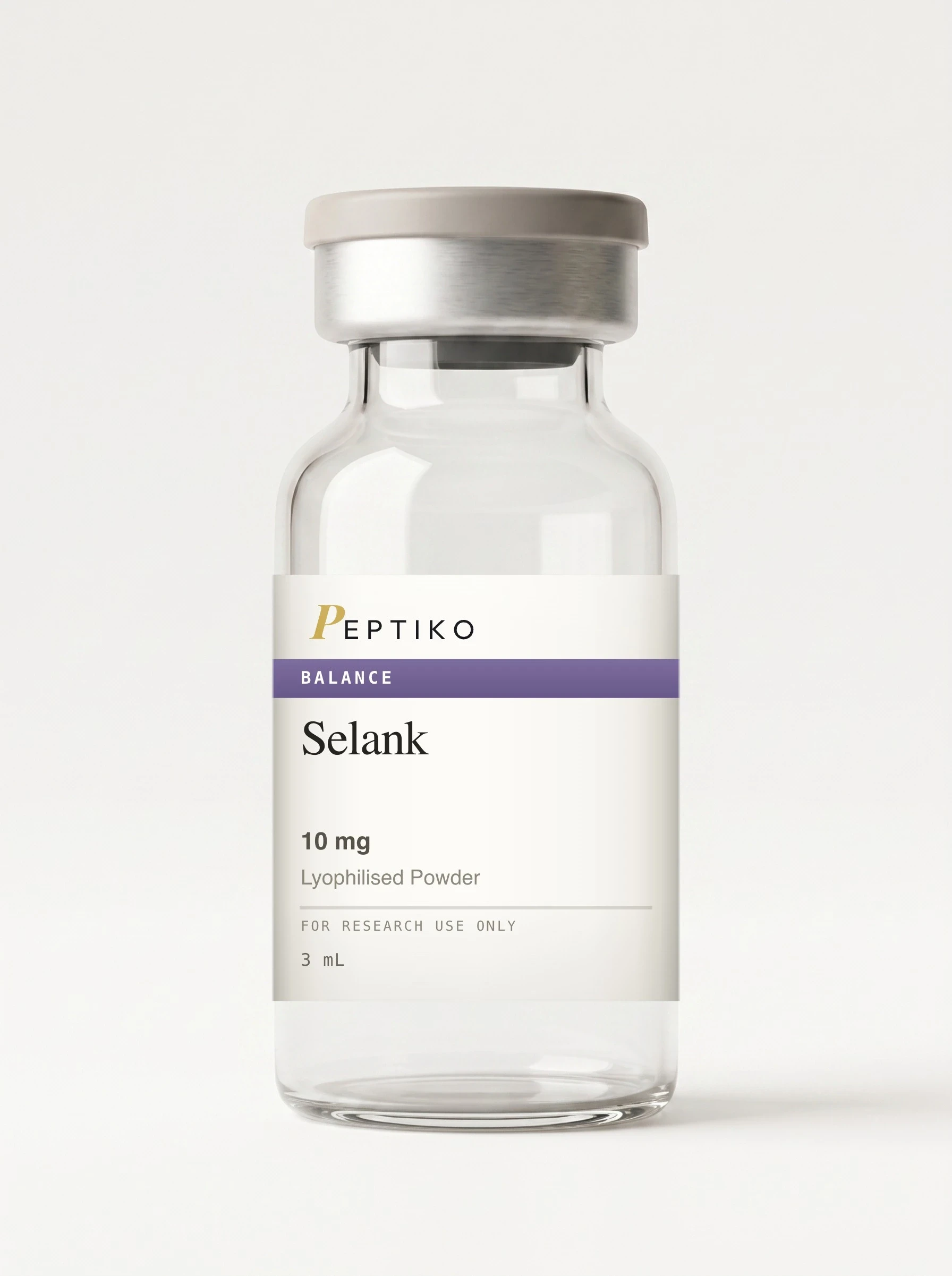
Selank
Tuftsin-derived heptapeptide. Studied for anxiolytic and neuro-immune pathways — a Russian-developed research peptide.
Pay on deliveryDelivered in 1 business dayFree from 1000 lei
For in-vitro research and laboratory use only. Not for human or animal consumption.
- ≥99% purity by HPLC-MS · lot number on every vial
- Delivery in Moldova: 1 business day
- Cash to the courier on delivery
- + bacteriostatic water free with this order
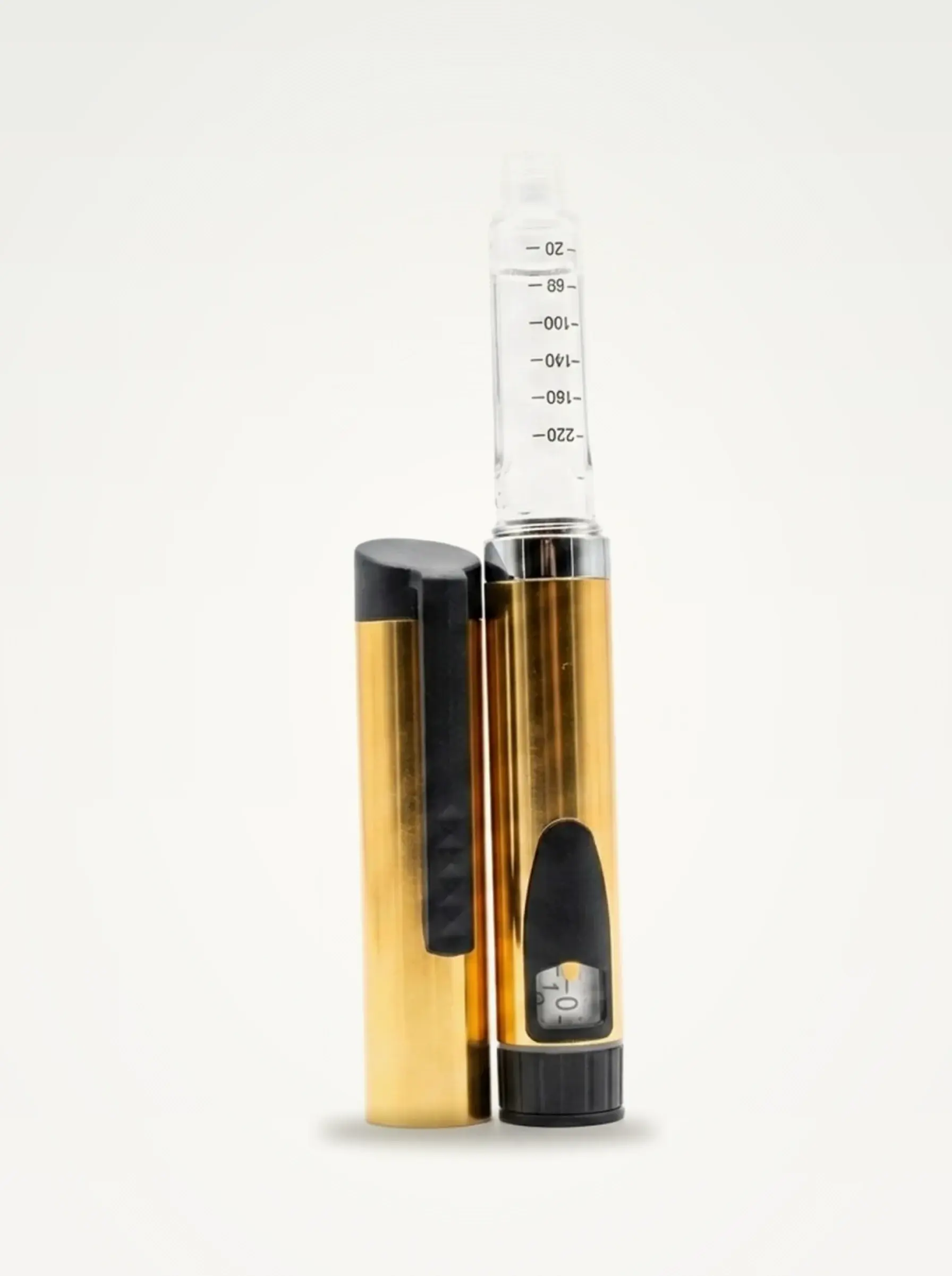 Injection Penreusable device · 800 lei
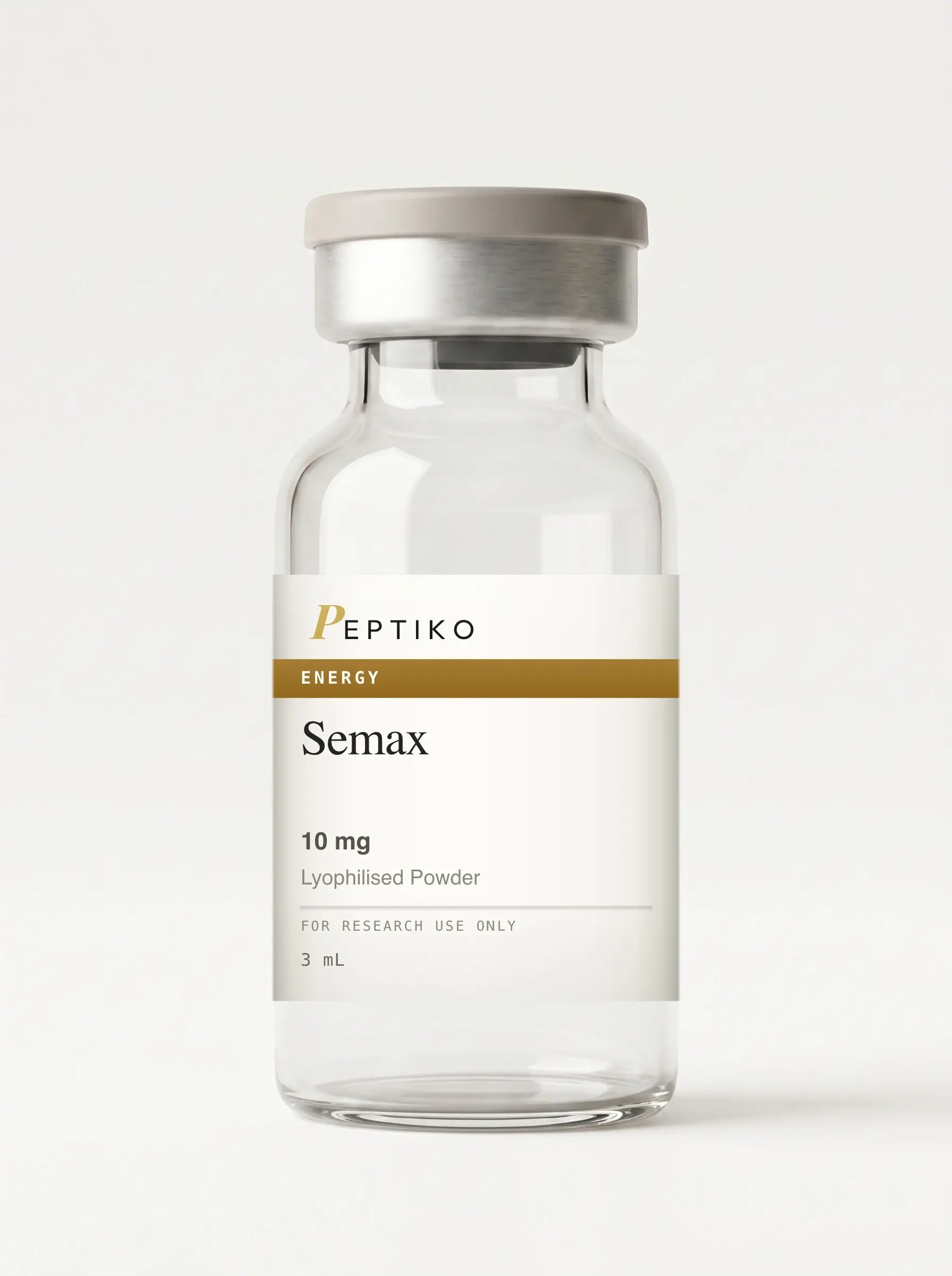
- Purity
- ≥99% HPLC-MS verified
- CAS
- 129954-34-3
- Storage
- Lyophilised: 2–8 °C, protect from light (−20 °C for long-term, ≥24 months). Reconstituted: 2–8 °C.
- Formats
- 10mg vial
Courier delivery anywhere in Moldova. Lyophilized peptides travel at ambient temperature.
Selank vs Semax: the difference in plain English →Overview
Selank is a synthetic heptapeptide (Thr-Lys-Pro-Arg-Pro-Gly-Pro) developed in Russia as a stabilised analogue of tuftsin, an endogenous immune-signalling fragment. The added Pro-Gly-Pro tail slows enzymatic degradation, giving the molecule a longer working window in vitro. Laboratory work characterises it across GABAergic signalling, BDNF expression and cytokine profiles — the reason it is described as a neuro-immune peptide. Supplied lyophilised for in-vitro research use only.
Mechanism
Selank is a synthetic heptapeptide, Thr-Lys-Pro-Arg-Pro-Gly-Pro, developed in Russia on the tuftsin tetrapeptide Thr-Lys-Pro-Arg — an endogenous immune-signalling fragment — by adding a C-terminal Pro-Gly-Pro tail. That tail is the whole design idea: the extension is described as slowing enzymatic degradation relative to the parent fragment, which is the stated reason the analogue is credited with a longer working window in vitro. No paper in this reference set measures that stability directly, and what the structure is credited with is stability, not a new binding site. Downstream, the published characterisation does not converge on a single receptor; it is described across three layers at once — a GABAergic layer (GABA-A receptor binding, from summary characterisation, with rodent behavioural work benchmarked against diazepam), a neurotrophic layer (hippocampal BDNF expression, alongside the HGF/c-Met axis named for this peptide class in a 2026 review), and an immune layer inherited from tuftsin (cytokine and interferon profiles). In human imaging a single exploratory study reports a circuit-level rather than molecular observation: altered resting-state coupling between the right amygdala and right temporal cortex, from a post-hoc analysis. Mechanism, in this literature, is therefore described at the level of systems and reported readouts, not as a defined receptor with binding constants.
Molecular identity
- Sequence
- Thr-Lys-Pro-Arg-Pro-Gly-Pro
- Formula
- C33H57N11O9
- Molecular weight
- 751.9 g/mol
- CAS
- 129954-34-3
- PubChem CID
- 11765600
What it acts on
- Peptidase-mediated clearance — the C-terminal Pro-Gly-Pro extension is what separates Selank from the tuftsin tetrapeptide, and it is described as slowing enzymatic degradation, the stated reason the analogue holds a longer working window in vitro than the parent fragment; no paper in this reference set measures that degradation directly.
- GABA-A receptor and GABAergic signalling — GABA-A receptor binding appears in the summary characterisation of the compound rather than in any primary paper cited here, and the rat withdrawal study benchmarks it against diazepam, a GABA-A positive modulator, reporting the same direction of effect at slightly lower pharmacological activity.
- BDNF expression — hippocampal BDNF is one of the readouts named in the summary characterisation, and the 2026 review groups the peptide with neuroactive peptides reported to raise BDNF and to engage the HGF/c-Met axis relevant to neuroplasticity; neither is primary expression data from this reference set.
- Cytokine and interferon profiles — the parent fragment tuftsin is an endogenous immune-signalling peptide, and immune readouts are listed in the summary characterisation as the reason the molecule is filed with the neuro-immune regulators rather than with pure neuromodulators; no paper in this reference set reports cytokine or interferon data for Selank.
- Amygdala–temporal cortex resting-state connectivity — the human imaging study reports between-group and between-condition differences in coupling between the right amygdala and right-hemisphere fusiform, inferior and middle temporal and parahippocampal cortex, defined in a post-hoc analysis.
What the studies report
Each item below summarises the paper it is numbered to, written from that paper's own abstract. The badge says how the evidence was produced.
- 1.human studyDokl Biol Sci (2020)
A resting-state fMRI study in 52 healthy participants comparing Selank, Semax and placebo. Imaging was acquired before administration and at two later time points, with the amygdala and dorsolateral prefrontal cortex of both hemispheres set as regions of interest. The authors report between-group and between-condition differences in connectivity between the right amygdala and a right-hemisphere temporal region spanning the fusiform, inferior and middle temporal and parahippocampal gyri. They state the finding came from post-hoc analysis and is described for the first time — an exploratory imaging result in healthy volunteers, with no clinical endpoint and no independent replication in this reference set.
- 2.
A 2026 narrative review of therapeutic peptides written from an orthopaedic perspective. Selank appears only in passing, grouped with semax and dihexa as neuroactive peptides reported to enhance BDNF and HGF/c-Met signalling relevant to neuroplasticity; the review's own subject is tissue repair and it surveys a dozen unrelated peptides. Its closing assessment applies to Selank as much as to the rest: the preclinical work is promising and clinical trials are currently lacking.
- 3.animal modelBull Exp Biol Med (2022)
Outbred rats in a naloxone-precipitated morphine withdrawal model. A single administration, at a dose the authors describe as anxiolytic, lowered the composite withdrawal index by 39.6%, significantly attenuated convulsive reactions, ptosis and posture disorders, and raised the tactile sensitivity threshold nine-fold against active control. Diazepam, used as the reference comparator, was slightly stronger on both measures (49.3% and a thirteen-fold threshold rise). The design is acute and single-administration, rests on one behavioural model, and carries no mechanistic readout of what mediated the effect.
- 4.animal modelBull Exp Biol Med (2019)
Male Wistar rats under chronic foot-shock stress, with liver morphology as the endpoint. The stress model produced hydropic degeneration of hepatocytes, a raised nucleus/cytoplasm ratio, focal necrosis and lymphohistiocytic infiltration. All three dose arms reduced the intensity of these changes, and the two higher arms restored the nucleus/cytoplasm ratio, but the largest stress-limiting effect fell on the intermediate arm rather than the highest — a non-monotonic dose response the paper records without explaining. Morphometry only: no biochemical, functional or mechanistic measurement accompanies it, and only male animals were used.
Used in research on
What this does not establish
Nothing in this reference set establishes a receptor-level mechanism for Selank itself: the GABA-A and BDNF attributions come from summary characterisation and from a review that mentions the peptide in a single line, not from primary binding or expression data cited here, and the cytokine and interferon profiles rest on that same summary characterisation, with no paper in this set reporting them. The peptidase-stability rationale is likewise a description rather than a measurement made in any cited paper. The only human study is an exploratory, placebo-controlled imaging experiment in 52 healthy volunteers, with a post-hoc connectivity finding, no clinical endpoint and no replication; it is not an efficacy trial. The remaining primary papers are rodent work — one acute behavioural model and one liver-morphology model, both in male outbred or Wistar rats — and the dose response in the second is non-monotonic. The review states outright that clinical trials are lacking, and no study with a clinical endpoint appears among the references.
Research applications
In vitro, Selank is used as a reference tuftsin analogue for studying neuro-immune regulatory pathways: GABA-A receptor-binding assays, BDNF expression readouts in hippocampal tissue models, and cytokine and interferon profiling panels. Because the Pro-Gly-Pro extension slows enzymatic degradation relative to the parent tuftsin fragment, it also serves as a comparator in peptide-stability and proteolysis assays. Laboratories select it as a benchmark heptapeptide when characterising GABAergic signalling and neuro-immune marker expression under controlled in-vitro conditions.
Reconstitution
Supplied lyophilised. For laboratory preparation, reconstitute the powder with sterile bacteriostatic water to a working stock, keep the reconstituted solution at 4 degrees C, and prepare assay dilutions in the buffer specified by your protocol. Store the unopened lyophilised vial at −20 °C, protected from light. For in-vitro research use only, not for human or animal administration.
Storage & handling
Lyophilised: 2–8 °C, protect from light (−20 °C for long-term, ≥24 months). Reconstituted: 2–8 °C.
Research literature
Selected peer-reviewed literature describing this compound. Peptiko supplies peptides for in-vitro research; these papers characterise the compound, not this product.
- 1.Functional Connectomic Approach to Studying Selank and Semax Effects. Dokl Biol Sci (2020)
- 2.Therapeutic Peptides in Orthopaedics: Applications, Challenges, and Future Directions. J Am Acad Orthop Surg Glob Res Rev (2026)
- 3.Selank, a Peptide Analog of Tuftsin, Attenuates Aversive Signs of Morphine Withdrawal in Rats. Bull Exp Biol Med (2022)
- 4.Effect of Selank on Morphological Parameters of Rat Liver in Chronic Foot-Shock Stress. Bull Exp Biol Med (2019)
Frequently asked questions
What is Selank?
Selank is a synthetic heptapeptide (Thr-Lys-Pro-Arg-Pro-Gly-Pro), a stabilised analogue of tuftsin, supplied lyophilised strictly as an in-vitro reference reagent. It is characterised across GABAergic signalling, BDNF expression and cytokine profiles.
Is it for human use?
No. It is a research-use-only reagent for in-vitro laboratory study. It is not a pharmaceutical, supplement, or medicine, and not for human or veterinary use.
How is purity verified?
Purity is at least 99% by HPLC-MS.
What is the CAS number?
CAS 129954-34-3.
Do you ship from Moldova?
Yes. We deliver by courier anywhere in Moldova, one business day after we confirm the order, and you pay the courier in cash. Lyophilized peptides travel at ambient temperature: a freeze-dried cake needs no cold chain.
Reviews
Be the first to review Selank.
Order on Telegram, or add it to the cart and check out on the site. Cash to the courier on delivery — nothing is paid in advance.