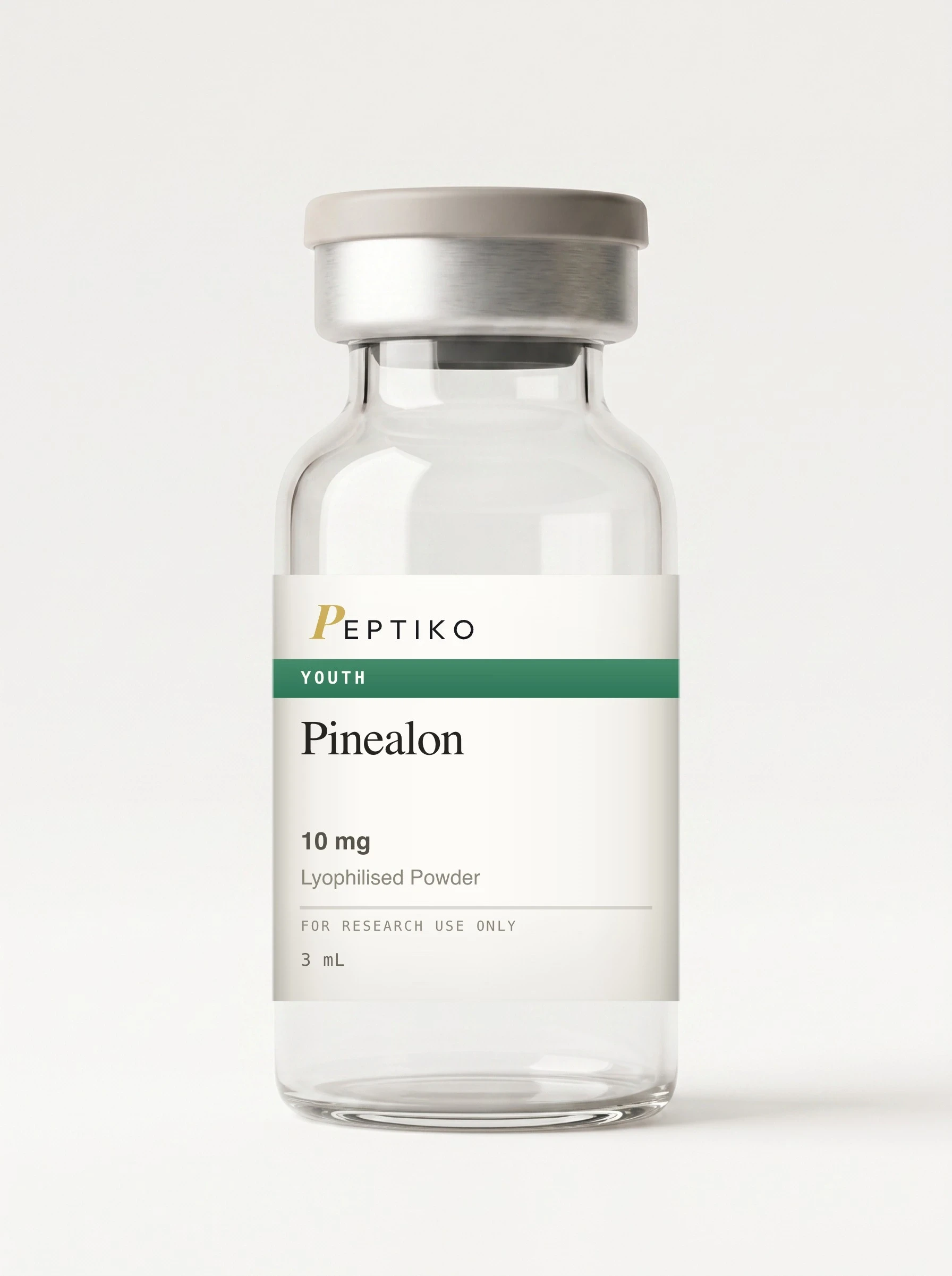
Pinealon
Khavinson short peptide bioregulator (Glu-Asp-Arg). Studied for neuroprotective and gene-regulation pathways — a Russian-developed research peptide.
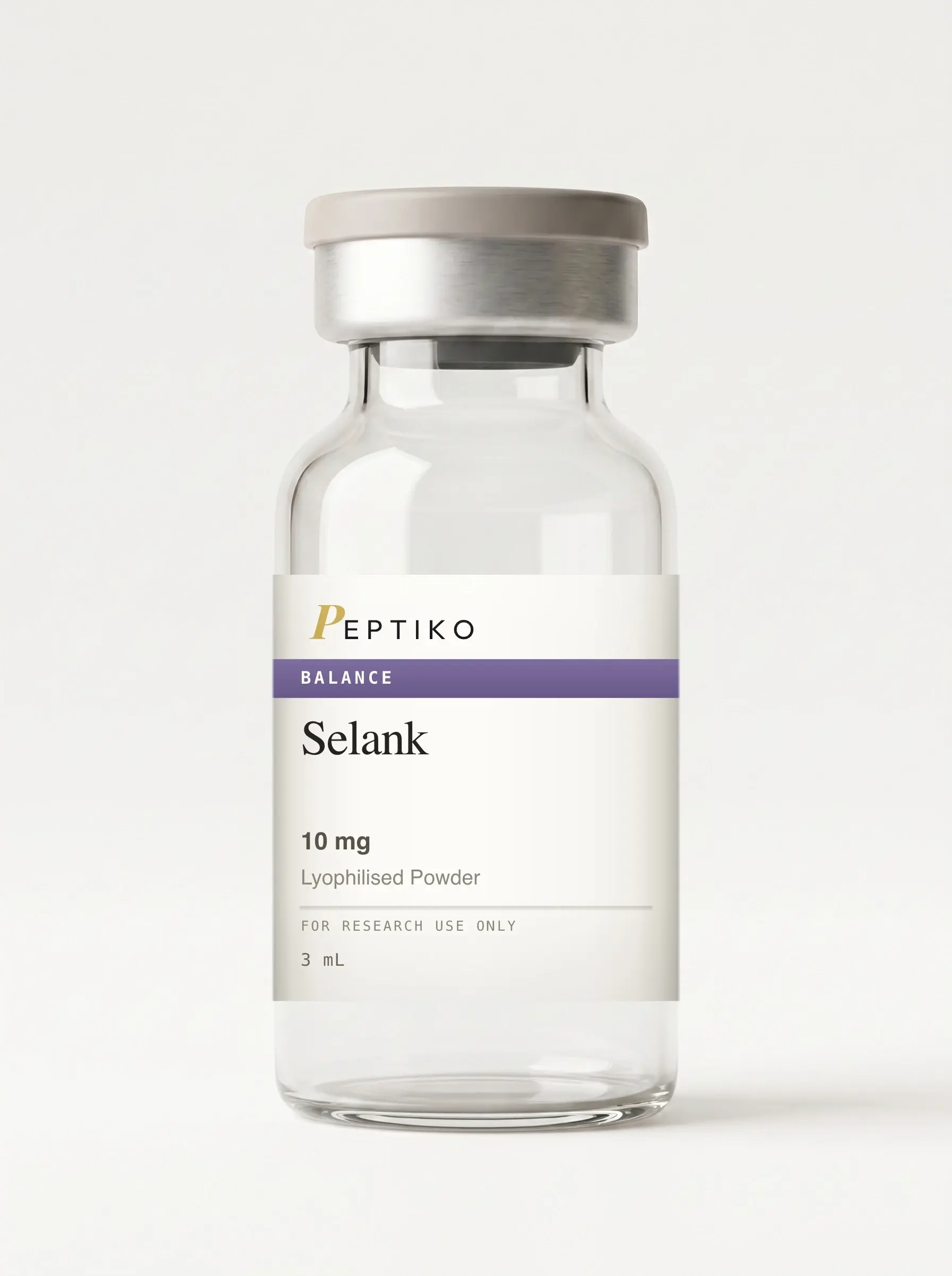
For in-vitro research and laboratory use only. Not for human or animal consumption.
- ≥99% purity by HPLC-MS · lot number on every vial
- Delivery in Moldova: 1 business day
- Cash to the courier on delivery
- + bacteriostatic water free with this order
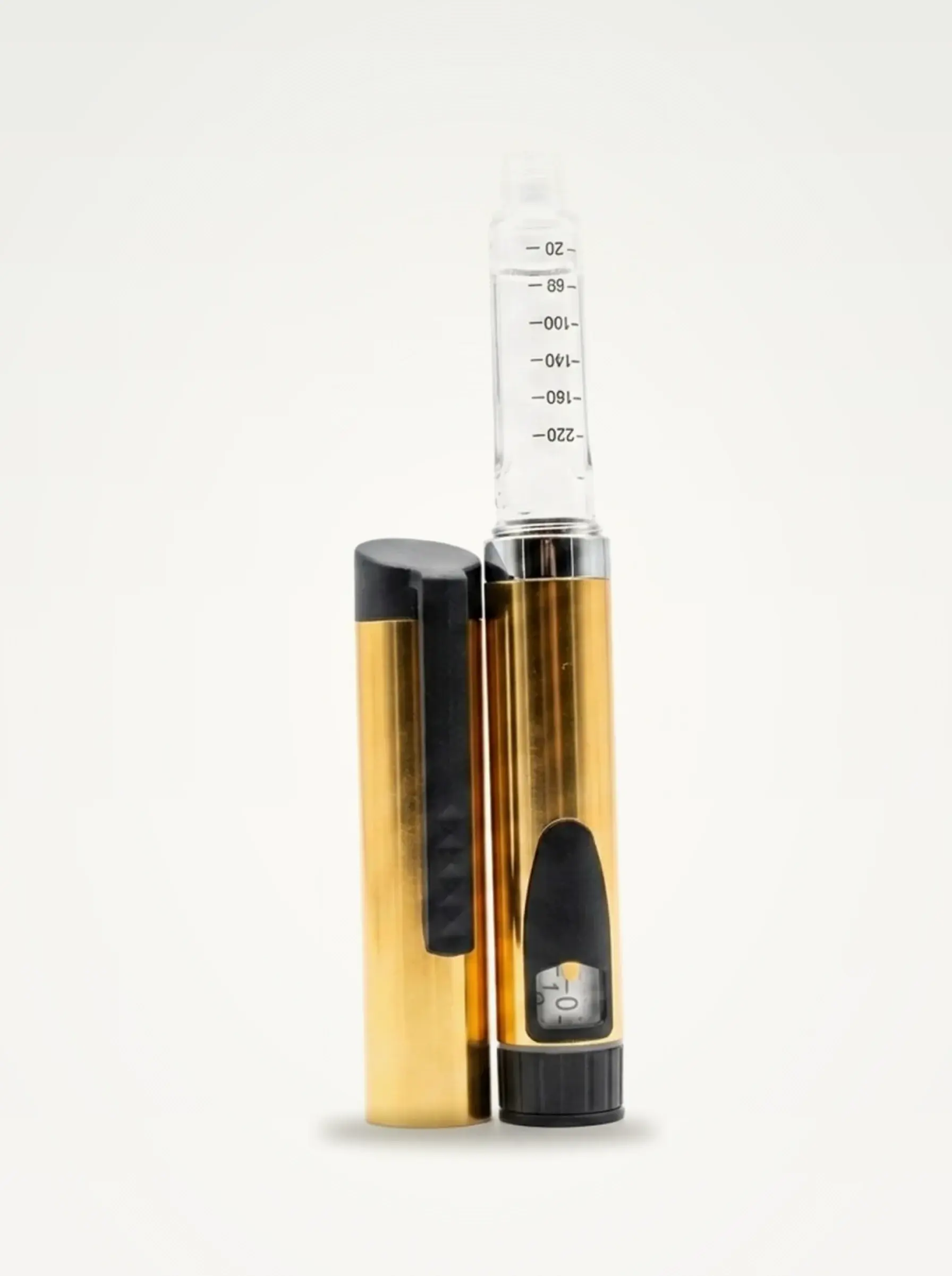 Injection Penreusable device · 800 lei
- Purity
- ≥98% HPLC-MS verified
- CAS
- 175175-23-2
- Storage
- Lyophilised: 2–8 °C, protect from light (−20 °C for long-term, ≥24 months). Reconstituted: 2–8 °C.
- Formats
- 5mg vial · 10mg vial · 20mg vial
Courier delivery anywhere in Moldova. Lyophilized peptides travel at ambient temperature.
Khavinson bioregulators: Epithalon, Selank, Semax →Overview
Pinealon comes from the Khavinson family of short peptide bioregulators, and it is studied above all for the brain — for sharper memory and focus and for shielding nerve cells from stress. In cell and animal research it has been linked to fewer neurons dying when starved of oxygen or under oxidative stress, and to better learning and memory in rodents, which is why laboratories treat it as a reference point for work on cognition and neuroprotection.
Mechanism
Pinealon is a synthetic tripeptide, Glu-Asp-Arg (C15H26N6O8, MW 418.40, CAS 175175-23-2), belonging to the Khavinson family of short peptide bioregulators. The design premise of that family is length rather than receptor affinity: its proponents argue that a three-residue peptide is small enough to enter the cell and reach chromatin directly, and the authors of the cited mechanism work read their result as bearing on that idea rather than on a named receptor, although chromatin access itself was not tested. In neuronal and non-neuronal culture the reported cascade begins with redox control — dose-dependent restriction of reactive oxygen species accumulation under both receptor-dependent and receptor-independent oxidative stress, with a parallel fall in necrotic death measured by propidium iodide uptake — accompanied by a delayed time course of ERK1/2 activation and by modification of the cell cycle. The genomic claim rests on a dissociation between concentration-response curves rather than on binding data: ROS restriction and the survival effect saturate at the lower end of the range tested, while cell-cycle modulation keeps rising above it, and the authors read that separation as evidence of a second mode of action exerted at the level of the genome. In rodents the measured endpoints sit further downstream still — offspring cognition and cerebellar neuron survival in a prenatal hyperhomocysteinemia model, brain monoamines and caspase-3 activity in aged animals under hypoxia and hypothermia — so the link between the proposed genomic step and the behavioural outcome is inferred across levels rather than traced.
Molecular identity
- Sequence
- Glu-Asp-Arg
- Formula
- C15H26N6O8
- Molecular weight
- 418.40 g/mol
- CAS
- 175175-23-2
- PubChem CID
- 10273502
What it acts on
- Reactive oxygen species accumulation — in cerebellar granule cells, neutrophils and PC12 cells the literature reports dose-dependent restriction of ROS build-up under oxidative stress of both receptor-dependent and receptor-independent origin.
- ERK1/2 (MAPK) cascade — the protective effect observed in culture is accompanied by a delayed time course of ERK1/2 activation rather than by an immediate one.
- Cell cycle and a proposed direct interaction with the cell genome — cell-cycle modulation continues at the upper end of the concentration range while the ROS and survival readouts are already saturated, and the authors read that split as a second, antioxidant-independent mode of action.
- Caspase-3 activity and free-radical processes in aged rat brain — both were measured endpoints, and in the one head-to-head comparison the effect of Pinealon was less pronounced than that of the comparator Cortexin.
- Brain monoamine pools — in 18-month-old rats the cited work reports accumulation of adrenergic mediators under acute hypobaric hypoxia and of serotonin in the cerebral cortex under mild hypothermia.
What the studies report
Each item below summarises the paper it is numbered to, written from that paper's own abstract. The badge says how the evidence was produced.
- 1.
A 2026 narrative review of therapeutic peptides in orthopaedics. Pinealon appears in it only as a classification: it is grouped with epithalon and delta sleep-inducing peptide among agents the authors describe as targeting circadian and mitochondrial regulators, with no primary data for the compound itself. The review's own conclusion is the part that matters here — the authors call the preclinical work promising but state that clinical trials are currently lacking across the peptides they survey.
- 2.animal modelInt J Clin Exp Med (2012)
A rat study of experimental prenatal hyperhomocysteinemia induced by alimentary methionine loading during pregnancy, with pinealon (Glu-Asp-Arg) administered to the pregnant animals. The offspring are reported to show improved spatial orientation and learning, and neurons isolated from their cerebellum to show less reactive oxygen species accumulation and fewer necrotic cells. The abstract states no group sizes, no blinding and no effect sizes, and the authors present the result as agreeing with their own earlier in-vitro data — a same-group confirmation rather than an independent replication.
- 3.in vitroRejuvenation Res (2011)
The core mechanism paper of this set, run in three cell types — cerebellar granule cells, neutrophils and pheochromocytoma PC12 cells. It reports dose-dependent restriction of reactive oxygen species accumulation under receptor-dependent and receptor-independent oxidative stress, reduced necrotic death by the propidium iodide test, a delayed time course of ERK1/2 activation and modification of the cell cycle. Its conclusion that the peptide interacts directly with the cell genome is an inference drawn from the concentration-response curves separating — ROS and mortality saturating while cell-cycle modulation continues — and not from any binding or gene-expression measurement reported in the abstract.
- 4.animal modelAdv Gerontol (2015)
A Russian-language gerontology study in 18-month-old rats under two stress models, acute hypobaric hypoxia and mild hypothermia, comparing Pinealon with Cortexin. It is the least flattering paper in the set: Cortexin is reported to act more strongly than Pinealon on free-radical processes and on brain caspase-3 activity. Both preparations were associated with accumulation of adrenergic mediators under hypoxia and of serotonin in the cerebral cortex under hypothermia, which the authors offer as something that may underlie a geroprotective effect — a proposal rather than a demonstration, and the abstract carries no statistics.
Used in research on
What this does not establish
There are no human data of any kind in this reference set — no trial, not even a case series. The base is three primary studies (one in cell culture, two in rats) plus one review whose own authors state that clinical trials are lacking; two of the primary papers come from the same research programme, one presented explicitly as agreeing with the other. The genomic mechanism that gives the whole Khavinson short-peptide class its rationale is inferred here from a split between concentration-response curves, with no binding, chromatin or gene-expression data cited. Nothing in this set establishes that the intact tripeptide reaches neuronal nuclei, and in the one head-to-head comparison it was the weaker of the two compounds tested on the redox and caspase-3 readouts.
Research applications
In vitro, Pinealon is used as a reference peptide for neuroprotection and gene-regulation research on cultured nerve cells. As one of the Khavinson short peptides (Glu-Asp-Arg), it features in oxidative-stress and oxygen-deprivation cell-culture models, where studies track neuronal cell viability, free-radical and reactive-oxygen-species levels, and proliferative activity. It also serves as a reference compound for gene-expression work exploring how very short peptides may reach cellular DNA and modulate the activity of individual genes, and for panels examining how cells defend themselves against oxidative damage. These are in-vitro and cell-model contexts only, used to characterise the neuroprotective and gene-regulation pathways this compound is studied for.
Reconstitution
Supplied as a lyophilised powder. For laboratory preparation, reconstitute with sterile bacteriostatic water to a working stock, keep the reconstituted solution at 4 degrees C, and prepare assay dilutions in the buffer specified by your protocol. For in-vitro research use only, not for human or animal administration.
Storage & handling
Lyophilised: 2–8 °C, protect from light (−20 °C for long-term, ≥24 months). Reconstituted: 2–8 °C.
Research literature
Selected peer-reviewed literature describing this compound. Peptiko supplies peptides for in-vitro research; these papers characterise the compound, not this product.
- 1.Therapeutic Peptides in Orthopaedics: Applications, Challenges, and Future Directions. J Am Acad Orthop Surg Glob Res Rev (2026)
- 2.Pinealon protects the rat offspring from prenatal hyperhomocysteinemia. Int J Clin Exp Med (2012)
- 3.Pinealon increases cell viability by suppression of free radical levels and activating proliferative processes. Rejuvenation Res (2011)
- 4.[Pinealon and Cortexin influence on behavior and neurochemical processes in 18-month aged rats within hypoxia and hypothermia]. Adv Gerontol (2015)
Frequently asked questions
What is Pinealon?
Pinealon (Glu-Asp-Arg) is a short peptide bioregulator from the Khavinson family, a research-use-only reagent studied in vitro for neuroprotective and gene-regulation pathways.
Is it for human use?
No. It is a research-use-only reagent for in-vitro laboratory study. It is not a pharmaceutical, supplement, or medicine, and not for human or veterinary use.
How is purity verified?
Purity is at least 99% by HPLC-MS.
What is the CAS number?
CAS 175175-23-2.
Do you ship from Moldova?
Yes. We deliver by courier anywhere in Moldova, one business day after we confirm the order, and you pay the courier in cash. Lyophilized peptides travel at ambient temperature: a freeze-dried cake needs no cold chain.
Reviews
Be the first to review Pinealon.
Order on Telegram, or add it to the cart and check out on the site. Cash to the courier on delivery — nothing is paid in advance.