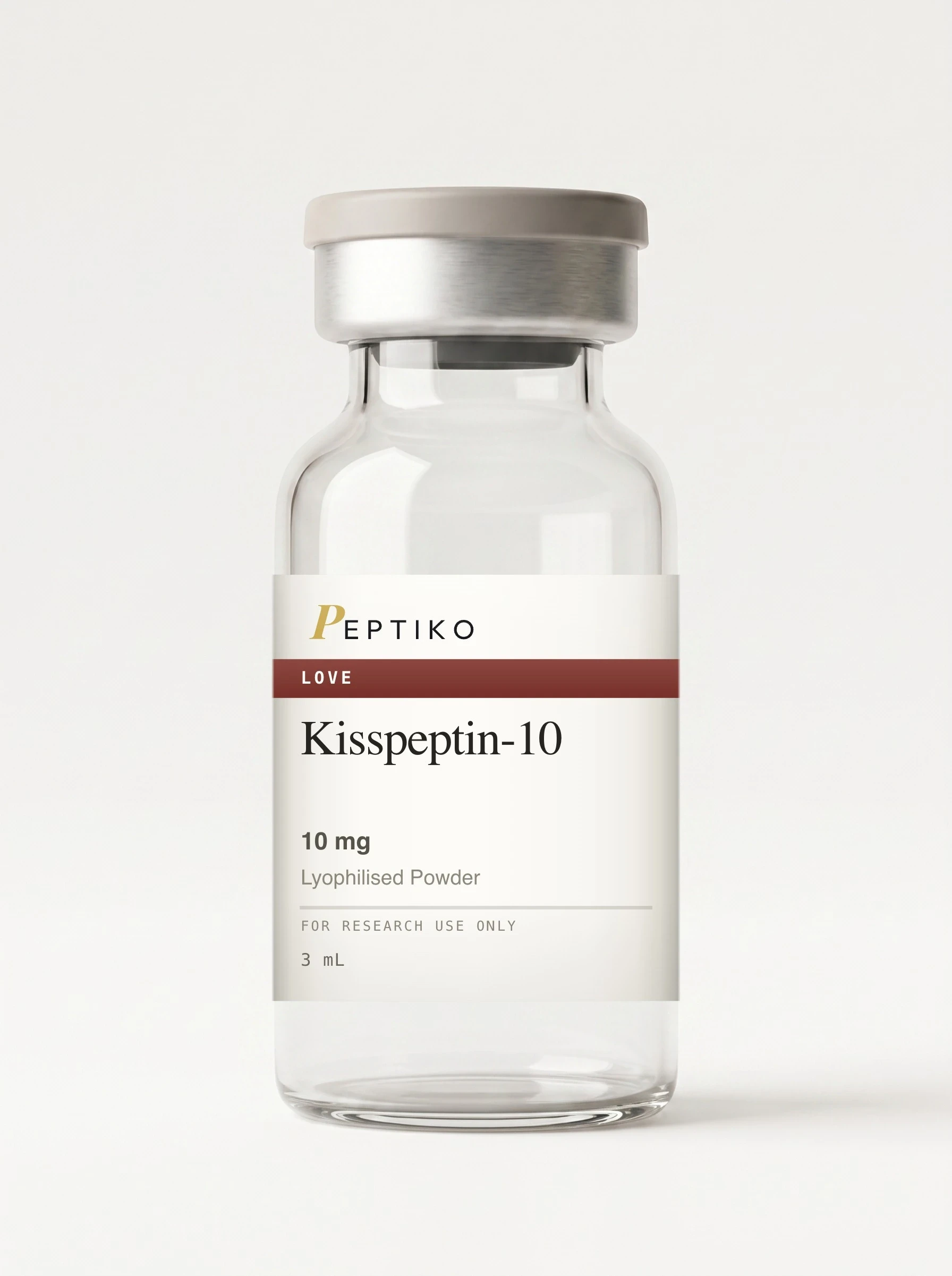
Kisspeptin-10
Endogenous decapeptide ligand of the KISS1R/GPR54 receptor, studied for hypothalamic–pituitary–gonadal axis signalling pathways.
For in-vitro research and laboratory use only. Not for human or animal consumption.
- ≥99% purity by HPLC-MS · lot number on every vial
- Delivery in Moldova: 1 business day
- Cash to the courier on delivery
- + bacteriostatic water free with this order
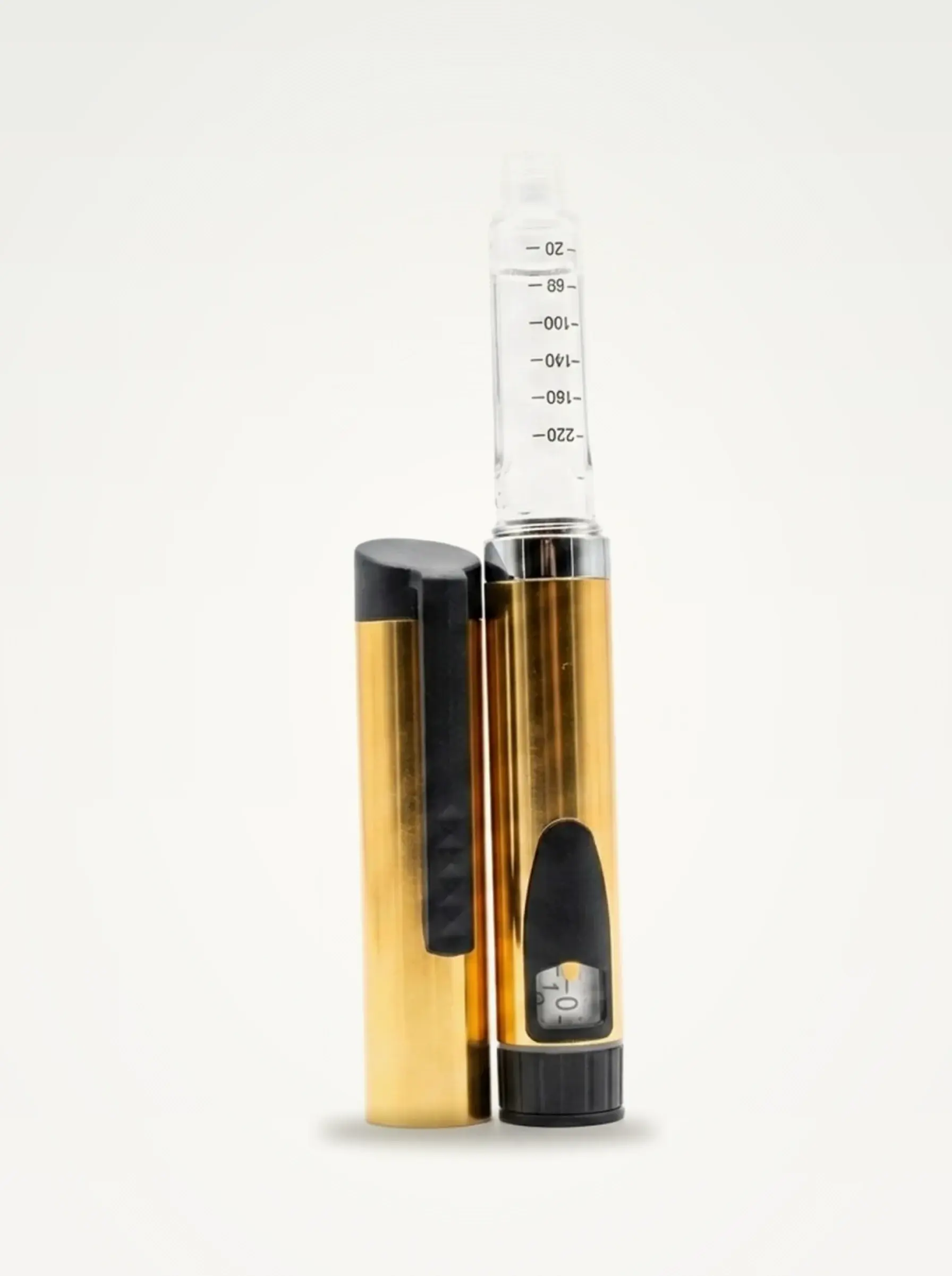 Injection Penreusable device · 800 lei
- Purity
- ≥99% HPLC-MS verified
- CAS
- 374675-21-5
- Storage
- Lyophilised: 2–8 °C (−20 °C for long-term, ≥24 months). Reconstituted: 2–8 °C.
- Formats
- 5mg vial
Courier delivery anywhere in Moldova. Lyophilized peptides travel at ambient temperature.
Overview
Kisspeptin-10 is the C-terminal decapeptide of kisspeptin (metastin 45–54) and the native ligand of the KISS1R (GPR54) receptor. It serves laboratories as a reference reagent for in-vitro study of the hypothalamic–pituitary–gonadal (HPG) axis and upstream neuroendocrine signalling. Supplied lyophilised for in-vitro research use only.
Mechanism
Kisspeptin-10 is the C-terminal decapeptide of the KISS1 gene product: the secreted precursor is proteolytically cleaved into a family of structurally related, strongly interspecies-conserved peptides collectively called kisspeptins, and residues 45–54 (metastin 45–54) carry the C-terminal Arg-Phe-amide motif required for receptor recognition — which is why the short fragment is used in place of the full-length peptide. KISS1 entered the literature through cancer biology, where loss of its expression was associated with poor prognosis in several malignancies; the reproductive role was established later, when inactivating mutations of GPR54 were identified in consanguineous pedigrees with idiopathic hypogonadotropic hypogonadism. The decapeptide binds KISS1R (GPR54), a Gq/11-coupled seven-transmembrane receptor, and the signal runs through phospholipase C to inositol trisphosphate and diacylglycerol, read out in cell systems as intracellular calcium mobilisation and ERK/MAPK phosphorylation. In the hypothalamus that receptor sits on GnRH neurons, where kisspeptin binding stimulates activity and gates GnRH — and hence gonadotropin — secretion. More recent mouse work adds a non-neuronal arm: Kiss1r is expressed in astrocytes, which contribute to fine-tuning of the same axis. KISS1 expression is itself regulated by gonadal steroids, so the system reported in the literature is a closed feedback loop rather than a one-way stimulus.
Molecular identity
- Sequence
- Tyr-Asn-Trp-Asn-Ser-Phe-Gly-Leu-Arg-Phe-NH₂
- Formula
- C63H83N17O14
- Molecular weight
- 1302.4 g/mol
- CAS
- 374675-21-5
- PubChem CID
- 25240297
What it acts on
- KISS1R (GPR54) — the cognate seven-transmembrane receptor for kisspeptins; the cited reviews report that homozygous or compound heterozygous loss-of-function mutations in this receptor have been identified in familial and sporadic patients with isolated hypogonadotropic hypogonadism without olfactory abnormalities, and that mice with targeted deletion of Kiss1 or Gpr54 show a similar failure of sexual maturation.
- Gq/11–phospholipase C branch — receptor occupancy is read out in cell-based systems as inositol-trisphosphate and diacylglycerol generation, intracellular calcium mobilisation and ERK/MAPK phosphorylation; the 2024 astrocyte paper reports only that kisspeptin activated canonical intracellular signalling pathways in cultured glia, without naming the individual readouts in its abstract.
- KISS1R on hypothalamic GnRH neurons — the reviews describe kisspeptin binding here as stimulating neuronal activity and supplying what one chapter calls an obligatory signal for GnRH secretion, placing the decapeptide upstream of gonadotropin release.
- Astrocytic Kiss1r and prostaglandin-E2 synthesis — in the 2024 mouse study, conditional deletion of Kiss1r in GFAP-positive cells altered expression of key PGE2-synthesis genes and disturbed astrocyte–GnRH neuronal appositions.
- KISS1 expression under gonadal steroid feedback — the reviews report KISS1 as a target of gonadal steroid regulation in both sexes, with the pubertal rise in hypothalamic kisspeptin expression treated as part of reproductive-axis maturation.
What the studies report
Each item below summarises the paper it is numbered to, written from that paper's own abstract. The badge says how the evidence was produced.
- 1.reviewIn Vivo (2011)
A 2011 narrative review of the kisspeptin/GPR54 system in reproduction. It traces the field's two origins — cancer biology, where loss of KISS1 expression was associated with poor prognosis in several malignancies, and human genetics, where two independent groups analysing large consanguineous pedigrees linked inactivating GPR54 mutations to idiopathic hypogonadotropic hypogonadism — and reviews the coupling of kisspeptin to the gonadal steroid feedback loop and to the triggering of puberty onset. It is a secondary source that summarises other groups' data rather than reporting new experiments.
- 2.animal modelJ Clin Invest (2024)
A mouse study with supporting astrocyte cultures from human, rat and mouse. Hypothalamic proteomic profiling after kisspeptin stimulation flagged glial and astrocyte markers as regulated; the authors then confirmed Kiss1r expression in mouse astrocytes in vivo and canonical intracellular signalling in astrocyte culture, with Kiss1r co-expression with GFAP and S100-β occurring across brain regions and at a higher percentage in Kiss1- and GnRH-enriched areas. Conditional ablation of Kiss1r in GFAP-positive cells altered astrocytic PGE2-synthesis gene expression, perturbed astrocyte–GnRH neuronal appositions, changed LH responses to kisspeptin and LH pulsatility, and altered reproductive responses to high-fat-diet metabolic stress, including female pubertal onset and estrous cyclicity. The evidence comes from genetic ablation in mice: it addresses whether the pathway is required, not what administering this decapeptide does.
- 3.reviewFront Horm Res (2010)
A 2010 review of the kisspeptin–GPR54 system in the human reproductive axis. It reports kisspeptins as a powerful stimulus for GnRH-driven gonadotropin secretion, KISS1 as a target of gonadal steroid regulation in both sexes, and the pubertal rise in hypothalamic kisspeptin expression as believed to contribute to maturation of the axis. The human evidence it rests on is loss-of-function GPR54 mutations in familial and sporadic isolated hypogonadotropic hypogonadism without olfactory abnormalities, mirrored by mice with targeted deletion of Kiss1 or Gpr54. The argument is built from mutation and knockout phenotypes — that is, from loss of signalling — rather than from controlled administration studies.
- 4.reviewAdv Exp Med Biol (2013)
A book-chapter review of kisspeptin antagonists rather than of the agonist decapeptide. It restates that kisspeptin binds KISS1R on GnRH neurons and provides an obligatory signal for GnRH secretion, and that the system is itself regulated by steroid hormone feedback and by nutritional and metabolic input; it then surveys attempts to block that receptor, noting that at the time of writing only four peptide antagonists and one small-molecule antagonist had been designed. The authors frame peripherally active antagonists as a possible route for hormone-dependent disorders of reproduction — a prospective argument about different molecules, which says nothing about the agonist's own effects.
Used in research on
What this does not establish
Three of the four references cited here are reviews rather than primary data, and the one primary study is mouse genetics: it deletes the receptor in astrocytes rather than testing the decapeptide itself. The human evidence in this set is genetic — loss-of-function GPR54 mutations in consanguineous pedigrees and sporadic cases — not interventional; no controlled human trial of this peptide appears among the cited work. The named second messengers and kinase readouts in the mechanism text come from the wider receptor literature, not from the abstracts cited here. The antagonist chapter concerns different molecules and its therapeutic framing is prospective. Nothing in this reference set establishes how the reagent behaves outside the assay and knockout systems described.
Research applications
Used in vitro as a reference agonist for characterising KISS1R/GPR54 receptor binding, expression and signalling in recombinant and native cell models. It supports research into the KISS1–GnRH regulatory node of the hypothalamic–pituitary–gonadal axis and into receptor-level second-messenger pathways such as calcium flux and MAPK activation. Suited to receptor-pharmacology, structure–activity and neuroendocrine-signalling assays.
Reconstitution
For laboratory handling, the lyophilised reagent is reconstituted with sterile bacteriostatic or ultrapure water added gently against the vial wall and swirled — not shaken — until fully dissolved, giving a defined stock concentration. Prepare working aliquots to limit freeze–thaw cycles and keep solutions cold during bench work. Reconstitution is a solubility and handling step for in-vitro use only and implies no administration protocol.
Storage & handling
Lyophilised: 2–8 °C (−20 °C for long-term, ≥24 months). Reconstituted: 2–8 °C.
Research literature
Selected peer-reviewed literature describing this compound. Peptiko supplies peptides for in-vitro research; these papers characterise the compound, not this product.
Frequently asked questions
What is Kisspeptin-10?
Kisspeptin-10 is the C-terminal decapeptide of kisspeptin (metastin 45–54) and the endogenous ligand of the KISS1R (GPR54) receptor. It is supplied as a ≥99% HPLC-MS lyophilised research reagent used to study hypothalamic–pituitary–gonadal axis signalling in vitro.
Is Kisspeptin-10 for human use?
No. Kisspeptin-10 is supplied strictly for in-vitro and laboratory research by qualified researchers. It is not a drug or supplement and is not intended for human or animal use, consumption, or any diagnostic or therapeutic application.
How is purity verified?
Purity is at least 99% by HPLC-MS.
What is the CAS number?
CAS 374675-21-5.
Do you ship from Moldova?
Yes. We deliver by courier anywhere in Moldova, one business day after we confirm the order, and you pay the courier in cash. Lyophilized peptides travel at ambient temperature: a freeze-dried cake needs no cold chain.
Reviews
Be the first to review Kisspeptin-10.
Order on Telegram, or add it to the cart and check out on the site. Cash to the courier on delivery — nothing is paid in advance.