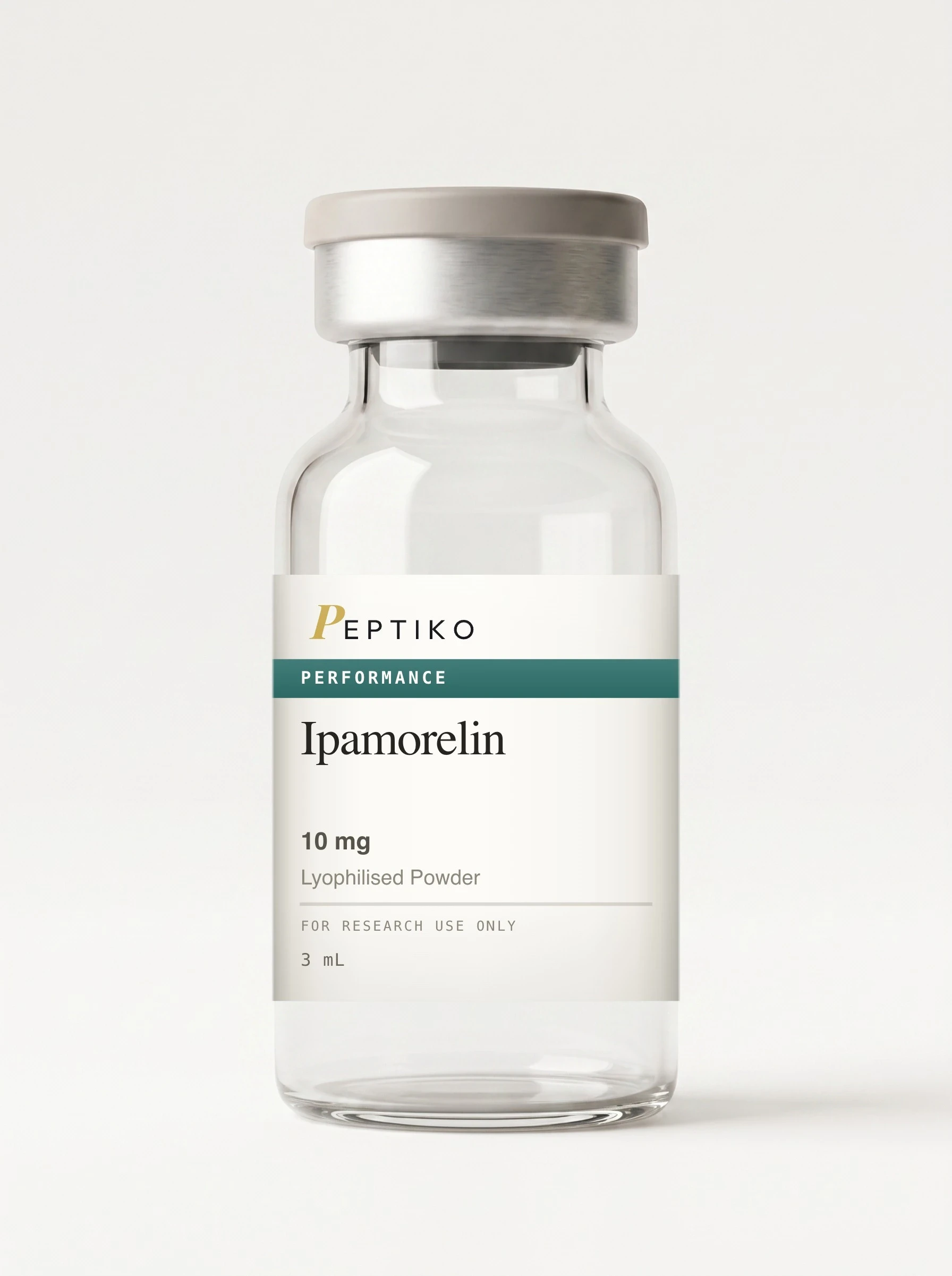
Ipamorelin
Selective ghrelin-receptor (GH-secretagogue) pentapeptide. Studied for GH secretion-pathway research.
Pay on deliveryDelivered in 1 business dayFree from 1000 lei
For in-vitro research and laboratory use only. Not for human or animal consumption.
- ≥99% purity by HPLC-MS · lot number on every vial
- Delivery in Moldova: 1 business day
- Cash to the courier on delivery
- + bacteriostatic water free with this order
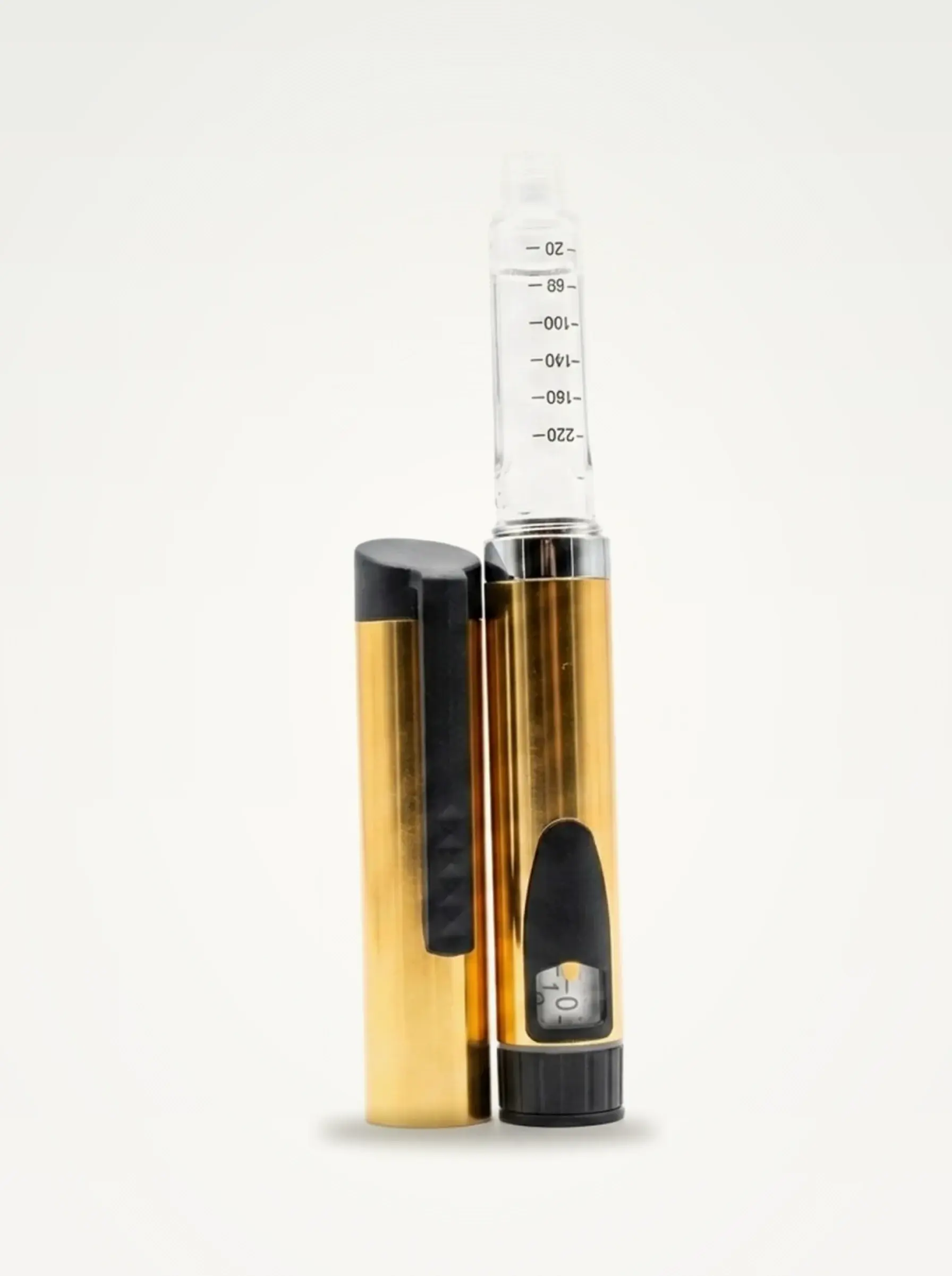 Injection Penreusable device · 800 lei
- Purity
- ≥99% HPLC-MS verified
- CAS
- 170851-70-4
- Storage
- Lyophilised: 2–8 °C (−20 °C for long-term, ≥24 months). Reconstituted: 2–8 °C.
- Formats
- 10mg vial
Courier delivery anywhere in Moldova. Lyophilized peptides travel at ambient temperature.
CJC-1295 and ipamorelin: DAC vs no-DAC explained →Overview
Where older growth-hormone peptides tend to switch on appetite and stress hormones along with the effect researchers actually want, Ipamorelin was designed to be far more selective. It binds the pituitary ghrelin receptor (GHS-R1a) selectively and produces a clean pulse of growth hormone; in published studies that response was not accompanied by a marked rise in cortisol or prolactin. That precision is why laboratories treat it as one of the cleanest tools for growth-hormone research.
Mechanism
Ipamorelin is a synthetic pentapeptide, Aib-His-D-2-Nal-D-Phe-Lys-NH2, that emerged from a chemistry programme screening a series of compounds built without the central Ala-Trp dipeptide of GHRP-1. Its structure is deliberately unnatural — α-aminoisobutyric acid at the N-terminus, two D-residues including a naphthylalanine, and a C-terminal amide — a short, wholly synthetic scaffold rather than a fragment of any endogenous hormone. Functionally it is an agonist at the GHRP-type receptor on pituitary somatotrophs (the receptor called the ghrelin receptor GHS-R1a in later nomenclature, a designation that appears in none of the sources cited here): profiling with GHRP and GHRH antagonists placed its action at the GHRP-like receptor and not at the GHRH receptor, and in primary rat pituitary cells, in pentobarbital-anaesthetised rats and in conscious swine it released growth hormone with potency and efficacy similar to GHRP-6. What distinguished it in that founding work is what it did not do: GHRP-6 and GHRP-2 raised ACTH and cortisol, while ipamorelin left them at levels not significantly different from GHRH stimulation, and no secretagogue tested changed FSH, LH, prolactin or TSH in swine — which is why the authors called it the first GHRP-receptor agonist with GH selectivity comparable to that of GHRH. A later review places the downstream limb in the GH→IGF-1 axis with satellite-cell repair, but presents that as mechanistic framing rather than a measured result.
Molecular identity
- Sequence
- Aib-His-D-2-Nal-D-Phe-Lys-NH2
- Formula
- C38H49N9O5
- Molecular weight
- 711.9 g/mol
- CAS
- 170851-70-4
- PubChem CID
- 9831659
What it acts on
- GHRP-type receptor on pituitary somatotrophs — pharmacological profiling with GHRP and GHRH antagonists in the founding paper placed the growth-hormone response at a GHRP-like receptor, not at the GHRH receptor. The site is characterised there pharmacologically only; the ghrelin-receptor designation GHS-R1a is later nomenclature and appears in none of the sources cited here.
- Growth-hormone release from somatotrophs — in primary rat pituitary cell culture, and again in anaesthetised rats and conscious swine, GH release was similar to GHRP-6 in potency and efficacy.
- Hypothalamic–pituitary–adrenal axis — the defining reported property is a negative one: where GHRP-6 and GHRP-2 raised ACTH and cortisol, this compound left both at levels not significantly different from GHRH stimulation, even at exposures far above those needed for GH release.
- Other anterior-pituitary axes — in swine, none of the secretagogues tested altered plasma FSH, LH, prolactin or TSH, which is the basis of the paper's selectivity claim.
- Downstream GH→IGF-1 signalling with satellite-cell repair — a 2026 orthopaedic review groups the compound with other GH secretagogues on this axis, but that is the review's mechanistic framing rather than a measured endpoint.
What the studies report
Each item below summarises the paper it is numbered to, written from that paper's own abstract. The badge says how the evidence was produced.
- 1.animal modelEur J Endocrinol (1998)
The founding pharmacology paper (1998). It describes the compound as a pentapeptide identified within a series built without the central Ala-Trp dipeptide of GHRP-1 and characterises it across three systems: primary rat pituitary cell culture, pentobarbital-anaesthetised rats and conscious swine. In each, GH release was similar to GHRP-6 in potency and efficacy, and profiling with GHRP and GHRH antagonists located the effect at a GHRP-like receptor. The selectivity result is the paper's own headline: GHRP-6 and GHRP-2 raised ACTH and cortisol, whereas with ipamorelin both stayed at levels not significantly different from those observed after GHRH stimulation, and none of the secretagogues tested altered FSH, LH, prolactin or TSH. The authors close by proposing it as a candidate for future clinical development — that is, no human data are reported here.
- 2.
A 2026 review of therapeutic peptides in orthopaedics, organised around signalling networks — PI3K/Akt, mTOR, MAPK, TGF-β and AMPK. It groups ipamorelin with CJC-1295, tesamorelin, sermorelin and AOD-9604 as growth-hormone secretagogues said to act through IGF-1 signalling and satellite-cell repair. This is a mechanistic synthesis rather than new data, and the authors state plainly that although preclinical studies are promising, clinical trials are currently lacking.
- 3.reviewAm J Sports Med (2026)
A narrative review written for orthopaedic and sports-medicine physicians, drawing on a PubMed search of biochemical and clinical studies of the most heavily marketed injectable peptides. Ipamorelin appears in it only in combination with CJC-1295: that pairing is reported to have significantly improved maximum tetanic tension in murine models of glucocorticoid-induced muscle loss, and the review states directly that the finding is confined to animal studies. Its overall conclusion is that indications, dosing, frequency and duration remain unknown and that substantial safety and efficacy research is needed before any recommendation can be made.
- 4.reviewSports Med (2026)
A 2026 narrative review in Sports Med covering both approved and unapproved peptides marketed direct to patients, ipamorelin among the compounds surveyed. It describes a parallel "gray market" of unapproved compounds operating largely outside regulatory oversight — the abstract does not state on which side of that line each listed compound falls — and concludes that while many such peptides show favourable tissue-repair and metabolic outcomes in animal models, rigorous human safety data are scarce and there is potential for serious harm. The review also treats the placebo effect as a mediator of reported peptide efficacy and discusses how social media amplifies it.
Used in research on
What this does not establish
Only one paper in this reference set generates primary data on the compound itself, and it is a 1998 preclinical study in rat pituitary cells, anaesthetised rats and swine; the other three are narrative reviews from 2026, not new experiments. No controlled human trial of the compound appears anywhere in the cited evidence — the single efficacy result the reviews attribute to it comes from murine models of glucocorticoid-induced muscle loss, where it was tested combined with CJC-1295, so no effect can be assigned to ipamorelin alone. No cited source documents any regulatory approval for it; one review surveys it among peptides spanning approved drugs and an unapproved "gray market" and records that rigorous human safety data are scarce, and another states that indications, dosing, frequency and duration remain unknown. Nothing cited here establishes an effect in humans.
Research applications
In vitro, Ipamorelin is used as a reference agonist for studying the ghrelin receptor (GHS-R1a) and the growth-hormone secretagogue pathway: receptor-binding and GHS-R1a activation assays, cAMP-accumulation and calcium-flux reporter systems, and receptor-selectivity panels that contrast its clean, selective profile with fuller ghrelin agonists. Because published work characterises it as evoking a growth-hormone pulse without a marked rise in cortisol, prolactin or ACTH, laboratories also treat it as a low-noise selectivity benchmark in pituitary-cell secretagogue models and in comparative studies of the ghrelin/GH signalling axis.
Reconstitution
Supplied lyophilised. For laboratory preparation, reconstitute the lyophilised powder with sterile bacteriostatic water to a working stock, keep the reconstituted solution at 4 degrees C, and prepare assay dilutions in the buffer specified by your protocol. For in-vitro research use only, not for human or animal administration.
Storage & handling
Lyophilised: 2–8 °C (−20 °C for long-term, ≥24 months). Reconstituted: 2–8 °C.
Research literature
Selected peer-reviewed literature describing this compound. Peptiko supplies peptides for in-vitro research; these papers characterise the compound, not this product.
- 1.Ipamorelin, the first selective growth hormone secretagogue. Eur J Endocrinol (1998)
- 2.Therapeutic Peptides in Orthopaedics: Applications, Challenges, and Future Directions. J Am Acad Orthop Surg Glob Res Rev (2026)
- 3.Injectable Peptide Therapy: A Primer for Orthopaedic and Sports Medicine Physicians. Am J Sports Med (2026)
- 4.Safety and Efficacy of Approved and Unapproved Peptide Therapies for Musculoskeletal Injuries and Athletic Performance. Sports Med (2026)
Frequently asked questions
What is Ipamorelin?
Ipamorelin is a selective ghrelin-receptor (GHS-R1a) pentapeptide, supplied as a lyophilised research reagent. In vitro it is studied as a reference growth-hormone secretagogue for the ghrelin/GH signalling pathway.
Is it for human use?
No. It is a research-use-only reagent for in-vitro laboratory study. It is not a pharmaceutical, supplement, or medicine, and not for human or veterinary use.
How is purity verified?
Purity is at least 99% by HPLC-MS.
What is the CAS number?
CAS 170851-70-4.
Do you ship from Moldova?
Yes. We deliver by courier anywhere in Moldova, one business day after we confirm the order, and you pay the courier in cash. Lyophilized peptides travel at ambient temperature: a freeze-dried cake needs no cold chain.
Reviews
Be the first to review Ipamorelin.
Order on Telegram, or add it to the cart and check out on the site. Cash to the courier on delivery — nothing is paid in advance.