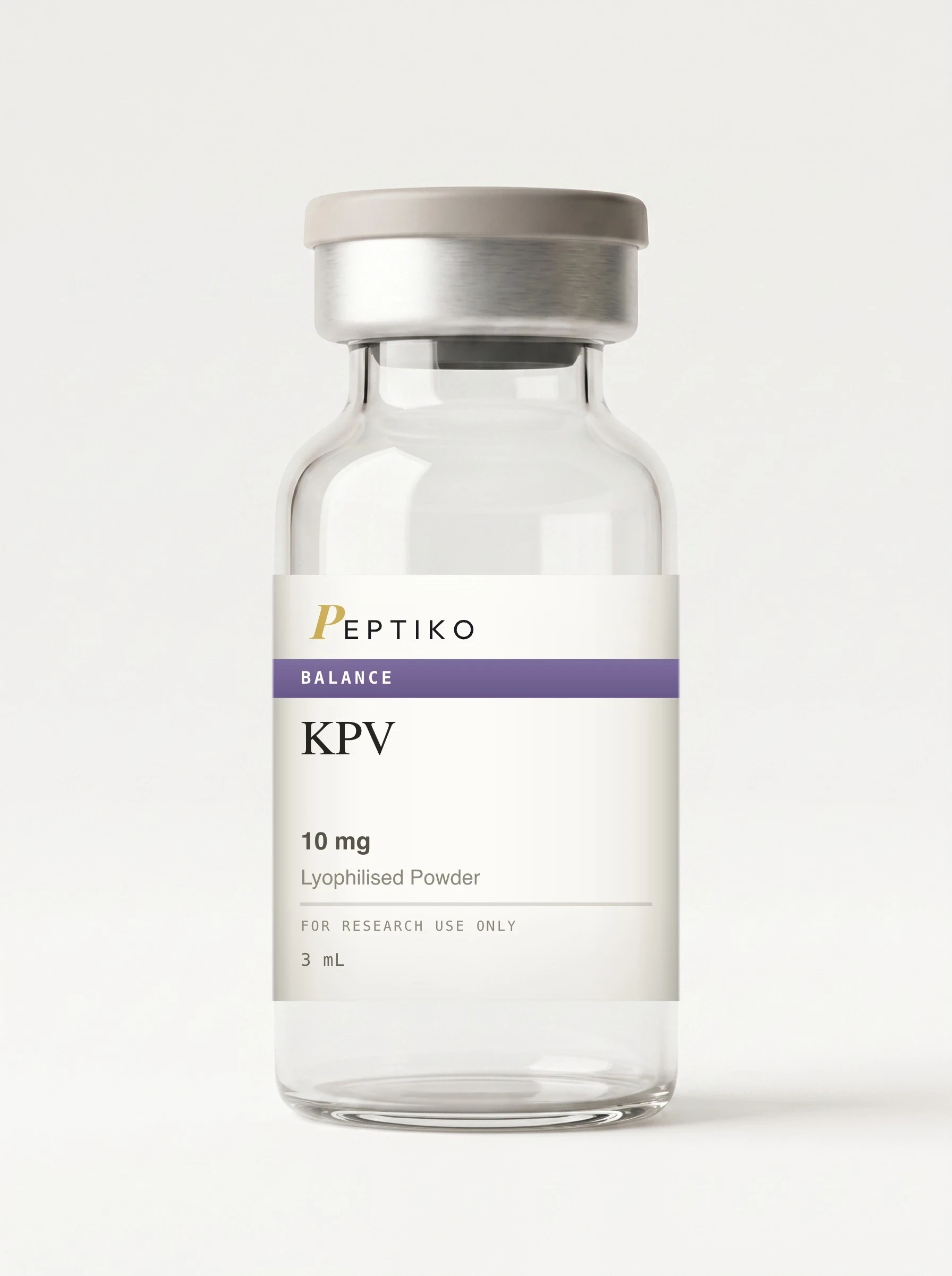
KPV
α-MSH-derived tripeptide (Lys-Pro-Val). Studied for anti-inflammatory and NF-κB-modulation pathways — a research reagent for immune-signaling work.
For in-vitro research and laboratory use only. Not for human or animal consumption.
- ≥99% purity by HPLC-MS · lot number on every vial
- Delivery in Moldova: 1 business day
- Cash to the courier on delivery
- + bacteriostatic water free with this order
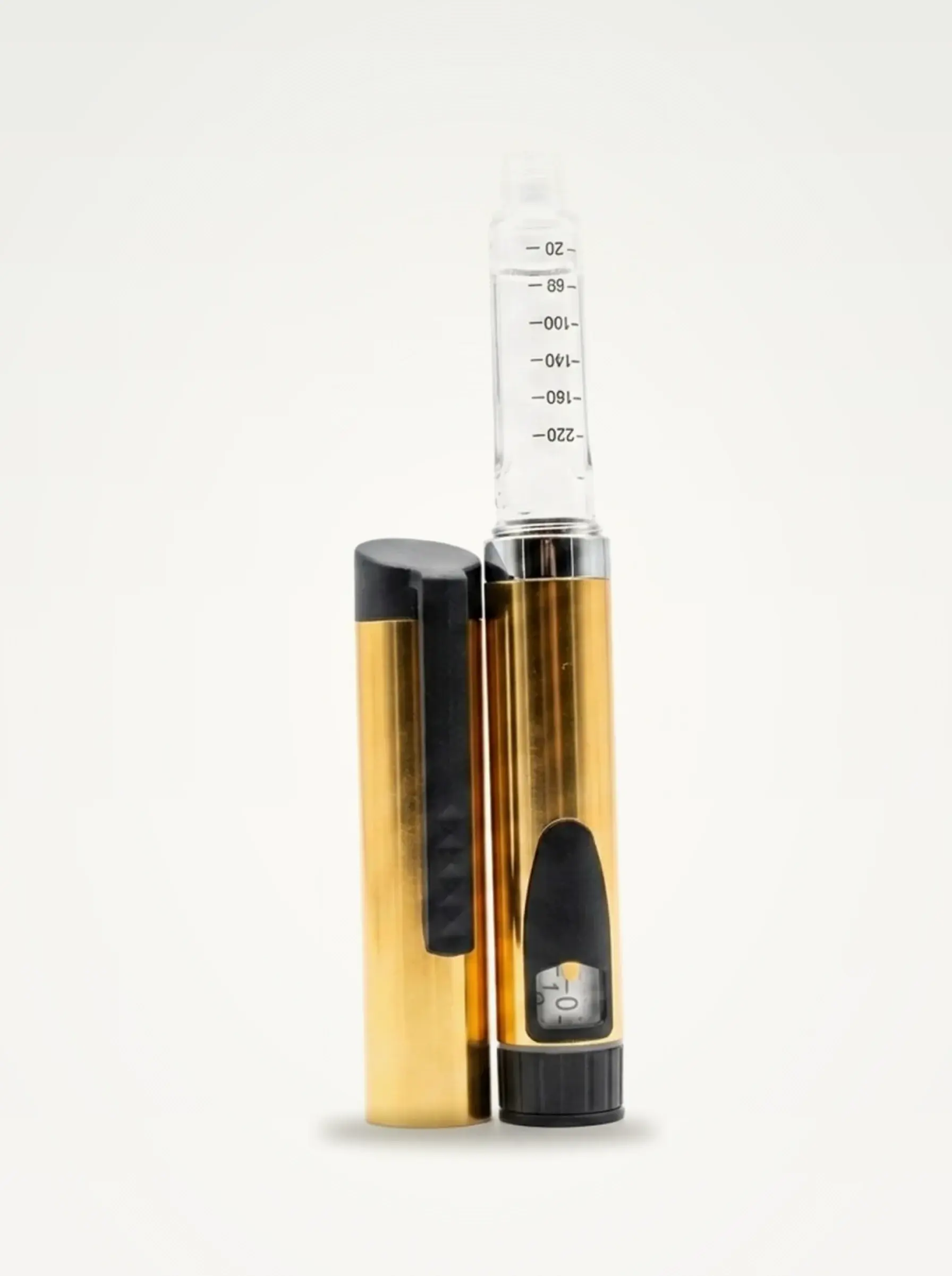 Injection Penreusable device · 800 lei
- Purity
- ≥99% HPLC-MS verified
- CAS
- 67727-97-3
- Storage
- Lyophilised: 2–8 °C, protect from light (−20 °C for long-term, ≥24 months). Reconstituted: 2–8 °C.
- Formats
- 5mg vial · 10mg vial
Courier delivery anywhere in Moldova. Lyophilized peptides travel at ambient temperature.
Overview
Calming inflammation is what draws laboratories to KPV, a three-part fragment (lysine, proline and valine) cut from the tail of a natural anti-inflammatory hormone called alpha-MSH. Much of the research looks at an irritated, inflamed gut, where animal studies reported less tissue damage, and at the skin, where it is studied for anti-inflammatory and wound-repair pathways and models of acne-associated inflammation. It keeps the anti-inflammatory action of the parent hormone without its pigment-changing effects, which is why researchers treat it as a clean tool for inflammation research.
Mechanism
KPV is α-MSH(11-13), the C-terminal tripeptide Lys-Pro-Val of α-melanocyte-stimulating hormone, and it is studied precisely for what it does not carry: the review cited here states the molecule lacks the entire sequence motif required to bind any known melanocortin receptor, yet retains almost all of the anti-inflammatory capacity of the full hormone while displaying none of its pigmentary action. That leaves an unusual mechanistic picture. The parent hormone works through melanocortin receptors on immune and resident somatic cells, modulating NF-κB activation, adhesion molecules, cytokines, chemokine receptors, T-cell activity and leukocyte migration; the tripeptide reproduces much of the same anti-inflammatory signature, and the reviewers note significant similarities between the two, but state outright that the exact signalling route used by KPV is currently unknown. Independence from MC1R signalling is at least partly shown rather than assumed: in mice whose MC1 receptor is non-functional, the protective effect in chemically induced colitis persisted — though the authors put it no more strongly than effects that seem to be at least partially independent of MC1R signalling, and that single arm is the whole of the evidence. Downstream the measured endpoints are consistent across the cited models — lower TNF-α and IL-1β with higher IL-10, less neutrophil infiltration read as colonic myeloperoxidase, and epithelial repair markers rising in healing mucosa. A second, practical half of the mechanism is delivery: the tripeptide is very small, and the in vivo work reporting the clearest effects places it inside a carrier — hyaluronic-acid-functionalised nanoparticles held in a chitosan/alginate hydrogel that targets colonic epithelial cells and macrophages, or a thermosensitive mucoadhesive gel that keeps it against inflamed tissue — so across much of this literature the carrier is part of the reported effect.
Molecular identity
- Sequence
- Lys-Pro-Val
- Formula
- C16H30N4O4
- Molecular weight
- 342.43 g/mol
- CAS
- 67727-97-3
- PubChem CID
- 125672
What it acts on
- Melanocortin receptors (MC1R and the wider MC-R family) — the review cited here states the tripeptide lacks the entire sequence motif required to bind any known melanocortin receptor, and in mice carrying a non-functional MC1R the protective effect in colitis persisted, so the literature treats the action as at least partly MC-R-independent.
- NF-κB-driven inflammatory transcription — the review describes NF-κB activation, adhesion molecules and chemokine receptors as the pathways through which the parent hormone acts, and records significant similarities between that signalling and the anti-inflammatory signalling of the tripeptide.
- Pro-inflammatory cytokine output — in a rat oral-mucositis model IL-1β and TNF-α were significantly suppressed while IL-10 rose; in a mouse colitis model TNF-α was likewise downregulated.
- Neutrophil influx read as myeloperoxidase — colonic MPO activity, the enzymatic marker of neutrophil infiltration, fell significantly in treated mice alongside a histological reduction of inflammatory infiltrate.
- Epithelial repair markers — CK10 and PCNA expression increased in repaired gingival tissue in the rat model, and cell-migration capacity was retained in vitro after formulation into the hydrogel.
What the studies report
Each item below summarises the paper it is numbered to, written from that paper's own abstract. The badge says how the evidence was produced.
- 1.animal modelInflamm Bowel Dis (2008)
A murine study in two established colitis models — dextran sodium sulfate colitis and CD45RB-hi transfer colitis — with weight loss, colonic histology and myeloperoxidase activity as readouts. Treated animals recovered earlier and regained significantly more body weight, inflammatory infiltrates and colonic MPO fell significantly, and the transfer-colitis arm reproduced the same pattern. A third arm used mice with a non-functional MC1 receptor, in which the treated group survived DSS colitis; that is the entire basis for the mechanistic claim, and the authors phrase it no more strongly than effects that 'seem to be at least partially independent' of MC1R signalling. The work is wholly in mice.
- 2.animal modelBiomater Sci (2021)
A biomaterials study in which the tripeptide served as model cargo in a thermosensitive PLGA-PEG-PLGA mucoadhesive hydrogel, with epigallocatechin gallate added as adhesion enhancer, tested in a rat model of chemotherapy-induced oral mucositis. The gel adhered to gingival tissue for hours; treated rats recovered food intake and body weight, ulcerated tissue was repaired with higher CK10 and PCNA expression, IL-1β and TNF-α were significantly inhibited while IL-10 rose, and the loaded gel was active against S. aureus and in MRSA-infected gingival ulcers. The peptide's own contribution cannot be isolated in vivo: the authors themselves credit the EGCG component with inherent antibacterial activity, and the in vivo comparisons run between gel formulations rather than peptide against a peptide-free vehicle.
- 3.reviewAdv Exp Med Biol (2010)
A review of α-MSH-related anti-inflammatory peptides. It sets out the receptor-based mechanism of the parent hormone across the central nervous system, immune cells and resident somatic cells, and the animal models in which it reads as anti-inflammatory, then makes the point that motivates work on the fragment: KPV lacks the entire sequence motif required for binding to any known melanocortin receptor yet retains almost all of the hormone's anti-inflammatory capacity with no pigmentary action. The review states plainly that the exact signalling mechanism used by KPV and related peptides is currently unknown, and frames these tripeptides — including the KPV derivative KdPT — as interesting candidates rather than as established agents.
- 4.animal modelMol Ther (2017)
A targeted-delivery study in a mouse model of ulcerative colitis. The tripeptide was loaded into hyaluronic-acid-functionalised polymeric nanoparticles — sub-micron, with a slightly negative zeta potential — encapsulated in a chitosan/alginate hydrogel designed to release them in the colonic lumen and reach colonic epithelial cells and macrophages. The particles were reported non-toxic and biocompatible with intestinal cells, and the functionalised system prevented mucosal damage and downregulated TNF-α more strongly than the same peptide in non-targeted nanoparticles, with the authors describing combined mucosal healing and anti-inflammatory effects. The comparison establishes the value of the targeting vehicle rather than of the free peptide, and all endpoints are mouse-model endpoints.
Used in research on
What this does not establish
None of the cited work is clinical: two rodent efficacy studies, one rodent biomaterials study and one review, with no controlled human trial anywhere in the set. The review itself states that the signalling mechanism of KPV is unknown, so the receptor-level account remains open — the murine MC1R data show what the peptide does not need, not what it acts on, and the authors put even that no more strongly than 'at least partially independent'. In neither carrier study is there an in vivo arm isolating the free peptide: the mucoadhesive gel contained epigallocatechin gallate, which the authors themselves credit with inherent antibacterial activity, and the colitis study compares formulations rather than free tripeptide against a peptide-free vehicle, so effects attributed to KPV cannot be cleanly separated from the delivery system. Nothing cited establishes human pharmacokinetics, stability or relevance.
Research applications
In vitro, KPV is used as a reference anti-inflammatory tripeptide for studying the NF-κB signalling pathway: reporter assays that read NF-κB activation, cytokine-release panels in cultured cells, and comparisons against its parent melanocortin fragment, alpha-MSH. As the C-terminal Lys-Pro-Val fragment that retains anti-inflammatory activity without the pigment-related actions of the full hormone, it appears across cell and tissue models of intestinal inflammation, dermal anti-inflammatory and wound-repair research, models of acne-associated inflammation, and antimicrobial-activity screens.
Reconstitution
Supplied lyophilised. For laboratory preparation, reconstitute the lyophilised powder with sterile bacteriostatic water to a working stock, keep the reconstituted solution at 4 degrees C, and prepare assay dilutions in the buffer specified by your protocol. For in-vitro research use only, not for human or animal administration.
Storage & handling
Lyophilised: 2–8 °C, protect from light (−20 °C for long-term, ≥24 months). Reconstituted: 2–8 °C.
Research literature
Selected peer-reviewed literature describing this compound. Peptiko supplies peptides for in-vitro research; these papers characterise the compound, not this product.
- 1.Melanocortin-derived tripeptide KPV has anti-inflammatory potential in murine models of inflammatory bowel disease. Inflamm Bowel Dis (2008)
- 2.In situ mucoadhesive hydrogel capturing tripeptide KPV: the anti-inflammatory, antibacterial and repairing effect on chemotherapy-induced oral mucositis. Biomater Sci (2021)
- 3.Terminal signal: anti-inflammatory effects of α-melanocyte-stimulating hormone related peptides beyond the pharmacophore. Adv Exp Med Biol (2010)
- 4.Orally Targeted Delivery of Tripeptide KPV via Hyaluronic Acid-Functionalized Nanoparticles Efficiently Alleviates Ulcerative Colitis. Mol Ther (2017)
Frequently asked questions
What is KPV?
A synthetic anti-inflammatory tripeptide (Lys-Pro-Val), the C-terminal fragment of the melanocortin hormone alpha-MSH, supplied as a lyophilised reagent for in-vitro laboratory research.
Is it for human use?
No. It is a research-use-only reagent for in-vitro laboratory study. It is not a pharmaceutical, supplement, or medicine, and not for human or veterinary use.
How is purity verified?
Purity is at least 99% by HPLC-MS.
What is the CAS number?
CAS 67727-97-3.
Do you ship from Moldova?
Yes. We deliver by courier anywhere in Moldova, one business day after we confirm the order, and you pay the courier in cash. Lyophilized peptides travel at ambient temperature: a freeze-dried cake needs no cold chain.
Reviews
Be the first to review KPV.
Order on Telegram, or add it to the cart and check out on the site. Cash to the courier on delivery — nothing is paid in advance.