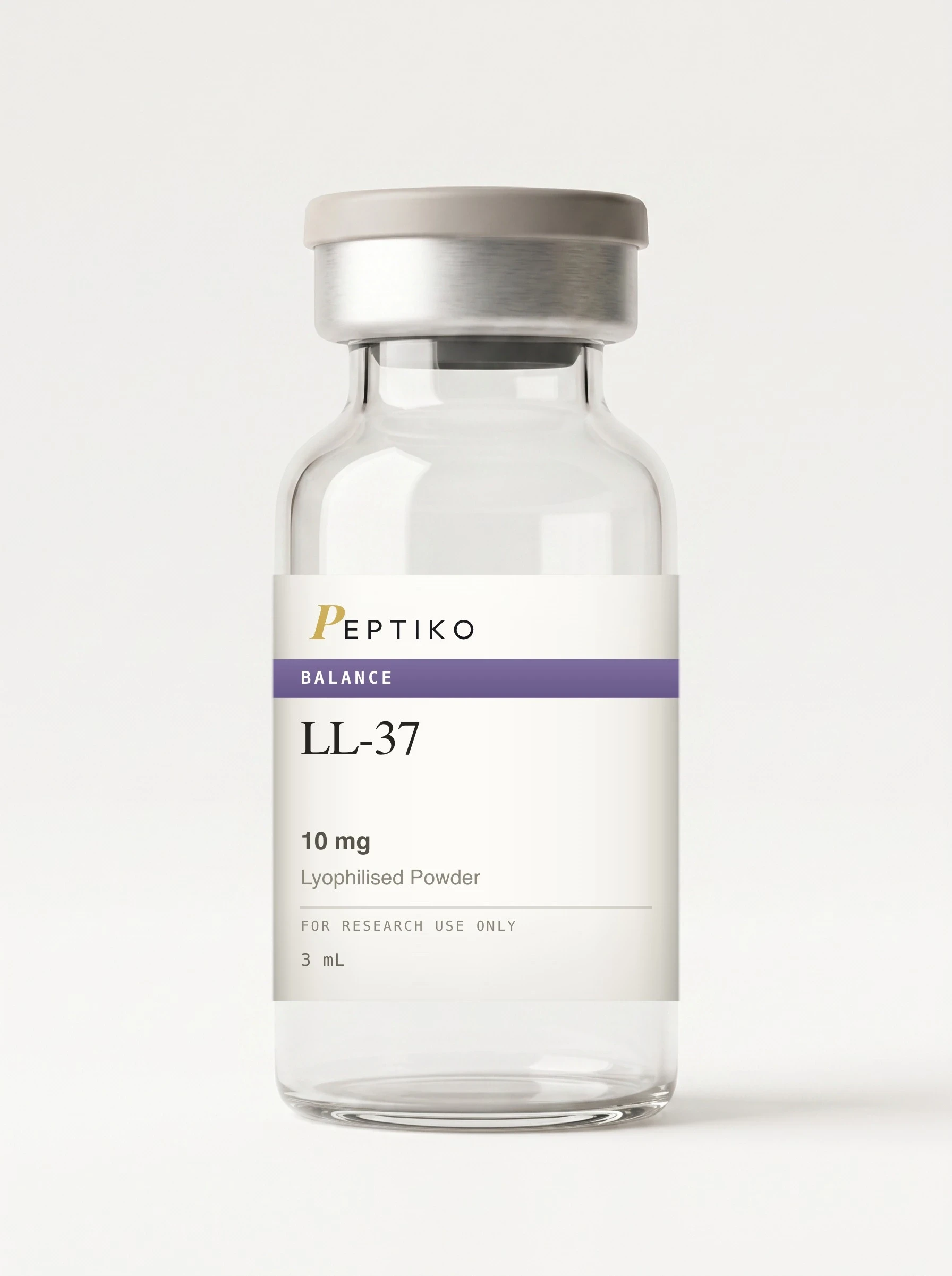
LL-37
Human cathelicidin-derived antimicrobial peptide. Studied for host-defense and immunomodulatory pathways — a research reagent for innate-immunity work.
For in-vitro research and laboratory use only. Not for human or animal consumption.
- ≥99% purity by HPLC-MS · lot number on every vial
- Delivery in Moldova: 1 business day
- Cash to the courier on delivery
- + bacteriostatic water free with this order
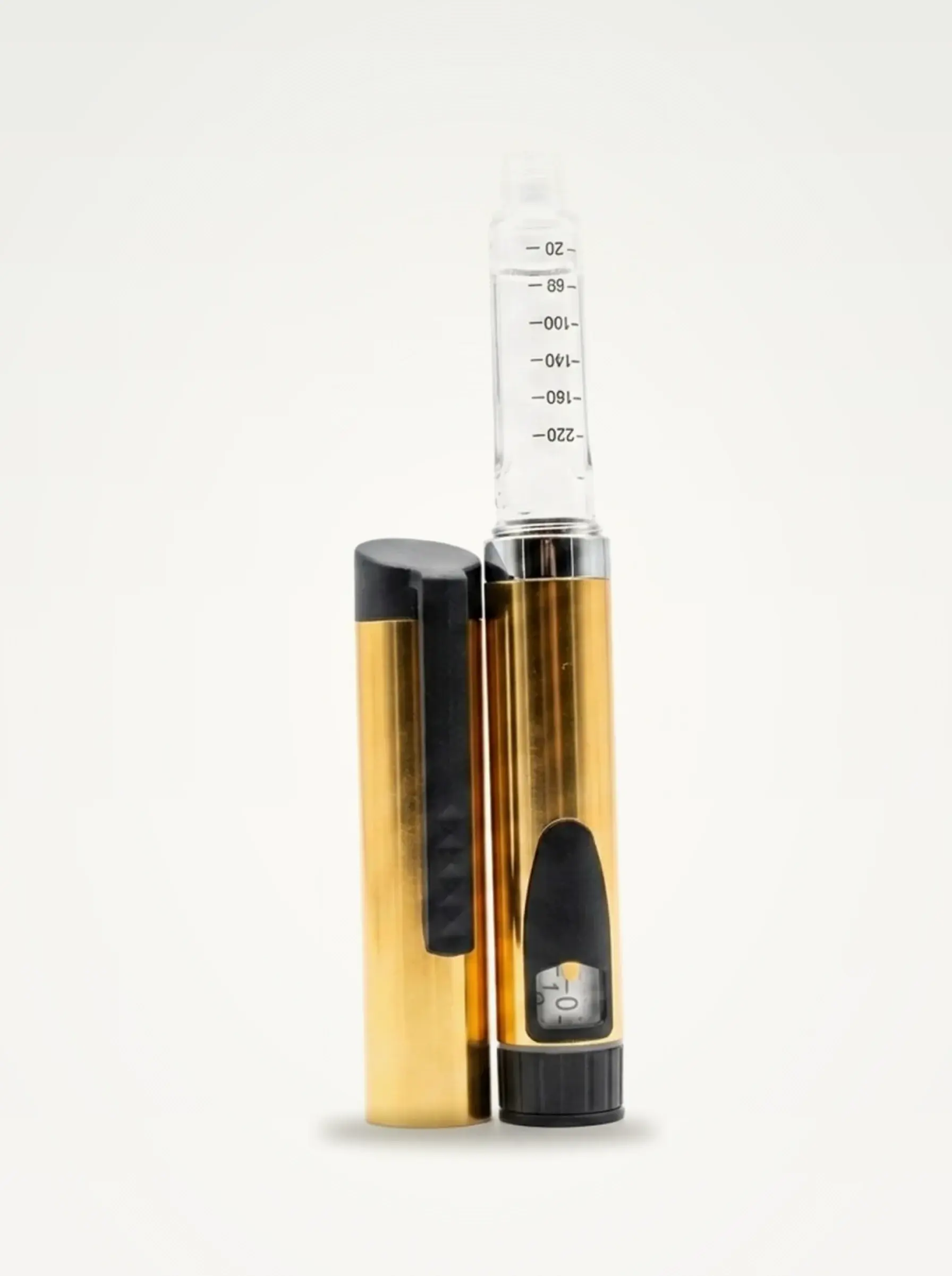 Injection Penreusable device · 800 lei
- Purity
- ≥98% HPLC-MS verified
- CAS
- 154947-66-7
- Storage
- Lyophilised: 2–8 °C, protect from light (−20 °C for long-term, ≥24 months). Reconstituted: 2–8 °C.
- Formats
- 5mg vial · 10mg vial
Courier delivery anywhere in Moldova. Lyophilized peptides travel at ambient temperature.
Overview
The only antimicrobial peptide the human body makes from the cathelicidin family, LL-37 is studied as a front-line host-defence molecule and a model system for wound-repair research. In laboratory tests it kills a broad range of bacteria, along with some fungi and viruses, and in research it also accelerated wound repair and recruited immune cells toward a site of infection in laboratory models. That dual role — direct antimicrobial and immune signal — makes it a cornerstone reagent in innate-immunity and tissue-repair research.
Mechanism
LL-37 is the 37-residue C-terminal peptide released by proteolytic processing of the precursor hCAP18, and it is the only cathelicidin the human genome encodes. Cathelicidins from mammals, fish, birds, amphibians and reptiles share one architecture: a highly conserved N-terminal pre-pro region homologous to cathelin, and a variable C-terminal domain to which the reviews assign both the antimicrobial and the immunomodulatory activity. LL-37 is that variable domain, which is why the molecule is read as a cationic host-defence module rather than as a ligand built around a single binding site. The signal is described as running along two lines at once. Directly, the cited reviews report broad-spectrum activity against bacteria, fungi, viruses and parasites, with antifungal, antiviral and antiparasitic effects all attributed to the same sequence. Indirectly, it acts as a host-directed messenger: potent chemotactic and immunomodulatory properties, followed through the immunological, respiratory, gastrointestinal and cutaneous systems and mapped onto specific diseases. The second line is where the mechanism is genuinely open — the 2023 review states that the molecular basis by which cathelicidins induce an immune response is still unclear, and proposes that contact with human receptors may be made not by the intact 37-mer but by sub-fragments of it (SK-24, IV-20, FK-13). Two properties of the native peptide shape how it is handled in the laboratory: it is poorly resistant to proteolysis and it is cytotoxic — these, together with high production costs, are the limitations the 2025 review names, and they are why that review gives particular attention to truncated and retro-analogues and to nanoscale delivery systems rather than to the native sequence. The direction of the effect is also not fixed: in the rosacea literature, pro-inflammatory pathways involving cathelicidins and inflammasome complexes are placed at the centre of a chronic inflammatory skin disease.
Molecular identity
- Sequence
- Leu-Leu-Gly-Asp-Phe-Phe-Arg-Lys-Ser-Lys-Glu-Lys-Ile-Gly-Lys-Glu-Phe-Lys-Arg-Ile-Val-Gln-Arg-Ile-Lys-Asp-Phe-Leu-Arg-Asn-Leu-Val-Pro-Arg-Thr-Glu-Ser
- Formula
- C205H340N60O53
- Molecular weight
- 4493 g/mol
- CAS
- 154947-66-7
- PubChem CID
- 16198951
What it acts on
- The variable C-terminal cathelicidin domain — the reviews assign both the antimicrobial and the immunomodulatory activity to this region rather than to the conserved cathelin-homologous N-terminal pre-pro region, and report direct activity across bacteria, fungi, viruses and parasites.
- Human immune receptors contacted by the LL-37 domain and its sub-fragments SK-24, IV-20 and FK-13 — the 2023 review proposes these fragments as the units that actually engage receptors, while stating that the molecular basis of the induced immune response is still unclear.
- Chemotactic and immunomodulatory signalling traced through the immunological, respiratory, gastrointestinal and cutaneous systems — the 2016 review describes potent chemotaxis running alongside the direct antimicrobial action and maps cathelicidin-dependent pathways onto specific diseases.
- The pro-inflammatory cathelicidin–inflammasome axis in skin — the rosacea review places this pathway at the centre of a chronic inflammatory dermatosis, so in that literature the same peptide reads as a driver of inflammation and not only as a defence molecule.
- Proteolytic degradation of the native sequence — the 2025 modification review lists low proteolytic stability alongside cytotoxicity and high production costs among the limitations that hinder clinical application, and gives particular attention to truncated and retro-analogues with increased proteolytic resistance.
What the studies report
Each item below summarises the paper it is numbered to, written from that paper's own abstract. The badge says how the evidence was produced.
- 1.reviewPeptides (2023)
A 2023 review in Peptides examining the LL-37 domain across cathelicidins from mammals, fish, birds, amphibians and reptiles. It sets out the family architecture — a conserved cathelin-homologous N-terminal pre-pro region and a variable C-terminal domain carrying the antimicrobial and immunomodulatory activity — and suggests that the LL-37 domain together with its SK-24, IV-20 and FK-13 fragments may be what interacts with receptors in humans. The authors state outright that the molecular basis by which cathelicidins induce an immune response is still unclear, so the fragment account is offered as a clue for further work, not as a demonstrated mechanism.
- 2.reviewPharmacol Rep (2016)
A 2016 pharmacology review of the sole human cathelicidin, covering four systems — immunological, respiratory, gastrointestinal and cutaneous — and relating cathelicidin-dependent molecular pathways to specific diseases. It reports broad-spectrum antibiotic action together with potent chemotactic and immunomodulatory properties, in the context of antimicrobial peptides distributed mainly in mucus layers, where they prevent colonisation by pathogens. It is a narrative review rather than a systematic one, and its own conclusion is a call for further investigation and development, not a statement that the peptide has been shown to work clinically.
- 3.reviewInt J Mol Sci (2025)
A 2025 review of chemical and structural modification strategies applied to LL-37. It names the obstacles that keep the native peptide out of clinical use — low proteolytic stability, cytotoxicity and high production costs — and surveys truncated and retro-analogues that preserve or improve activity while showing reduced toxicity and greater proteolytic resistance, alongside nanoscale delivery systems intended to prolong half-life and mitigate cytotoxic effects. The authors state that peptide design, cost-effective production and long-term safety and efficacy all still require optimisation and validation, which places the analogue work firmly at candidate stage.
- 4.reviewJ Cutan Med Surg (2024)
A 2024 dermatology review of rosacea pathogenesis, relevant here because it is where cathelicidin biology is read in the opposite direction. It places pro-inflammatory pathways involving cathelicidins and inflammasome complexes at the centre of a chronic inflammatory skin condition for which there is no cure, and suggests that established and emerging treatments may owe their efficacy to acting on those same pathways, with common triggers modulating them in a complex manner. The review itself calls the pathogenesis likely multifactorial, with genetic and environmental contributions, so the cathelicidin account is one strand of a working hypothesis rather than a settled mechanism.
Used in research on
What this does not establish
Every reference in this set is a review; none is primary data and none is a controlled human trial, so nothing cited here establishes an effect in people. The reviews name their own gaps: the molecular basis by which cathelicidins induce an immune response is still unclear, the receptor-engaging unit may be sub-fragments rather than the intact 37-mer, and long-term safety and efficacy — even of the modified analogues — are stated to remain unvalidated. Native LL-37 is described in this same literature as proteolytically unstable, cytotoxic and expensive to produce, and the dermatology review places cathelicidin pathways at the centre of a chronic inflammatory skin disease, so greater cathelicidin activity is nowhere in this evidence base read as uniformly favourable.
Research applications
In vitro, LL-37 serves as a reference human cathelicidin antimicrobial peptide for innate-immunity and host-defence research: membrane-permeabilization and antimicrobial-activity assays against bacterial, fungal and viral panels, FPR2 receptor-signalling and immune-cell chemotaxis reporters, bacterial-toxin (endotoxin) neutralization studies, and cell-culture wound-repair models examining keratinocyte migration and angiogenesis. It is also used as a comparator in vitamin-D-induced cathelicidin-expression studies. Throughout, it functions purely as a benchmark reagent for characterising the LL-37/hCAP18 host-defence pathway in cell cultures and laboratory models.
Reconstitution
Supplied lyophilised. For laboratory preparation, reconstitute the lyophilised powder with sterile bacteriostatic water to a working stock, keep the reconstituted solution at 4 degrees C, and prepare assay dilutions in the buffer specified by your protocol. Store the unopened vial at −20 °C, protected from light. For in-vitro research use only, not for human or animal administration.
Storage & handling
Lyophilised: 2–8 °C, protect from light (−20 °C for long-term, ≥24 months). Reconstituted: 2–8 °C.
Research literature
Selected peer-reviewed literature describing this compound. Peptiko supplies peptides for in-vitro research; these papers characterise the compound, not this product.
- 1.The LL-37 domain: A clue to cathelicidin immunomodulatory response? Peptides (2023)
- 2.LL-37: Cathelicidin-related antimicrobial peptide with pleiotropic activity. Pharmacol Rep (2016)
- 3.Antimicrobial Peptides of the Cathelicidin Family: Focus on LL-37 and Its Modifications. Int J Mol Sci (2025)
- 4.Rosacea: Pathogenesis and Therapeutic Correlates. J Cutan Med Surg (2024)
Frequently asked questions
What is LL-37?
LL-37 is a 37-amino-acid human cathelicidin-derived antimicrobial peptide, cleaved from the hCAP18 precursor and the only human member of the cathelicidin family. It is supplied as a lyophilised research reagent and is studied in vitro as a host-defence and immunomodulatory reference compound in innate-immunity and wound-repair research.
Is LL-37 for human use?
No. It is a research-use-only reagent for in-vitro laboratory study. It is not a pharmaceutical, supplement, or medicine, and not for human or veterinary use.
How is purity verified?
Purity is at least 99% by HPLC-MS.
What is the CAS number?
CAS 154947-66-7.
Do you ship from Moldova?
Yes. We deliver by courier anywhere in Moldova, one business day after we confirm the order, and you pay the courier in cash. Lyophilized peptides travel at ambient temperature: a freeze-dried cake needs no cold chain.
Reviews
Be the first to review LL-37.
Order on Telegram, or add it to the cart and check out on the site. Cash to the courier on delivery — nothing is paid in advance.