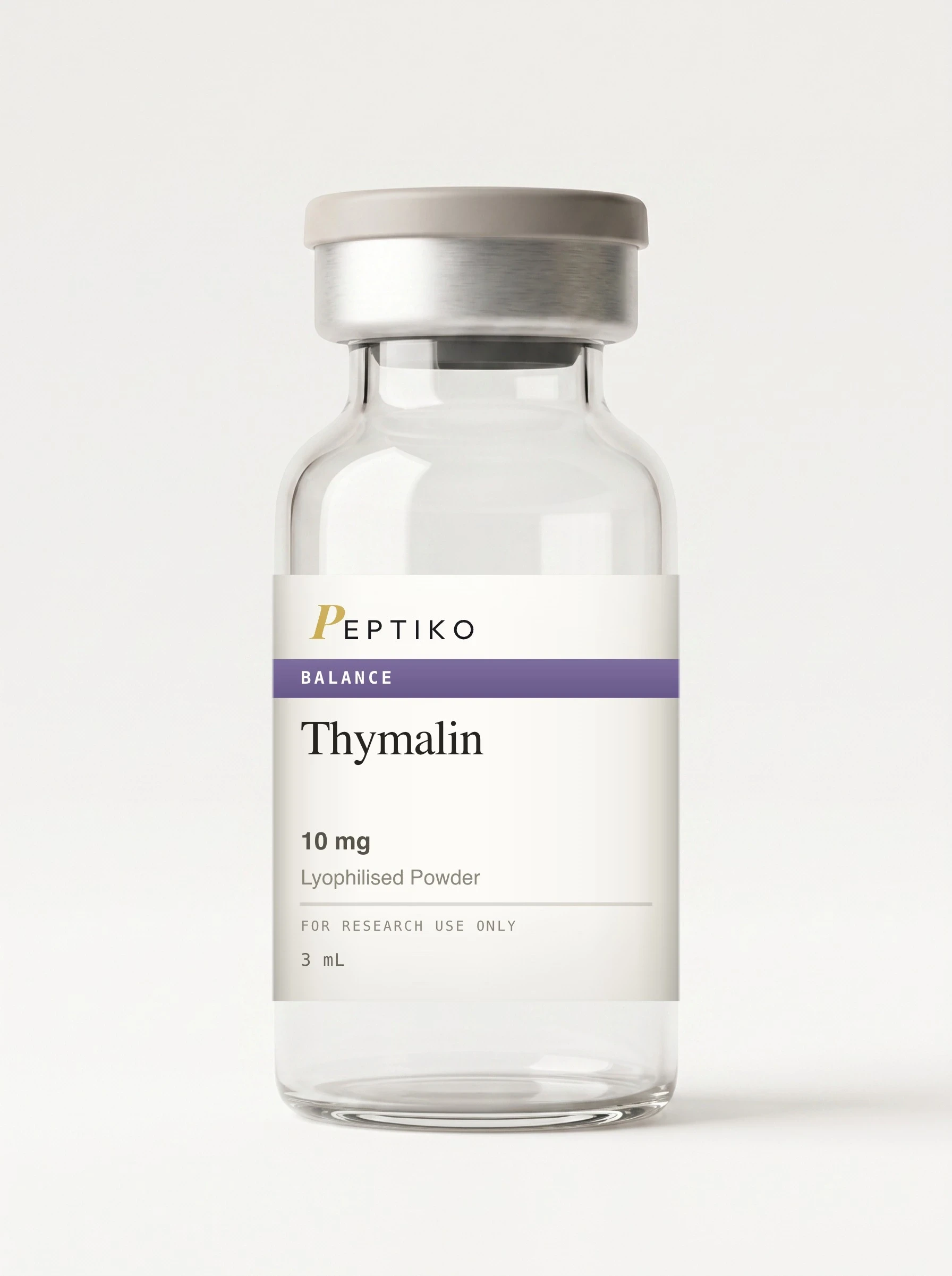
Thymalin
Thymus-derived polypeptide complex (peptide bioregulator), studied for immune-regulation and cellular-senescence research pathways.
For in-vitro research and laboratory use only. Not for human or animal consumption.
- ≥99% purity by HPLC-MS · lot number on every vial
- Delivery in Moldova: 1 business day
- Cash to the courier on delivery
- + bacteriostatic water free with this order
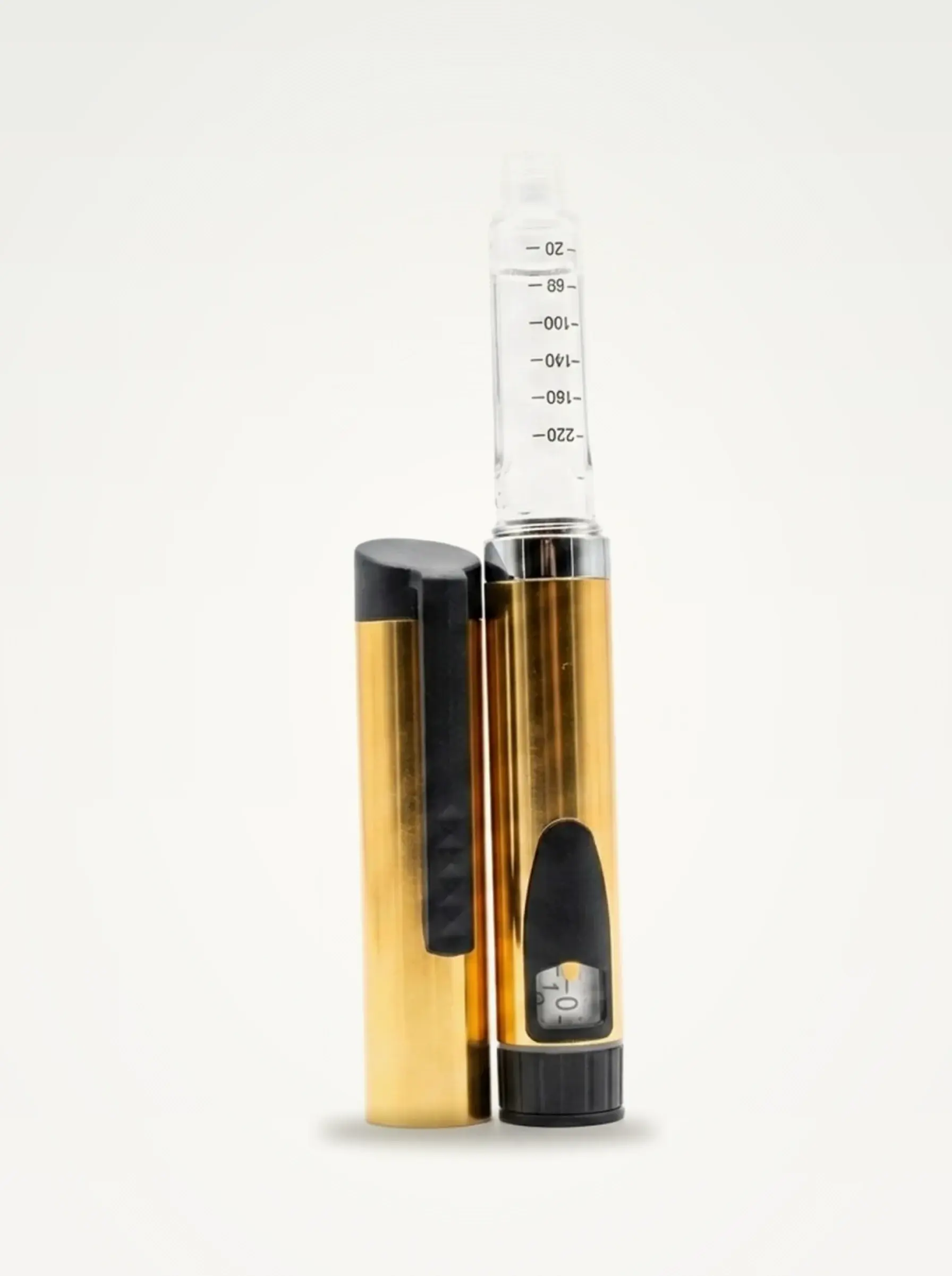 Injection Penreusable device · 800 lei
- Purity
- ≥95% HPLC-MS (polypeptide complex)
- CAS
- —
- Storage
- Lyophilised: 2–8 °C, protect from light (−20 °C for long-term, ≥24 months). Reconstituted: 2–8 °C — less stable in solution.
- Formats
- 10mg lyophilised vial
Courier delivery anywhere in Moldova. Lyophilized peptides travel at ambient temperature.
Khavinson bioregulators: Epithalon, Selank, Semax →Overview
Thymalin is a thymus-derived polypeptide complex from the Khavinson tradition of peptide bioregulators, not a single defined molecule, which is why it carries no single CAS number or PubChem entry. It is characterised in vitro as a reference reagent for immune-regulation research and is grouped with the Russian/CIS regulatory-peptide tradition alongside Epithalon. Supplied lyophilised for in-vitro research use only.
Mechanism
Thymalin is not a single molecule but a polypeptide complex extracted from thymus tissue — one of the organ-extract "peptide bioregulators" developed in the St Petersburg gerontology tradition. That is why it carries no single sequence, CAS number or PubChem entry, and why it must not be confused with thymulin, a separate, chemically defined nonapeptide. The cited work identifies the short dipeptides Lys-Glu (KE) and Glu-Trp (EW) as its active constituents, and the mechanism proposed there runs at the level of gene expression rather than through one receptor: docking models the dipeptides binding defined double-stranded DNA motifs (GGAG in B-form DNA for EW, GCGC in the curved nucleosomal form for KE), while promoter-database, pathway and protein-interaction analysis nominates AKT1/AKT2 — which the authors tie to the cytokine-storm programme — alongside ACE2, CYSLTR1 and CHUK, whose protein products the authors describe as functionally associated with IL-1β, IL-6, TNF-α, IL-4 and IL-10. What is actually measured downstream is cellular: reduced secretion of IL-1β, IL-6 and TNF-α by LPS-stimulated human mononuclear cells, and a shift in the surface markers of cultured human haematopoietic stem cells away from CD44/CD117 and toward CD28. The older literature that built the preparation's reputation was clinical and immunological rather than molecular, and that gap — a plausible gene-level model resting on small biological datasets — defines the present state of the evidence.
What it acts on
- ACE2 — bioinformatic cluster analysis in the cited work names ACE2 as a specific candidate target gene of the Glu-Trp (EW) dipeptide, and the same paper cites earlier evidence that EW reduces angiotensin-induced vasoconstriction through ACE2 inhibition.
- AKT1 and AKT2 — the predicted target genes of both active dipeptides converge on the AKT kinases, which the authors associate with the cytokine-storm programme; CHUK is named as a target specific to the Lys-Glu (KE) dipeptide.
- IL-1β, IL-6 and TNF-α output — in an LPS-stimulated model using human peripheral blood mononuclear cells, the complex and both of its dipeptides are reported to lower the secreted levels of all three cytokines on ELISA.
- CD44, CD117 and CD28 on human haematopoietic stem cells — a culture study reports lower stem-cell and intermediate-stage markers alongside a marked rise in CD28, which the authors take as indirect evidence of a shift toward a mature T-lymphocyte phenotype.
- Double-stranded DNA motifs — molecular docking places EW at a GGAG sequence in classical B-form DNA and KE at GCGC in the curved nucleosomal form; this is the proposed structural basis for an action at the level of gene expression, obtained by modelling rather than measurement.
What the studies report
Each item below summarises the paper it is numbered to, written from that paper's own abstract. The badge says how the evidence was produced.
- 1.
A programme review by the group that developed these organ-extract preparations, covering three decades of work on pineal, thymic and other tissue peptides. Thymalin occupies only a few lines of it: the authors state that its immunostimulating effects are the most prominent and link them to anticarcinogenic and geroprotective activity. No design, control groups or endpoints are given for the thymus-preparation experiments; the concrete data cited concern mainly the pineal preparation and the tetrapeptide Epitalon, and the paper closes by putting forward a general "peptide theory of ageing" rather than testing one.
- 2.in vitroBull Exp Biol Med (2020)
A culture study on human haematopoietic stem cells. Exposure to the complex is reported to lower CD44 (stem-cell marker) and CD117 (marker of an intermediate differentiation stage) by two- to three-fold, and to raise CD28 (mature T-lymphocyte marker) by 6.8-fold. The authors themselves call the differentiation conclusion indirect — it rests on marker expression, not on lineage tracing — and write that the targeted molecular mechanism still requires study; the closing suggestion about antiviral immunity is an inference drawn from published patient observations, not something this experiment tested.
- 3.human studyAdv Gerontol (2002)
A multi-year observation of 266 elderly participants, run jointly by the St Petersburg and Kyiv institutes, comparing thymus and pineal peptide preparations against a control group. The authors report a 2.0- to 2.4-fold lower incidence of acute respiratory illness among the peptide-treated participants taken together, and an approximately two-fold lower mortality rate over the follow-up in the thymus-preparation group, with the largest reported difference where both preparations were given. The abstract describes no randomisation, blinding or placebo; the paper is indexed as a review and reaches English only as the abstract of a Russian-language article, and every result comes from the same research programme that created the preparations. Nothing in this reference set replicates it independently.
- 4.in vitroInt J Mol Sci (2023)
The most mechanistic paper in the set, pairing modelling with a small experiment. Molecular docking assigns each active dipeptide a preferred double-stranded DNA motif, and promoter-database, pathway and protein-interaction analysis nominates AKT1/AKT2, ACE2, CYSLTR1 and CHUK as candidate targets. The experimental part is an LPS-induced inflammation model in human peripheral blood mononuclear cells, where the complex and both dipeptides lowered IL-1β, IL-6 and TNF-α by 1.4- to 6.0-fold on ELISA. The authors state the scale plainly: blood from four donors, with each cytokine assay repeated a handful of times, and the mechanism is described throughout as a potential one.
Used in research on
What this does not establish
None of the cited work identifies a defined molecular entity. Thymalin is an extract; these papers characterise neither its full composition nor its batch-to-batch consistency, so the results cannot be attributed to a single structure — and no sequence can honestly be stated for it. The gene-level mechanism is prediction, not measurement: docking and database analysis. The biological experiments amount to two small in-vitro studies, one of them on cells from four donors. The human data come from a single long-running programme run by the groups that developed the preparation, described without randomisation or blinding and reaching English only in abstract; this reference set contains no independent controlled trial. It is also not thymulin, the separate chemically defined nonapeptide with which it is frequently confused.
Research applications
Thymalin is used in vitro as a reference reagent in immune-regulation research, including assays of T-cell maturation, cytokine signalling and immune-cell population balance. It is also studied within cellular-senescence and aging-biology research, where peptide bioregulators of the Khavinson tradition are investigated for their reported influence on cell proliferation. It is frequently used as a comparator alongside Epithalon and Thymosin alpha-1 in regulatory-peptide studies.
Reconstitution
As a handling note, the lyophilised complex is typically dissolved by adding bacteriostatic water down the vial wall and letting it go into solution without shaking, giving a working stock at the researcher's chosen concentration. Prepare stocks under aseptic conditions and keep them cold, since a peptide complex in solution is less stable than the dry cake. This is a solubility and laboratory-handling note only, not a dosing or administration protocol.
Storage & handling
Lyophilised: 2–8 °C, protect from light (−20 °C for long-term, ≥24 months). Reconstituted: 2–8 °C — less stable in solution.
Research literature
Selected peer-reviewed literature describing this compound. Peptiko supplies peptides for in-vitro research; these papers characterise the compound, not this product.
- 1.Peptides and Ageing. Neuro Endocrinol Lett (2002)
- 2.Thymalin: Activation of Differentiation of Human Hematopoietic Stem Cells. Bull Exp Biol Med (2020)
- 3.[Geroprotective effect of thymalin and epithalamin]. Adv Gerontol (2002)
- 4.The Influence of KE and EW Dipeptides in the Composition of the Thymalin Drug on Gene Expression and Protein Synthesis Involved in the Pathogenesis of COVID-19. Int J Mol Sci (2023)
Frequently asked questions
What is Thymalin?
Thymalin is a thymus-derived polypeptide complex from the Khavinson tradition of peptide bioregulators. Because it is a mixture of polypeptides rather than a single defined molecule, it has no single CAS number or PubChem entry, and it should not be confused with Thymulin, a separate defined nonapeptide. It is characterised in vitro as a reference reagent for immune-regulation and cellular-senescence research.
Is Thymalin for human use?
No. Thymalin is supplied strictly as a research reagent for in-vitro and laboratory use only. It is not a medicine and is not intended for human or animal use, consumption, or any diagnostic or therapeutic application.
How is purity verified?
Purity is at least 99% by HPLC-MS.
What is the CAS number?
Thymalin is a thymus polypeptide complex, not a single defined molecule, so it has no single CAS number.
Do you ship from Moldova?
Yes. We deliver by courier anywhere in Moldova, one business day after we confirm the order, and you pay the courier in cash. Lyophilized peptides travel at ambient temperature: a freeze-dried cake needs no cold chain.
Reviews
Be the first to review Thymalin.
Order on Telegram, or add it to the cart and check out on the site. Cash to the courier on delivery — nothing is paid in advance.