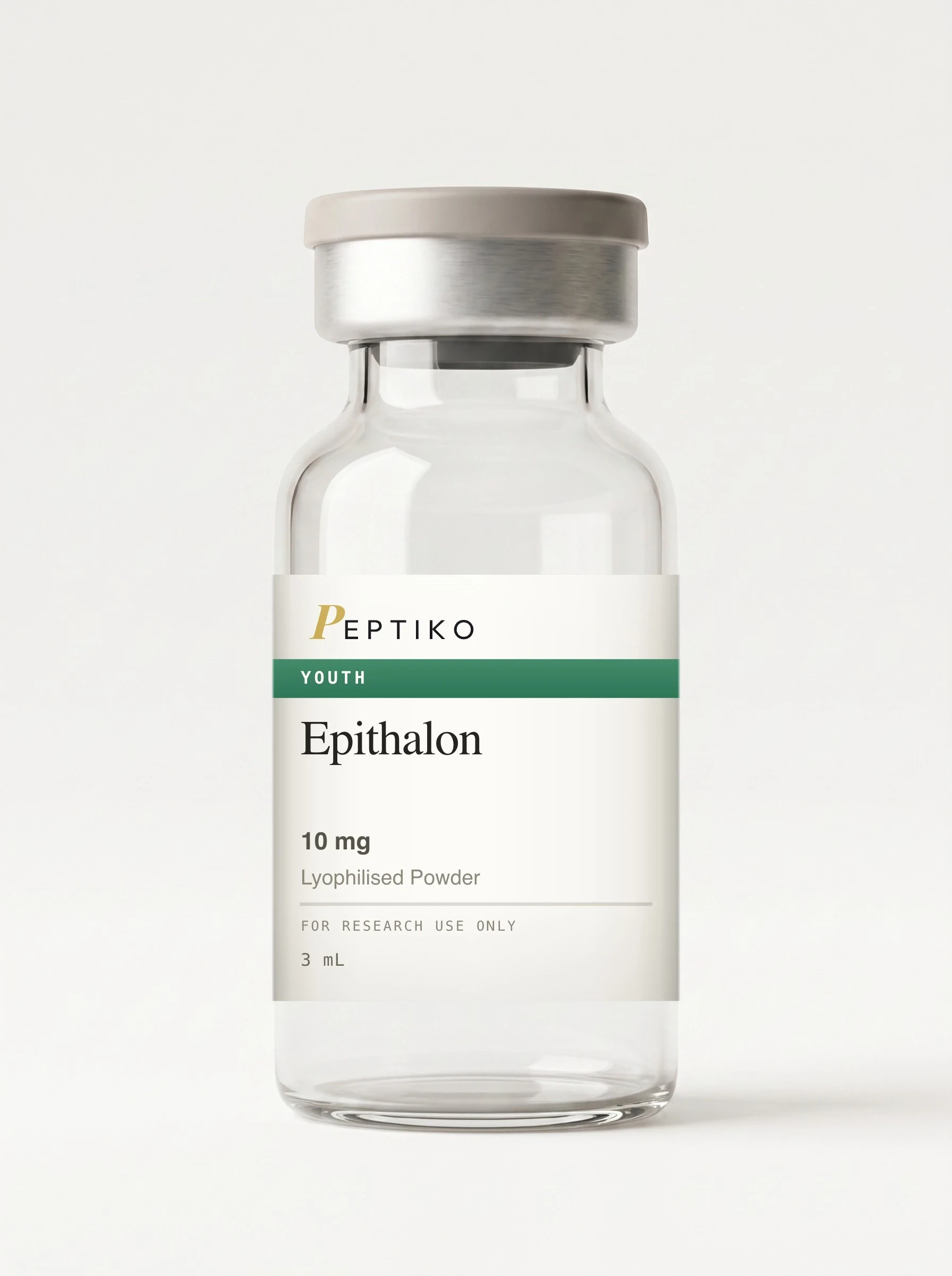
Epithalon
Synthetic tetrapeptide (Ala-Glu-Asp-Gly). Studied for telomerase-activity and circadian-rhythm pathways — a Russian-developed research peptide.
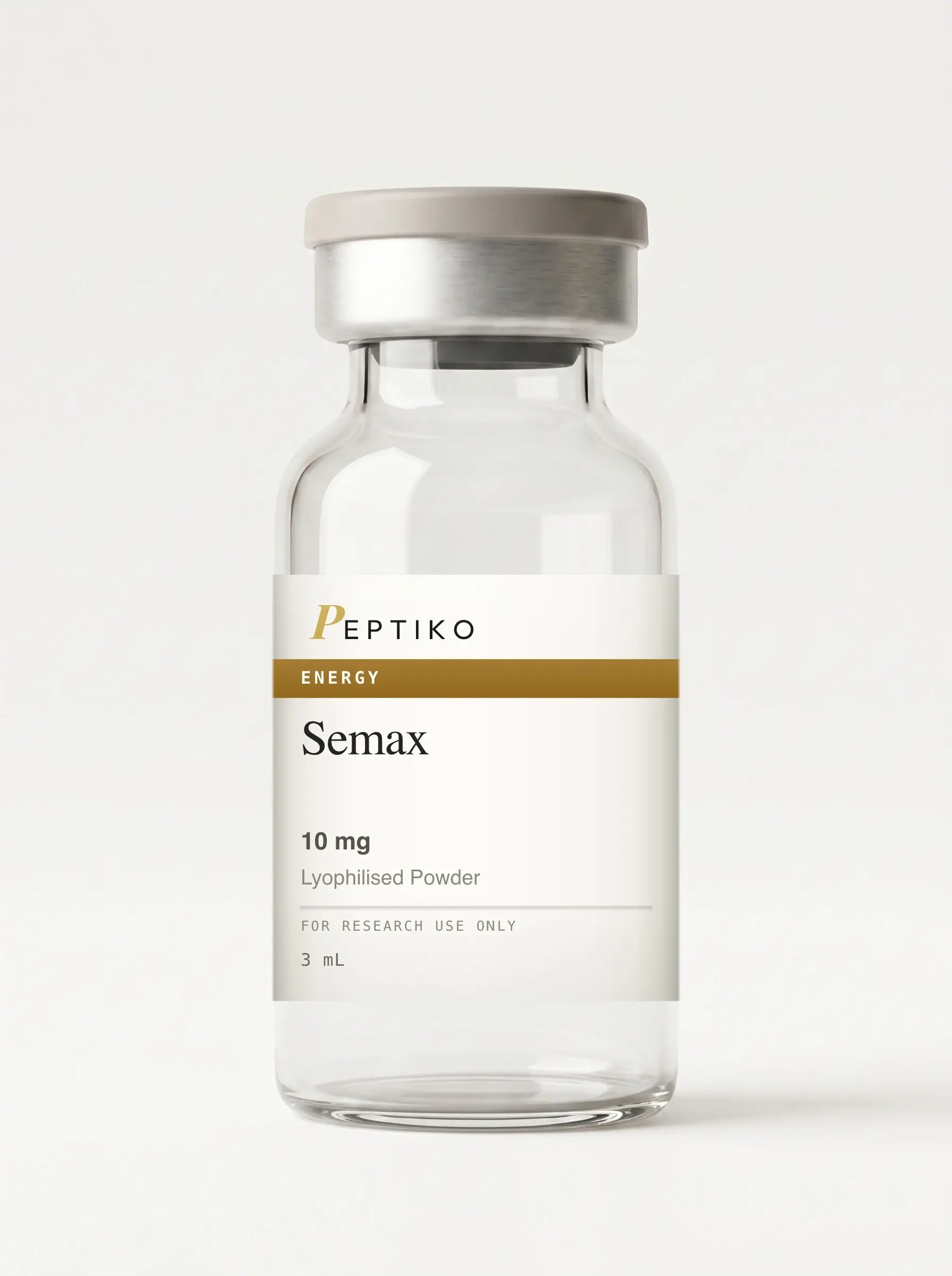
For in-vitro research and laboratory use only. Not for human or animal consumption.
- ≥99% purity by HPLC-MS · lot number on every vial
- Delivery in Moldova: 1 business day
- Cash to the courier on delivery
- + bacteriostatic water free with this order
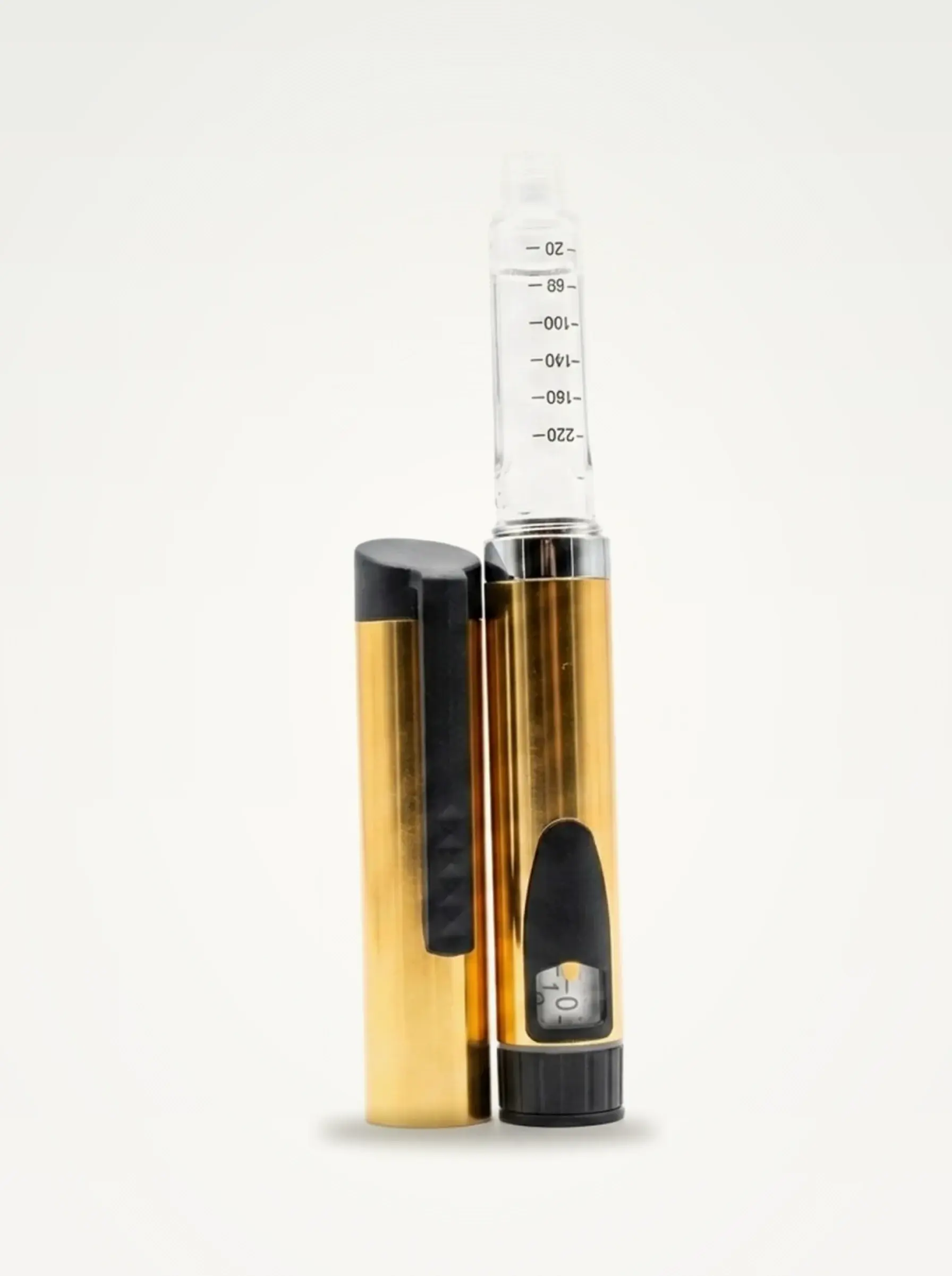 Injection Penreusable device · 800 lei
- Purity
- ≥99% HPLC-MS verified
- CAS
- 307297-39-8
- Storage
- Lyophilised: 2–8 °C (−20 °C for long-term). Reconstituted: 2–8 °C, ≤7 days.
- Formats
- 10mg vial
Courier delivery anywhere in Moldova. Lyophilized peptides travel at ambient temperature.
Epithalon (AEDG): telomeres and telomerase explained →Overview
In published human cell-culture work, Epithalon has been reported to activate telomerase — the enzyme that rebuilds the protective caps on the ends of chromosomes — which is why it became a landmark compound in the longevity literature. A four-amino-acid peptide modelled on a pineal-gland substance, it is supplied as a reference reagent for telomere and circadian-rhythm research; these findings trace largely to a single laboratory and have not been widely replicated.
Mechanism
Epithalon (Epitalon, AEDG) is a synthetic tetrapeptide, Ala-Glu-Asp-Gly, assembled from the amino-acid composition of Epithalamin — a bovine pineal-gland extract — and only afterwards identified in pineal polypeptide complex solution. Two of its four residues are acidic (Glu, Asp) and the other two are the smallest available (Ala, Gly), so the molecule is short and strongly polar. Twenty-five years of in vitro, in vivo and in silico work describe two largely separate strands of signal. The first is genomic: in one telomerase-negative human fetal fibroblast culture the peptide is reported to induce expression of the telomerase catalytic subunit, the appearance of enzymatic activity and telomere elongation, which the authors suggest may be due to reactivation of the telomerase gene in somatic cells. The second is neuroendocrine: reported influence on melatonin synthesis in the pineal axis, on interleukin-2 mRNA and thymocyte mitogenic activity, and on the activity of several enzymes including AChE and BuChE, with antioxidant, neuroprotective and antimutagenic effects that reviewers ascribe to both specific and non-specific mechanisms. The 2025 review is explicit on two points: it is not established whether these are the whole of the mechanism, and physico-chemical and structural characterisation of the molecule itself remains sparse next to the volume of biological reporting.
Molecular identity
- Sequence
- Ala-Glu-Asp-Gly
- Formula
- C14H22N4O9
- Molecular weight
- 390.35 g/mol
- CAS
- 307297-39-8
- PubChem CID
- 219042
What it acts on
- Telomerase and its catalytic subunit — in telomerase-negative human fetal fibroblasts the cited work reports induced expression of the catalytic subunit, appearance of enzymatic activity and telomere elongation, which the authors suggest may be due to reactivation of the telomerase gene in somatic cells.
- Melatonin synthesis in the pineal axis — the 2025 review describes a direct influence on melatonin production, and a second review groups the peptide with compounds said to act on circadian and mitochondrial regulators.
- Interleukin-2 transcription and thymocyte mitogenic activity — the review literature reports altered IL-2 mRNA levels and modulated mitogenic activity of murine thymocytes, the immune arm of the described profile.
- Cholinesterases — AChE and BuChE are listed among the enzymes whose activity the review reports as enhanced, alongside telomerase itself; how a four-residue peptide reaches enzymes this unrelated is not resolved there.
- HER-2/neu expression — in the transgenic mouse study the authors attribute the reduced tumour burden probably to suppression of HER-2/neu expression; this is offered as an interpretation, not as a measured endpoint of that report.
What the studies report
Each item below summarises the paper it is numbered to, written from that paper's own abstract. The badge says how the evidence was produced.
- 1.
A 2026 narrative review of therapeutic peptides in orthopaedics. It reports no new data on this compound: it places Epithalon alongside delta sleep-inducing peptide and pinealon as agents said to target circadian and mitochondrial regulators, within a broader map of PI3K/Akt, mTOR, MAPK, TGF-β and AMPK signalling. The review's own conclusion is the relevant part — preclinical studies look promising, but clinical trials are currently lacking.
- 2.reviewInt J Mol Sci (2025)
The most comprehensive source in this set: a 2025 review in Int J Mol Sci covering 25 years of in vitro, in vivo and in silico work. It records the peptide's derivation from Epithalamin and the reported effects on melatonin synthesis, IL-2 mRNA levels, murine thymocyte mitogenic activity and the activity of AChE, BuChE and telomerase, framed as a geroprotective and neuroendocrine profile arising from both specific and non-specific mechanisms. The authors state directly that it remains uncertain whether these are the sole mechanisms of action, and that physico-chemical and structural investigation of the peptide is quite limited next to the pharmacodynamic literature.
- 3.animal modelBull Exp Biol Med (2002)
A lifespan study in female FVB/N mice transgenic for HER-2/neu, a mammary-tumour model. Treated animals showed a 13.5% increase in mean and 13.9% in maximum lifespan, a 34.2% longer mean lifespan among animals free of neoplasms, a 3.7-fold increase in the number of mice developing no mammary tumours, and fewer lung metastases and multiple tumours. The limits are structural: one strain, one sex, one transgenic background, and the mechanism the authors propose — suppression of HER-2/neu expression — is stated as probable rather than demonstrated in this report.
- 4.in vitroBull Exp Biol Med (2003)
The primary telomerase report, and a very short one. In telomerase-negative human fetal fibroblast culture, addition of the peptide induced expression of the catalytic subunit, enzymatic activity of telomerase and telomere elongation. It is a brief communication in a single cell type, with no replication described in the abstract, and the conclusion it draws — the possibility of prolonging the life span of a cell population and of the whole organism — is the authors' extrapolation, not something the experiment measured.
Used in research on
What this does not establish
The two primary experiments in this reference set are a single brief in-vitro report in one human fetal fibroblast culture and a single lifespan study in one transgenic mouse strain; the other two sources are reviews — the 2025 one restates this material, the orthopaedic one only lists the compound among others. There are no controlled human trials — the orthopaedic review says plainly that clinical trials are lacking — and the 2025 review states that it is not established whether the described mechanisms are the only ones, and that physico-chemical and structural characterisation of the peptide itself is thin. No independent replication of the telomerase result appears among these sources.
Research applications
In vitro, Epithalon serves as a reference tetrapeptide (Ala-Glu-Asp-Gly) for studying telomerase-activity and telomere-maintenance pathways: telomerase-activity assays and telomere-length readouts in human somatic cell cultures, replicative-senescence and cell-division models, and circadian-rhythm gene-expression work in which melatonin- and cortisol-related signalling is profiled. Modelled on a pineal-gland substance, it is used as a comparator compound in telomere, circadian-rhythm and cellular-ageing research rather than as a settled result, since much of the underlying literature traces to a single laboratory and has not been widely replicated.
Reconstitution
Supplied lyophilised. For laboratory preparation, reconstitute the lyophilised powder with sterile bacteriostatic water to a working stock, keep the reconstituted solution at 4 degrees C, and prepare assay dilutions in the buffer specified by your protocol. For in-vitro research use only, not for human or animal administration.
Storage & handling
Lyophilised: 2–8 °C (−20 °C for long-term). Reconstituted: 2–8 °C, ≤7 days.
Research literature
Selected peer-reviewed literature describing this compound. Peptiko supplies peptides for in-vitro research; these papers characterise the compound, not this product.
- 1.Therapeutic Peptides in Orthopaedics: Applications, Challenges, and Future Directions. J Am Acad Orthop Surg Glob Res Rev (2026)
- 2.Overview of Epitalon-Highly Bioactive Pineal Tetrapeptide with Promising Properties. Int J Mol Sci (2025)
- 3.Epithalon decelerates aging and suppresses development of breast adenocarcinomas in transgenic her-2/neu mice. Bull Exp Biol Med (2002)
- 4.Epithalon peptide induces telomerase activity and telomere elongation in human somatic cells. Bull Exp Biol Med (2003)
Frequently asked questions
What is Epithalon?
Epithalon is a synthetic tetrapeptide (Ala-Glu-Asp-Gly) modelled on a pineal-gland substance, supplied as a reference reagent for in-vitro telomere and circadian-rhythm research.
Is it for human use?
No. It is a research-use-only reagent for in-vitro laboratory study. It is not a pharmaceutical, supplement, or medicine, and not for human or veterinary use.
How is purity verified?
Purity is at least 99% by HPLC-MS.
What is the CAS number?
CAS 307297-39-8.
Do you ship from Moldova?
Yes. We deliver by courier anywhere in Moldova, one business day after we confirm the order, and you pay the courier in cash. Lyophilized peptides travel at ambient temperature: a freeze-dried cake needs no cold chain.
Reviews
Be the first to review Epithalon.
Order on Telegram, or add it to the cart and check out on the site. Cash to the courier on delivery — nothing is paid in advance.