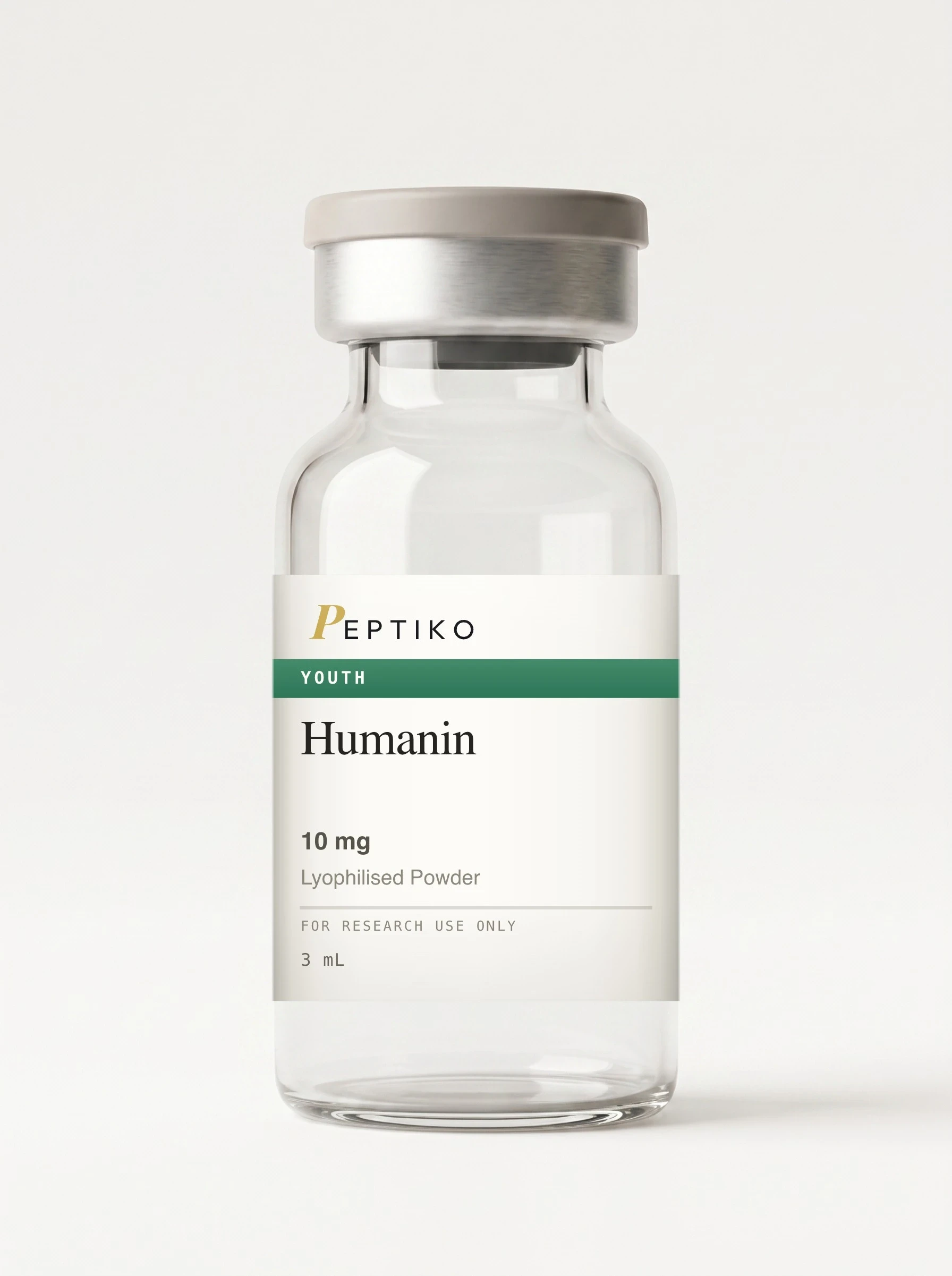
Humanin
Mitochondrial-derived 24-residue peptide encoded in the MT-RNR2 region. Studied for cytoprotective and cellular-stress-response pathways — a longevity-focused research reagent.
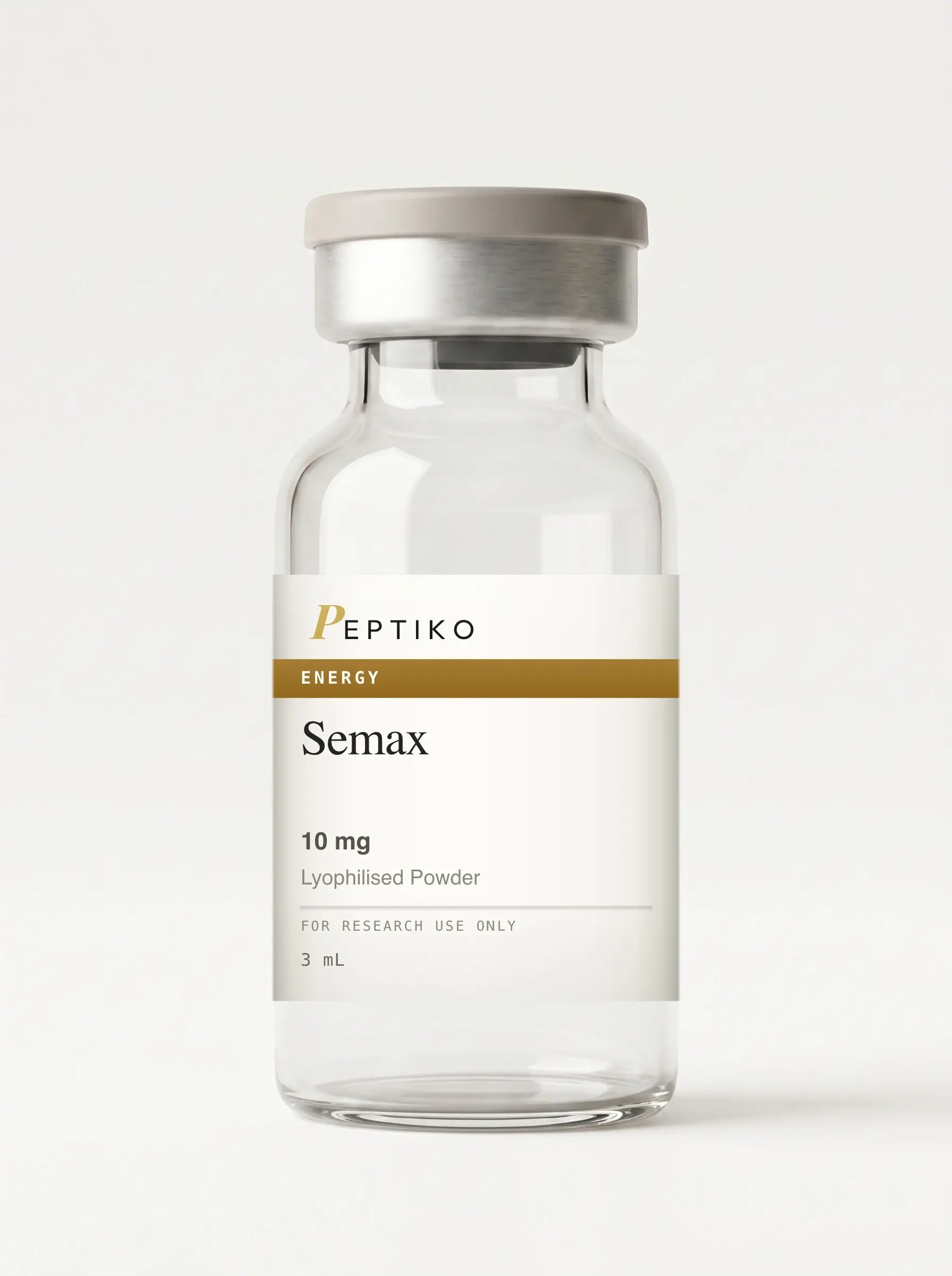
For in-vitro research and laboratory use only. Not for human or animal consumption.
- ≥99% purity by HPLC-MS · lot number on every vial
- Delivery in Moldova: 1 business day
- Cash to the courier on delivery
- + bacteriostatic water free with this order
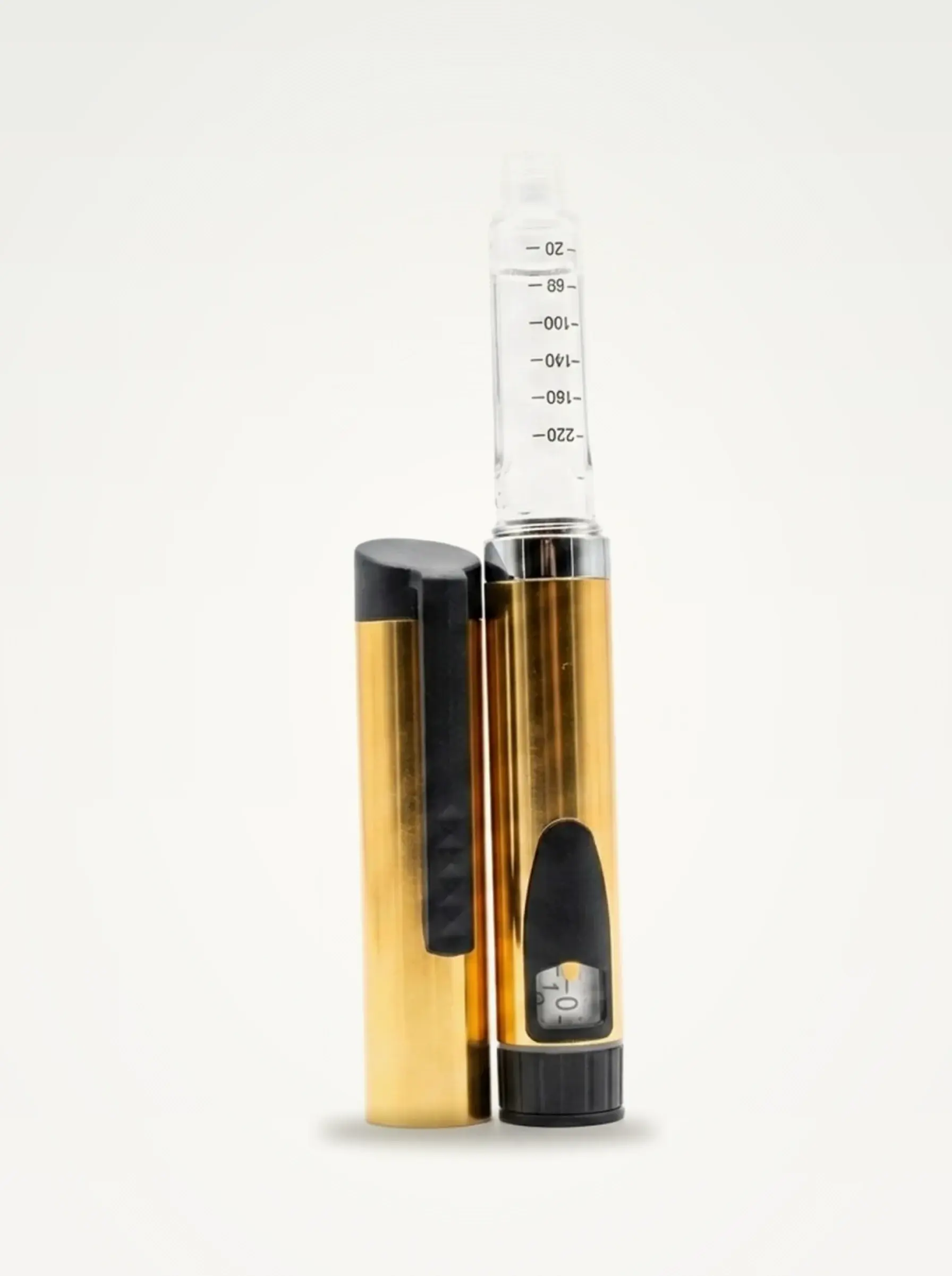 Injection Penreusable device · 800 lei
- Purity
- ≥98% HPLC-MS verified
- CAS
- 330936-69-1
- Storage
- Lyophilised: 2–8 °C, protect from light (−20 °C for long-term, ≥24 months). Reconstituted: 2–8 °C.
- Formats
- 5mg vial · 10mg vial
Courier delivery anywhere in Moldova. Lyophilized peptides travel at ambient temperature.
Overview
Encoded inside the mitochondria's own DNA rather than in the cell nucleus, humanin is one of the protective peptides the body makes for itself — and laboratories study it for keeping the brain and metabolism resilient as the body ages. In experiments it has shielded neurons from the kind of damage linked to Alzheimer's disease and improved how cells handle blood sugar. Its natural levels run higher in exceptionally long-lived animals and people, which is why it anchors so much aging research.
Mechanism
Humanin is a 24-residue peptide encoded not in the cell nucleus but in the mitochondrial genome — the first such peptide identified in over three decades and the founding member of the class now called mitochondrial-derived peptides. The gene was found in brain tissue from an Alzheimer's disease patient and the peptide was characterised from the outset as an antagonising factor against neuronal death induced by Alzheimer-associated insults, so the mechanism written up in the reviews is described as a survival signal rather than a growth signal. The cited literature places it on two levels at once: inside the cell, as a cytoprotective factor preserving mitochondrial function and cell viability under stress and senescence; outside it, through multiple extracellular anti-cell-death actions and through the somatotropic axis, where it binds IGFBP-3 and lowers circulating IGF-I while IGF-I in turn appears to regulate peptide levels. Regulation of the cellular response to oxidative stress and apoptosis is also reported in ovarian and testicular tissue, chiefly when the body is in an abnormal state. Mechanistic detail is left explicitly open in three of the four reviews — reproduction, the IGF-I interaction and senescence — and none of the four identifies a receptor-level mechanism; one systematic review also describes the peptide in the opposite direction — as promoting the death of damaged cells — so the direction of the signal is not settled within this reference set.
Molecular identity
- Sequence
- Met-Ala-Pro-Arg-Gly-Phe-Ser-Cys-Leu-Leu-Leu-Leu-Thr-Ser-Glu-Ile-Asp-Leu-Pro-Val-Lys-Arg-Arg-Ala
- Formula
- C119H204N34O32S2
- Molecular weight
- 2687.2 g/mol
- CAS
- 330936-69-1
- PubChem CID
- 16131438
What it acts on
- IGFBP-3 and the IGF-I axis — the peptide is reported to bind IGFBP-3 and to lower circulating IGF-I, while IGF-I in turn appears to regulate peptide levels; the review authors state the mechanism of this reciprocal regulation has still to be elucidated.
- Cell-death signalling — described in the founding literature as an antagonising factor against neuronal death induced by Alzheimer-associated insults, working through multiple intracellular and extracellular anti-cell-death actions rather than a single receptor event.
- Amyloid-associated pathomechanisms — the same review reports antagonism of several Alzheimer-associated pathomechanisms, amyloid plaque accumulation among them.
- Oxidative-stress and apoptosis pathways in ovary and testis — a review reports modulation of several signalling pathways in gonadal tissue, chiefly when the body is in an abnormal state.
- Mitochondrial function under senescence — as a peptide encoded by mitochondrial DNA it is described as cytoprotective, preserving mitochondrial function and cell viability in stressed and senescent cells.
What the studies report
Each item below summarises the paper it is numbered to, written from that paper's own abstract. The badge says how the evidence was produced.
- 1.
A review of the comparatively thin reproductive literature. In ovary and testis the peptide is reported to regulate the cellular response to oxidative stress and apoptosis through several signalling pathways, chiefly when the body is in an abnormal state. The authors themselves note that relatively few studies have addressed reproduction, that the detailed mechanism needs urgent exploration, and that the applications they raise — male and female infertility, male contraception, glucose metabolism in polycystic ovary syndrome — are proposed directions for further study rather than results.
- 2.reviewBiology (Basel) (2023)
A systematic review of the link between cellular senescence, this peptide, aging and disease. It presents the peptide as encoded by mitochondrial DNA and cytoprotective — preserving mitochondrial function and cell viability under stress and senescence — and discusses cardiovascular disease, neurodegeneration and cancer as the contexts of interest. The abstract is internally inconsistent: the same passage also describes the peptide as promoting the death of damaged or malfunctioning cells and contributing to inflammation. The authors state that neither senescence nor the peptide's mechanisms have been fully clarified and call for further research.
- 3.
A narrative review written by the group that discovered the peptide, retracing the identification of the gene in the brain of an Alzheimer's disease patient — where it was found as an antagonising factor against neuronal cell death induced by disease-associated insults — and summarising what has accumulated since. It reports multiple intracellular and extracellular anti-cell-death actions and antagonism of Alzheimer-associated pathomechanisms including amyloid plaque accumulation. It contains no new experiments, and the authors present it as a perspective on a field they themselves call new.
- 4.
A review of the functional interface with IGF-I. It records that the authors' own laboratory found the peptide binds IGFBP-3, that later work found it decreases circulating IGF-I, and that IGF-I appears to regulate peptide levels in return. Neuroprotection is named as the original observation, with stroke, cardiovascular and cancer models added since. The review states directly that the exact mechanism by which the peptide and IGF-I regulate each other still needs to be elucidated.
Used in research on
What this does not establish
Every source cited here is a review: this set contains no primary experiment and no controlled human trial. The work the reviews summarise is cell-culture and animal research, and the reviews name their own gaps — in reproduction the detailed mechanism is said to need urgent exploration, the exact basis of the IGF-I interaction still needs to be elucidated, and the senescence review states that neither senescence nor the peptide's mechanisms are fully clarified while describing the effect in two opposite directions, protective in one sentence and pro-death in another. The therapeutic applications discussed in these papers are proposals for future study, not established findings.
Research applications
In vitro, humanin is used as a reference mitochondrial-derived peptide (MDP) for studying cytoprotective and cellular-stress-response pathways. Common research contexts include apoptosis and cell-survival assays, cultured-neuron models exposed to amyloid-beta, mitochondrial-signalling readouts, and insulin- and glucose-signalling assays in cell lines. It also serves as a reference point in studies of its interfaces with IGF-I signalling and in aging- and longevity-focused cell-based research, where it is frequently benchmarked as one of the first-described mitochondrial-derived peptides. Framed strictly as a reagent, it is used to characterise these pathways in vitro rather than to produce any biological outcome.
Reconstitution
Supplied lyophilised. For laboratory preparation, reconstitute the lyophilised powder with sterile bacteriostatic water to a working stock, keep the reconstituted solution at 4 degrees C, and prepare assay dilutions in the buffer specified by your protocol. For in-vitro research use only, not for human or animal administration.
Storage & handling
Lyophilised: 2–8 °C, protect from light (−20 °C for long-term, ≥24 months). Reconstituted: 2–8 °C.
Research literature
Selected peer-reviewed literature describing this compound. Peptiko supplies peptides for in-vitro research; these papers characterise the compound, not this product.
- 1.The role of humanin in the regulation of reproduction. Biochim Biophys Acta Gen Subj (2022)
- 2.Humanin and Its Pathophysiological Roles in Aging: A Systematic Review. Biology (Basel) (2023)
- 3.Humanin and Alzheimer's disease: The beginning of a new field. Biochim Biophys Acta Gen Subj (2022)
- 4.Humanin: Functional Interfaces with IGF-I. Growth Horm IGF Res (2016)
Frequently asked questions
What is Humanin?
Humanin (HN) is a 24-residue mitochondrial-derived peptide encoded in the MT-RNR2 region — one of the first mitochondrial-derived peptides (MDPs) described. It is supplied as a research-use-only reagent studied in vitro for cytoprotective and cellular-stress-response pathways, with a longevity-research focus.
Is it for human use?
No. It is a research-use-only reagent for in-vitro laboratory study. It is not a pharmaceutical, supplement, or medicine, and not for human or veterinary use.
How is purity verified?
Purity is at least 99% by HPLC-MS.
What is the CAS number?
CAS 330936-69-1.
Do you ship from Moldova?
Yes. We deliver by courier anywhere in Moldova, one business day after we confirm the order, and you pay the courier in cash. Lyophilized peptides travel at ambient temperature: a freeze-dried cake needs no cold chain.
Reviews
Be the first to review Humanin.
Order on Telegram, or add it to the cart and check out on the site. Cash to the courier on delivery — nothing is paid in advance.