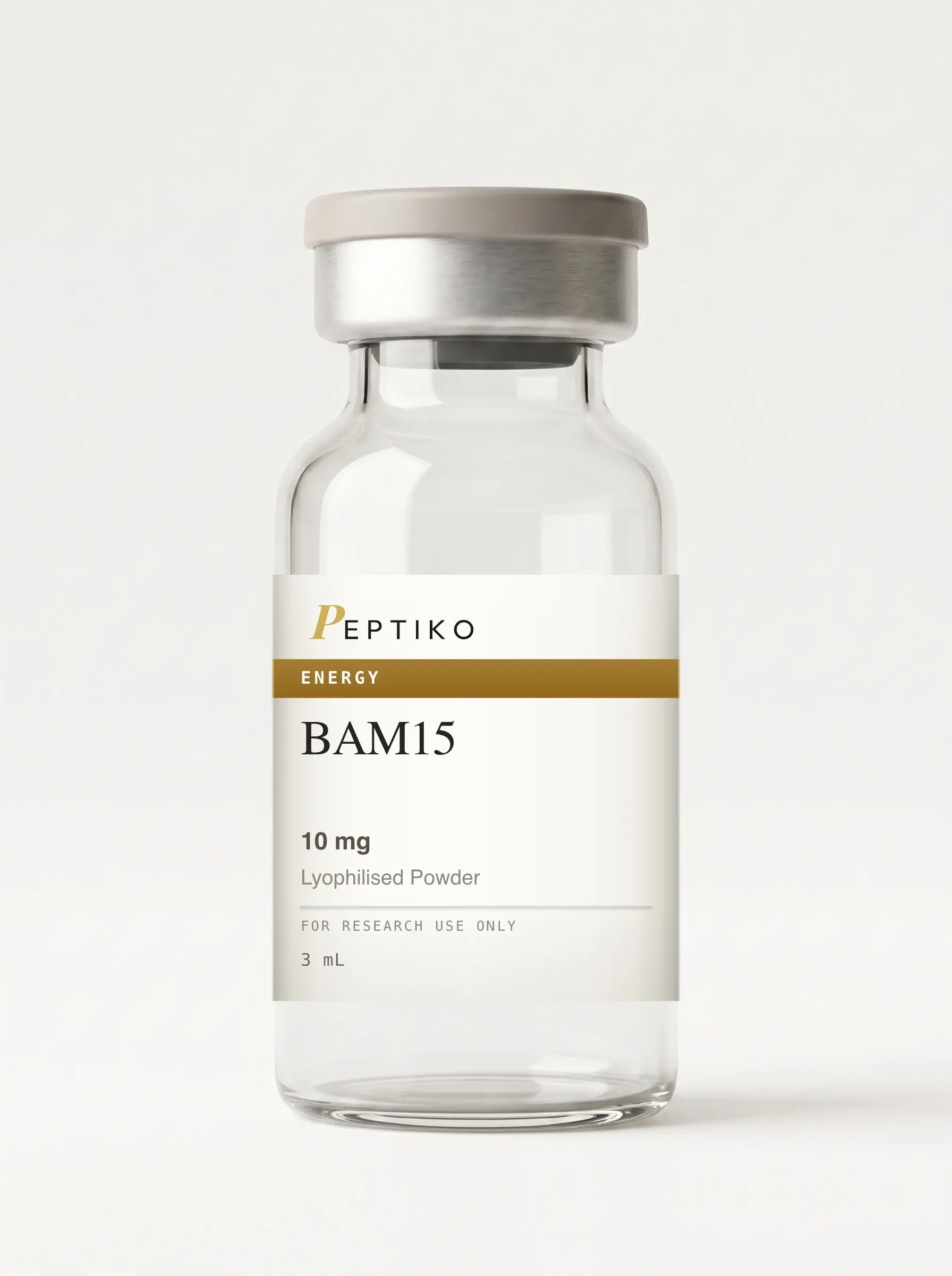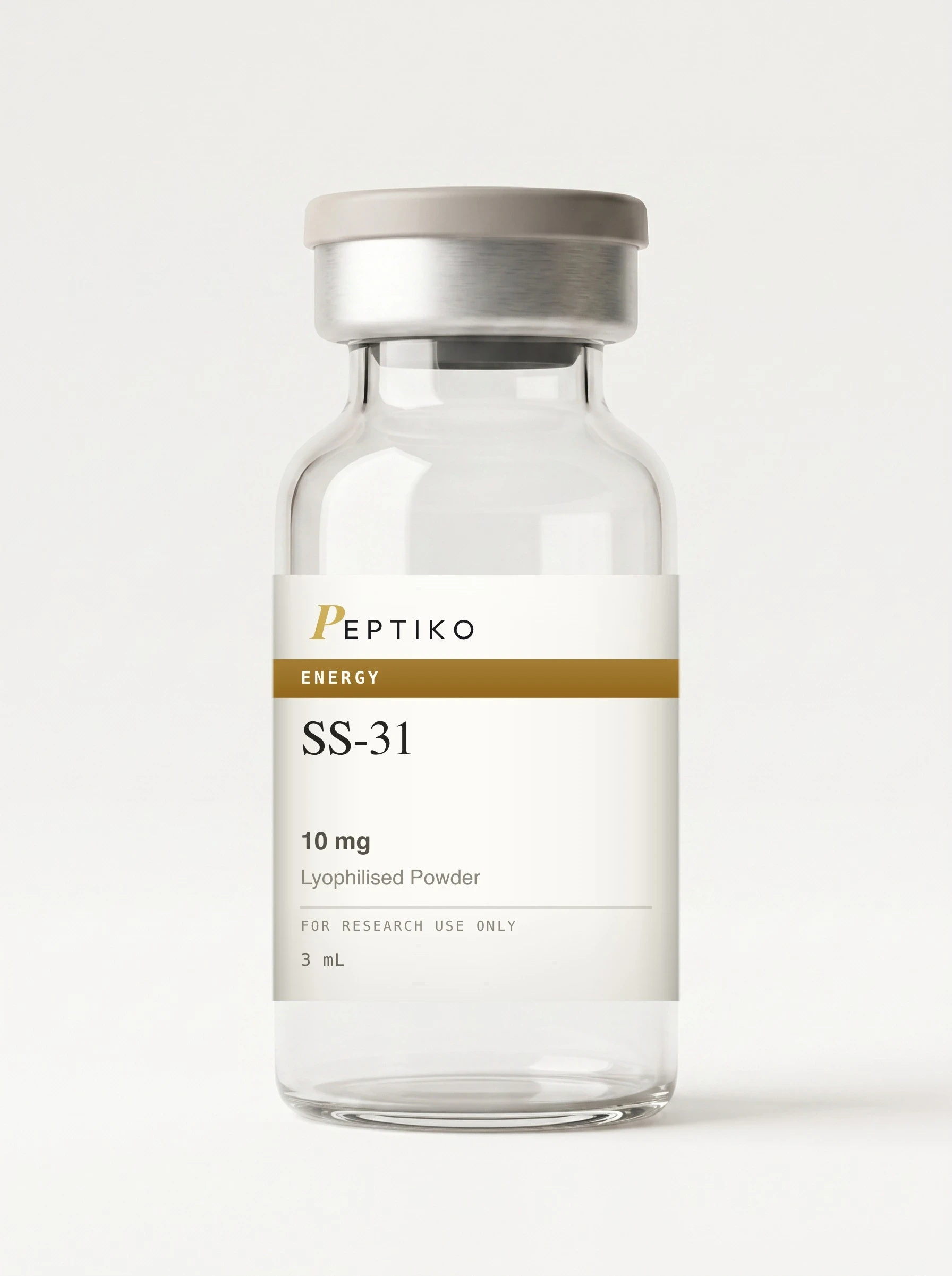
SS-31 (Elamipretide)
Mitochondria-targeting tetrapeptide (Elamipretide). Studied for cardiolipin-binding and mitochondrial-bioenergetics pathways — a cell-penetrating research peptide.
Pay on deliveryDelivered in 1 business dayFree from 1000 lei
For in-vitro research and laboratory use only. Not for human or animal consumption.
- ≥99% purity by HPLC-MS · lot number on every vial
- Delivery in Moldova: 1 business day
- Cash to the courier on delivery
- + bacteriostatic water free with this order
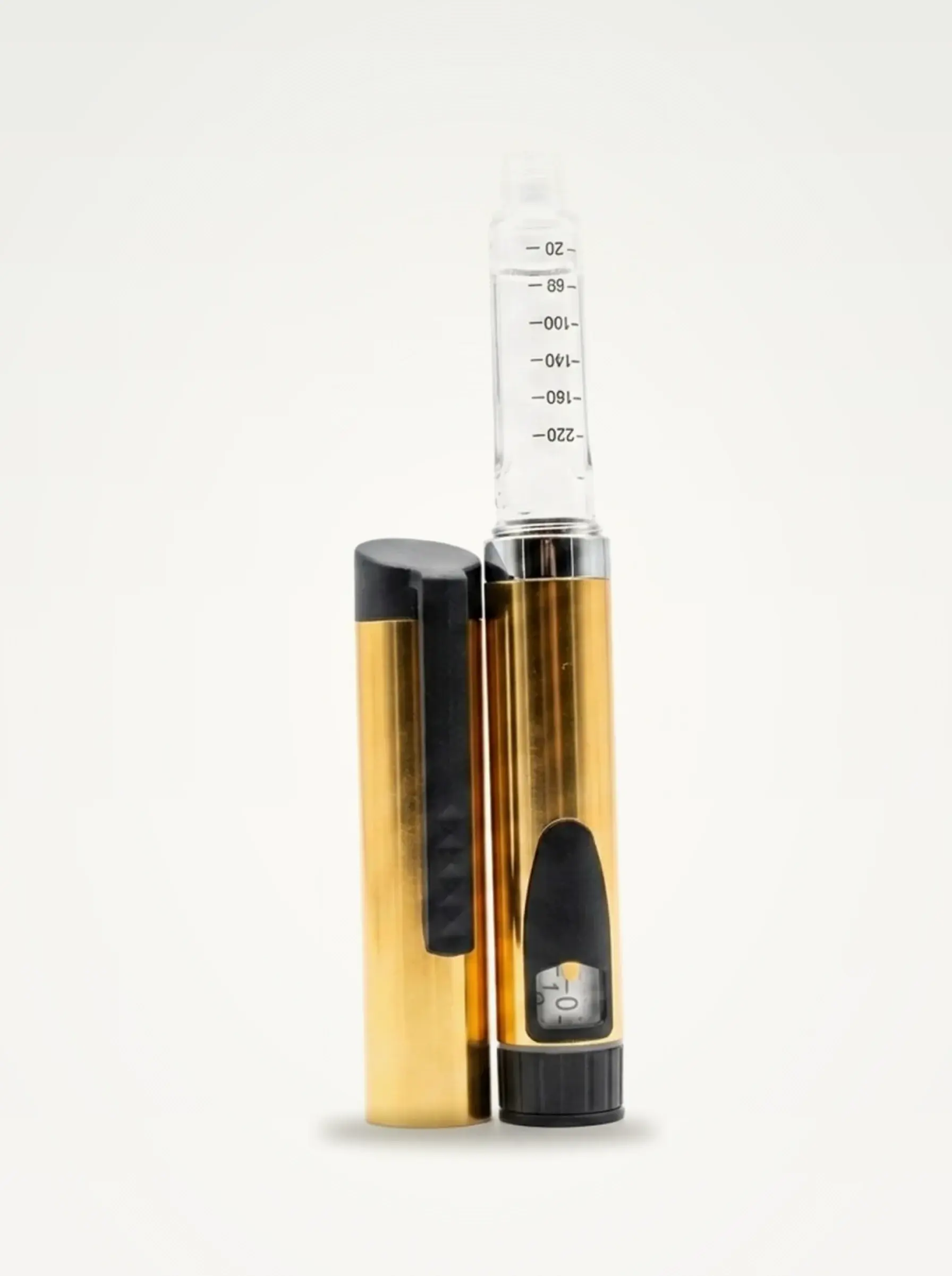 Injection Penreusable device · 800 lei
- Purity
- ≥99% HPLC-MS verified
- CAS
- 736992-21-5
- Storage
- Lyophilised: 2–8 °C, protect from light (−20 °C for long-term, ≥24 months). Reconstituted: 2–8 °C.
- Formats
- 10mg vial
Courier delivery anywhere in Moldova. Lyophilized peptides travel at ambient temperature.
Longevity peptides: SS-31, MOTS-c and Epithalon →Overview
SS-31, also known as elamipretide, works right where the body makes its energy — the mitochondria, the tiny power plants inside every cell. Because tired, damaged mitochondria sit behind so much lost energy and weakening heart and muscle tissue, laboratories study this peptide as a way to restore cellular energy, stamina and endurance. In research it has been explored mainly for protecting the heart and muscles, and it has been carried into human clinical trials in people whose mitochondria are failing.
Mechanism
SS-31, catalogued in the literature as elamipretide, MTP-131 and Bendavia, is a water-soluble aromatic-cationic tetrapeptide with an amidated C-terminus; alternating aromatic and basic residues give it a net positive charge, and the reviews attribute to that structure its uptake into a wide range of cell types, its passage across the outer mitochondrial membrane, and its transient localisation to the inner mitochondrial membrane. Its target there is not a receptor but a lipid — selective binding to cardiolipin, the signature phospholipid of the inner membrane that shapes cristae. From that single anchoring event the reported cascade is structural before it is chemical: cristae architecture is stabilised, excessive reactive-oxygen-species formation and the accompanying oxidative stress fall, and ATP output rises. Because the anchor is a lipid common to every mitochondrion rather than a tissue-restricted receptor, the same mechanism is invoked across tissues with nothing else in common — cardiac muscle, skeletal muscle, retina, hippocampus — which is why the cited literature spans heart failure, ischaemia–reperfusion injury, muscle atrophy, neurodegeneration and a rare X-linked disorder of cardiomyopathy and muscle weakness, and why the peptide functions in the laboratory as a probe of mitochondrial bioenergetics rather than as a pathway-specific ligand.
Molecular identity
- Sequence
- D-Arg-Dmt-Lys-Phe-NH₂ (Dmt = 2′,6′-dimethyltyrosine; C-terminal amide)
- Formula
- C32H49N9O5
- Molecular weight
- 639.8 g/mol
- CAS
- 736992-21-5
- PubChem CID
- 11764719
What it acts on
- Cardiolipin in the inner mitochondrial membrane — the cited reviews describe selective binding to this phospholipid as the primary molecular event, with no classical receptor involved.
- Cristae architecture and oxidative phosphorylation — binding is reported to stabilise cristae structure and to raise ATP production across the preclinical models the reviews collect.
- Mitochondrial reactive-oxygen-species production — the peptide is described as a mitochondrion-targeted antioxidant that inhibits excessive ROS formation and so lowers oxidative stress in the cited models.
- BDNF signalling and hippocampal synaptic proteins — in the cited mouse endotoxin model, treatment is reported to reverse the loss of synaptic-signalling proteins and to increase synaptic structural complexity.
What the studies report
Each item below summarises the paper it is numbered to, written from that paper's own abstract. The badge says how the evidence was produced.
- 1.reviewInt J Mol Sci (2025)
A 2025 review of structure, mechanism of action and reported therapeutic potential. It attributes the mitochondrial selectivity to the peptide's unusual structure and describes cardiolipin binding as the event behind cristae stabilisation, reduced oxidative stress and increased ATP production, then summarises preclinical models of heart failure, neurodegeneration, ischaemia–reperfusion injury, metabolic syndromes and muscle atrophy. The clinical programmes (PROGRESS-HF, TAZPOWER, MMPOWER-3, ReCLAIM) are named and glossed rather than analysed, and the review closes by listing long-term efficacy and safety among the things still to be investigated.
- 2.reviewDrugs (2026)
A development-milestone summary in Drugs. It records that in September 2025 the compound received accelerated approval in the USA to improve muscle strength in adult and paediatric patients with Barth syndrome above a specified body-weight threshold — the first disease-specific approval for that ultra-rare X-linked recessive disorder — and that phase III development continues in dry age-related macular degeneration and in mitochondrial myopathies. It is a regulatory history rather than a trial report: it carries no endpoint data of its own, the approval it describes is an accelerated one, and the phase III programmes it names are unfinished.
- 3.reviewHeart Fail Rev (2022)
A 2022 review in Heart Failure Reviews focused on the cardiomyopathy of Barth syndrome, a rare X-linked disease with skeletal-muscle weakness, growth delay and cyclic neutropenia. It describes the peptide as a water-soluble aromatic-cationic tetrapeptide that penetrates cells readily and localises transiently to the inner mitochondrial membrane, and reports rapid improvement of mitochondrial bioenergetics and morphology in induced pluripotent stem cells derived from patients. Its central arguments — durability of effect after treatment stops, and gradual structural reverse remodelling of the failing left ventricle — are the authors' synthesis of data assembled across models rather than the output of one controlled study, and the review frames the field explicitly in terms of challenges as well as opportunities.
- 4.animal modelJ Neuroinflammation (2019)
The only primary study in this reference set. In mice given lipopolysaccharide to induce inflammation, the authors used the Morris water maze and contextual fear conditioning for hippocampus-related learning and memory, ELISA and molecular assays for mitochondrial function, oxidative stress and the inflammatory response, and TUNEL and Golgi staining for neural apoptosis and dendritic-spine density. Treated animals showed less mitochondrial dysfunction and oxidative stress, reversal of synaptic-signalling proteins and greater synaptic structural complexity via BDNF signalling, and better task performance. The authors state at the outset that the compound's effect on the cognitive sequelae of inflammatory and oxidative stress was unknown, and their extension to perioperative neurocognitive disorders is offered as a possibility rather than demonstrated — this is an acute rodent endotoxin model.
Used in research on
What this does not establish
Three of the four papers cited here are reviews; the only primary study is an acute endotoxin model in mice. Nothing in this set is the primary report of a controlled human trial — the large clinical programmes are named and glossed by the reviews but not analysed in them, and the 2025 review itself places long-term efficacy and safety among the open questions. The 2025 regulatory decision described in the literature is an accelerated approval restricted to a single ultra-rare genetic disorder, and it attaches to a licensed medicinal product manufactured and tested as such; it establishes nothing about a research reagent, and the phase III work in macular degeneration and mitochondrial myopathy is unfinished. No cited paper reports data in healthy subjects.
Research applications
In vitro, SS-31 (elamipretide) is used as a reference cell-penetrating tetrapeptide for studying mitochondrial-bioenergetics pathways. Because its positive charge lets it concentrate on the inner mitochondrial membrane and bind cardiolipin, it serves as a comparison compound in cardiolipin-binding assays, mitochondrial ATP-output measurements, reactive-oxygen-species (free-radical) production readouts, and membrane-stability panels. Laboratories apply it in cardiac, skeletal-muscle and ocular cell and tissue-model systems as a reference point in in-vitro studies of cellular-energy pathways at the level of the mitochondrion.
Reconstitution
Supplied lyophilised. For laboratory preparation, reconstitute the lyophilised powder with sterile bacteriostatic water to a working stock, keep the reconstituted solution at 4 degrees C, protect it from light, and prepare assay dilutions in the buffer specified by your protocol. For in-vitro research use only, not for human or animal administration.
Storage & handling
Lyophilised: 2–8 °C, protect from light (−20 °C for long-term, ≥24 months). Reconstituted: 2–8 °C.
Research literature
Selected peer-reviewed literature describing this compound. Peptiko supplies peptides for in-vitro research; these papers characterise the compound, not this product.
- 1.Elamipretide: A Review of Its Structure, Mechanism of Action, and Therapeutic Potential. Int J Mol Sci (2025)
- 2.Elamipretide: First Approval. Drugs (2026)
- 3.Elamipretide for Barth syndrome cardiomyopathy: gradual rebuilding of a failed power grid. Heart Fail Rev (2022)
- 4.Elamipretide (SS-31) improves mitochondrial dysfunction, synaptic and memory impairment induced by lipopolysaccharide in mice. J Neuroinflammation (2019)
Frequently asked questions
What is SS-31 (Elamipretide)?
SS-31 (elamipretide) is a positively charged, cell-penetrating tetrapeptide reference reagent that concentrates on the inner mitochondrial membrane and binds cardiolipin. It is studied in vitro as a reference point for mitochondrial-bioenergetics pathways — cardiolipin binding, ATP output and reactive-oxygen-species (free-radical) production.
Is it for human use?
No. It is a research-use-only reagent for in-vitro laboratory study. It is not a pharmaceutical, supplement, or medicine, and not for human or veterinary use.
How is purity verified?
Purity is at least 99% by HPLC-MS.
What is the CAS number?
CAS 736992-21-5.
Do you ship from Moldova?
Yes. We deliver by courier anywhere in Moldova, one business day after we confirm the order, and you pay the courier in cash. Lyophilized peptides travel at ambient temperature: a freeze-dried cake needs no cold chain.
Reviews
Be the first to review SS-31 (Elamipretide).
Order on Telegram, or add it to the cart and check out on the site. Cash to the courier on delivery — nothing is paid in advance.