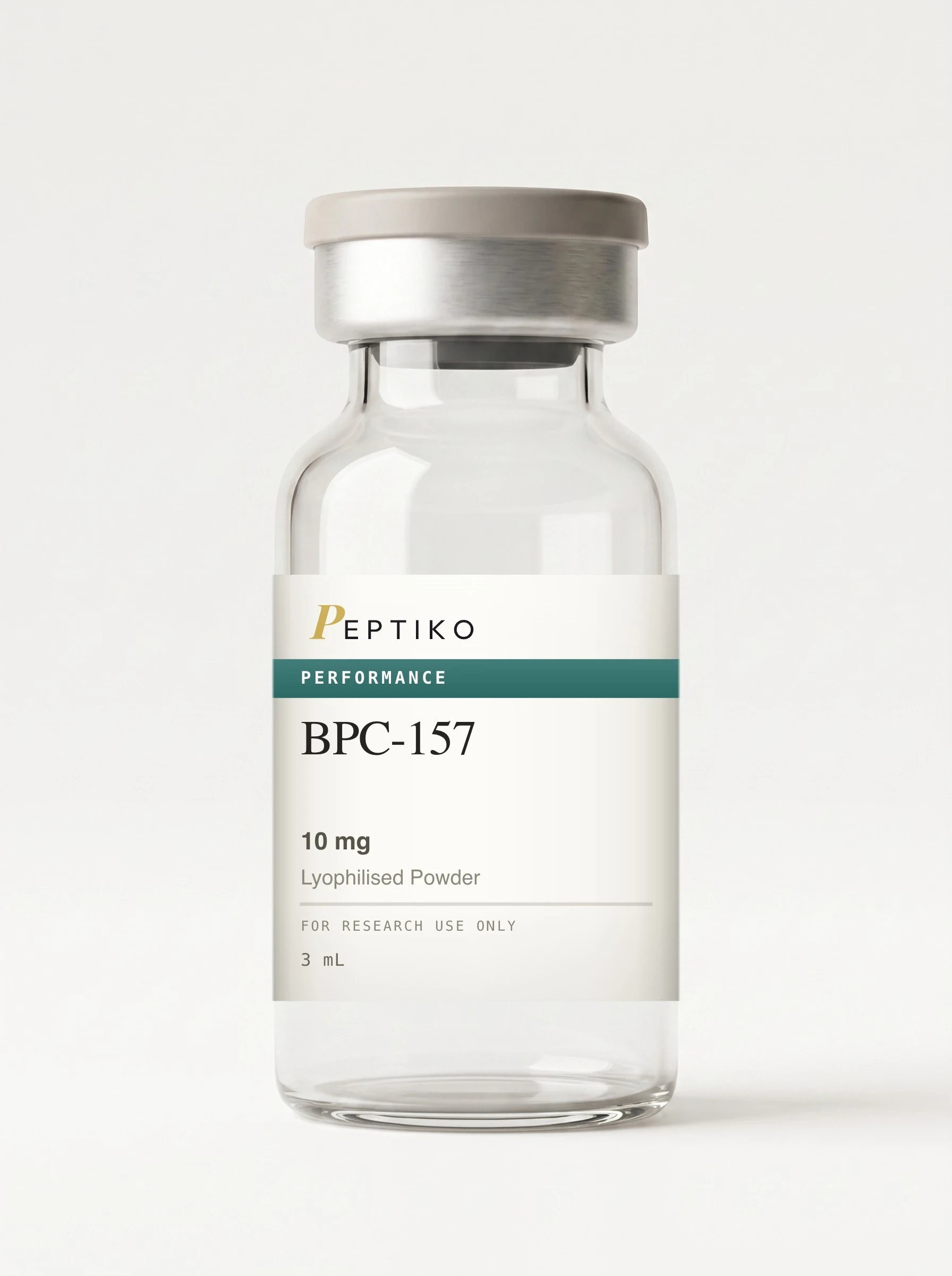
BPC-157
Found naturally in stomach secretions. Studied for tissue-repair and angiogenesis pathways.
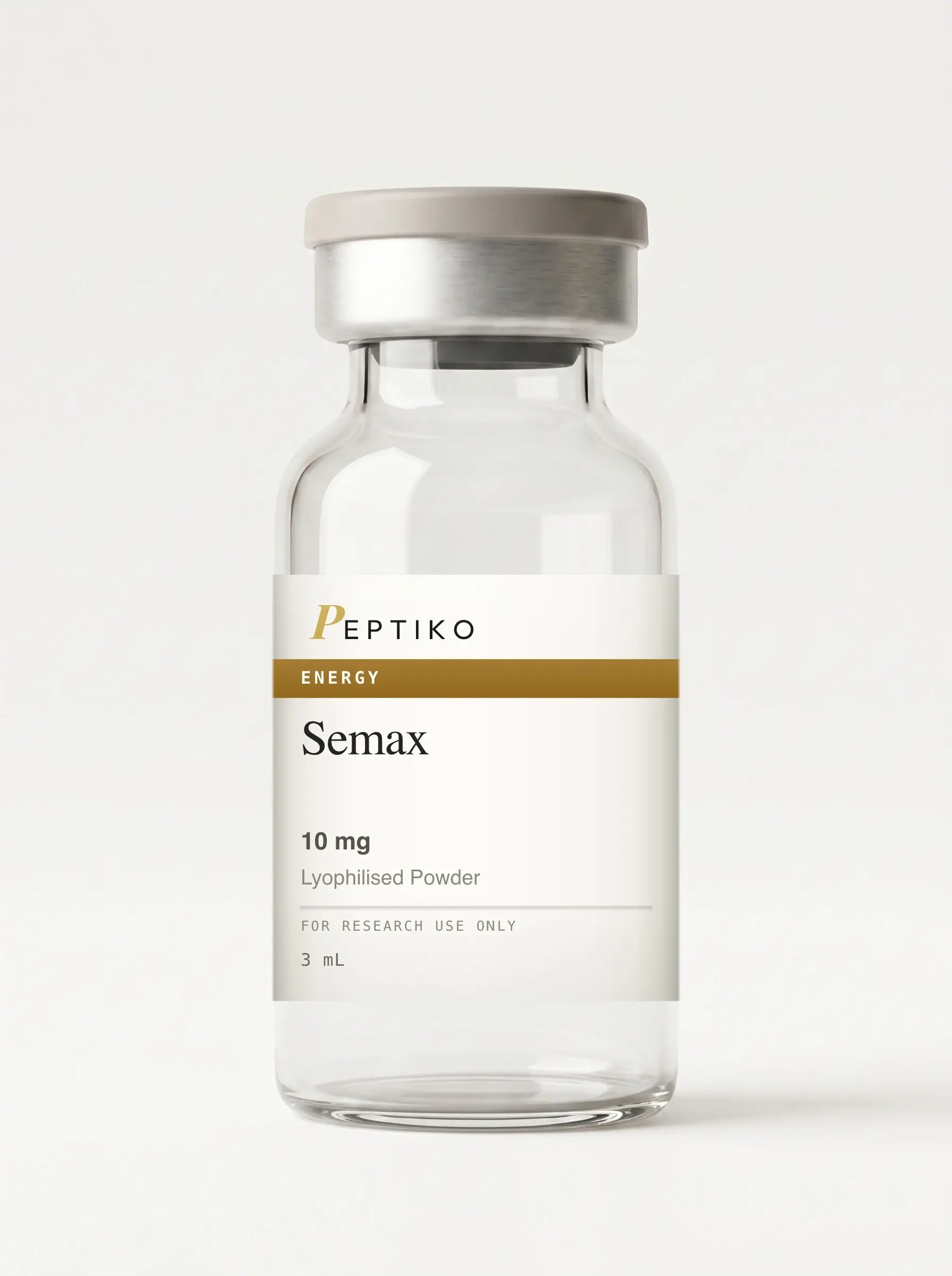
For in-vitro research and laboratory use only. Not for human or animal consumption.
- ≥99% purity by HPLC-MS · lot number on every vial
- Delivery in Moldova: 1 business day
- Cash to the courier on delivery
- + bacteriostatic water free with this order
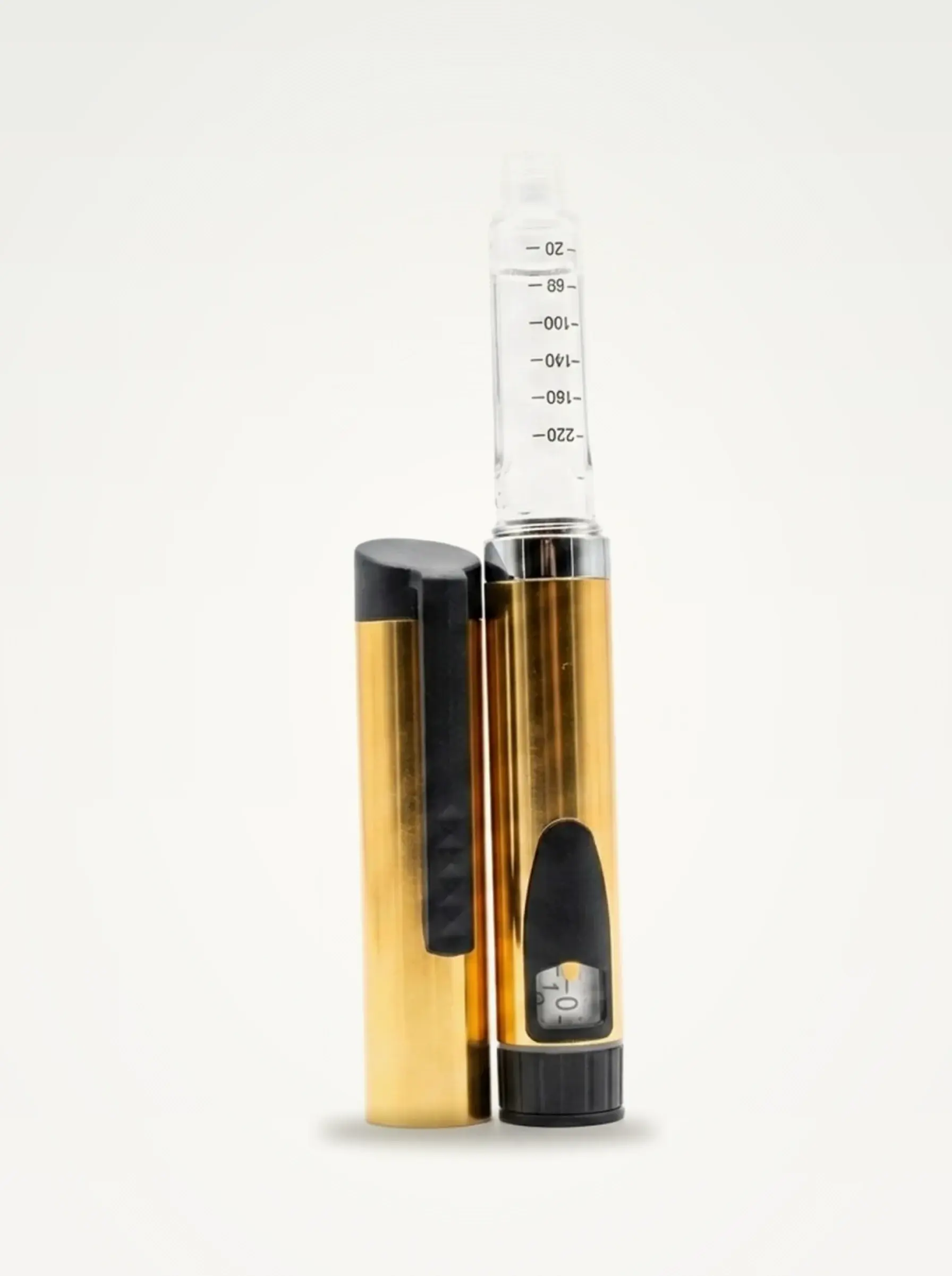 Injection Penreusable device · 800 lei
- Purity
- ≥99% HPLC-MS verified
- CAS
- 137525-51-0
- Storage
- Lyophilised: 2–8 °C, protect from light (−20 °C for long-term, ≥24 months). Reconstituted: 2–8 °C.
- Formats
- 10mg vial
Courier delivery anywhere in Moldova. Lyophilized peptides travel at ambient temperature.
BPC-157: what this peptide is and what is known →Overview
Derived from a protein the stomach naturally makes to protect its own lining, BPC-157 is one of the most-studied peptides in tissue-repair research. Laboratories investigate its role in tendon, muscle and joint repair models, in gastrointestinal-lining protection, and in wound-repair and angiogenesis research. Published work to date is confined to cell cultures and animal models, and Peptiko supplies it strictly as an in-vitro reference reagent.
Mechanism
BPC-157 is a 15-residue fragment of a protein found in human gastric juice. It is unusually stable in gastric acid, which is why it appears in the literature as a stable partial sequence rather than a designed analogue. Rather than binding one receptor, the published mechanism work describes it as acting on several repair-associated systems at once — angiogenic (VEGFR2), vasoactive (NO), and cytoskeletal (FAK–paxillin) — which is the reason review authors call it pleiotropic and also the reason a single clean mechanism has not been established.
Molecular identity
- Sequence
- Gly-Glu-Pro-Pro-Pro-Gly-Lys-Pro-Ala-Asp-Asp-Ala-Gly-Leu-Val
- Formula
- C62H98N16O22
- Molecular weight
- 1419.5 g/mol
- CAS
- 137525-51-0
- PubChem CID
- 9941957
What it acts on
- VEGFR2 signalling — the peptide is reported to drive VEGFR2 internalisation and downstream Akt/eNOS activation, the axis behind new vessel formation in the cited injury models.
- Nitric oxide system — described as modulating both NO release and NO synthase blockade, which is how the same peptide reads as protective across otherwise unrelated organ models.
- Growth-factor and FAK–paxillin pathways in fibroblasts and tendon explants, reported as the route to accelerated tendon and ligament outgrowth in vitro.
- Gut–brain axis and dopaminergic/serotonergic systems, the basis of the CNS-model literature.
What the studies report
Each item below summarises the paper it is numbered to, written from that paper's own abstract. The badge says how the evidence was produced.
- 1.
A 2025 literature and patent review across preclinical models of tissue injury, inflammatory bowel disease and CNS disorders. The authors describe a favourable reported safety profile with few adverse effects, and state plainly that the compound has not been approved by the FDA or other regulators because comprehensive clinical studies confirming benefit in humans are absent.
- 2.reviewHSS J (2025)
A systematic review from an orthopaedic sports-medicine perspective. Preclinical work is reported as showing healing potential in fractures, tendon ruptures, ligament tears and muscle injury. The same review records that the compound lacks FDA approval and that its use is banned in professional sport.
- 3.animal modelCell Tissue Res (2019)
A critical review of soft-tissue healing work — tendon, ligament and skeletal muscle. It reports consistently positive healing effects across injury types, and states directly that the majority of those studies were performed in small rodent models.
- 4.human studyAltern Ther Health Med (2021)
The one human report in this reference set, and a weak design: a retrospective chart review of 17 patients given intra-articular injections for knee pain, with follow-up by phone and no control group. It is a case series, not a controlled trial, and cannot establish efficacy.
Used in research on
What this does not establish
The evidence base is preclinical. Across the reviews cited here, the human data amount to one uncontrolled retrospective case series; no regulator has approved this compound for any indication, and the reviews themselves name the absence of controlled clinical trials as the reason.
Research applications
In vitro, BPC-157 is used as a reference compound for tissue-repair and angiogenesis research: assays that track the formation of new blood vessels, VEGFR2 receptor signalling and the nitric-oxide pathway that governs vascular tone, alongside cell-culture models of tendon, muscle, ligament and joint-cell behaviour and of gastrointestinal-lining protection. Its unusual stability under acidic conditions is one reason it appears across gut-repair and wound-repair studies, where laboratories use it as a benchmark for how the compound acts on the angiogenic and cytoprotective pathways described above.
Reconstitution
Supplied lyophilised. For laboratory preparation, reconstitute with sterile bacteriostatic water to a working stock, keep the reconstituted solution at 4 degrees C, and prepare assay dilutions in the buffer specified by your protocol. For in-vitro research use only, not for human or animal administration.
Storage & handling
Lyophilised: 2–8 °C, protect from light (−20 °C for long-term, ≥24 months). Reconstituted: 2–8 °C.
Research literature
Selected peer-reviewed literature describing this compound. Peptiko supplies peptides for in-vitro research; these papers characterise the compound, not this product.
- 1.Multifunctionality and Possible Medical Application of the BPC 157 Peptide-Literature and Patent Review. Pharmaceuticals (Basel) (2025)
- 2.Emerging Use of BPC-157 in Orthopaedic Sports Medicine: A Systematic Review. HSS J (2025)
- 3.Gastric pentadecapeptide body protection compound BPC 157 and its role in accelerating musculoskeletal soft tissue healing. Cell Tissue Res (2019)
- 4.Intra-Articular Injection of BPC 157 for Multiple Types of Knee Pain. Altern Ther Health Med (2021)
Frequently asked questions
What is BPC-157?
A synthetic peptide based on a protective protein the stomach produces naturally, supplied as a lyophilised reagent for in-vitro laboratory research into tissue-repair and angiogenesis pathways.
Is it for human use?
No. It is a research-use-only reagent for in-vitro laboratory study. It is not a pharmaceutical, supplement, or medicine, and not for human or veterinary use.
How is purity verified?
Purity is at least 99% by HPLC-MS.
What is the CAS number?
CAS 137525-51-0.
Do you ship from Moldova?
Yes. We deliver by courier anywhere in Moldova, one business day after we confirm the order, and you pay the courier in cash. Lyophilized peptides travel at ambient temperature: a freeze-dried cake needs no cold chain.
Reviews
Be the first to review BPC-157.
Order on Telegram, or add it to the cart and check out on the site. Cash to the courier on delivery — nothing is paid in advance.