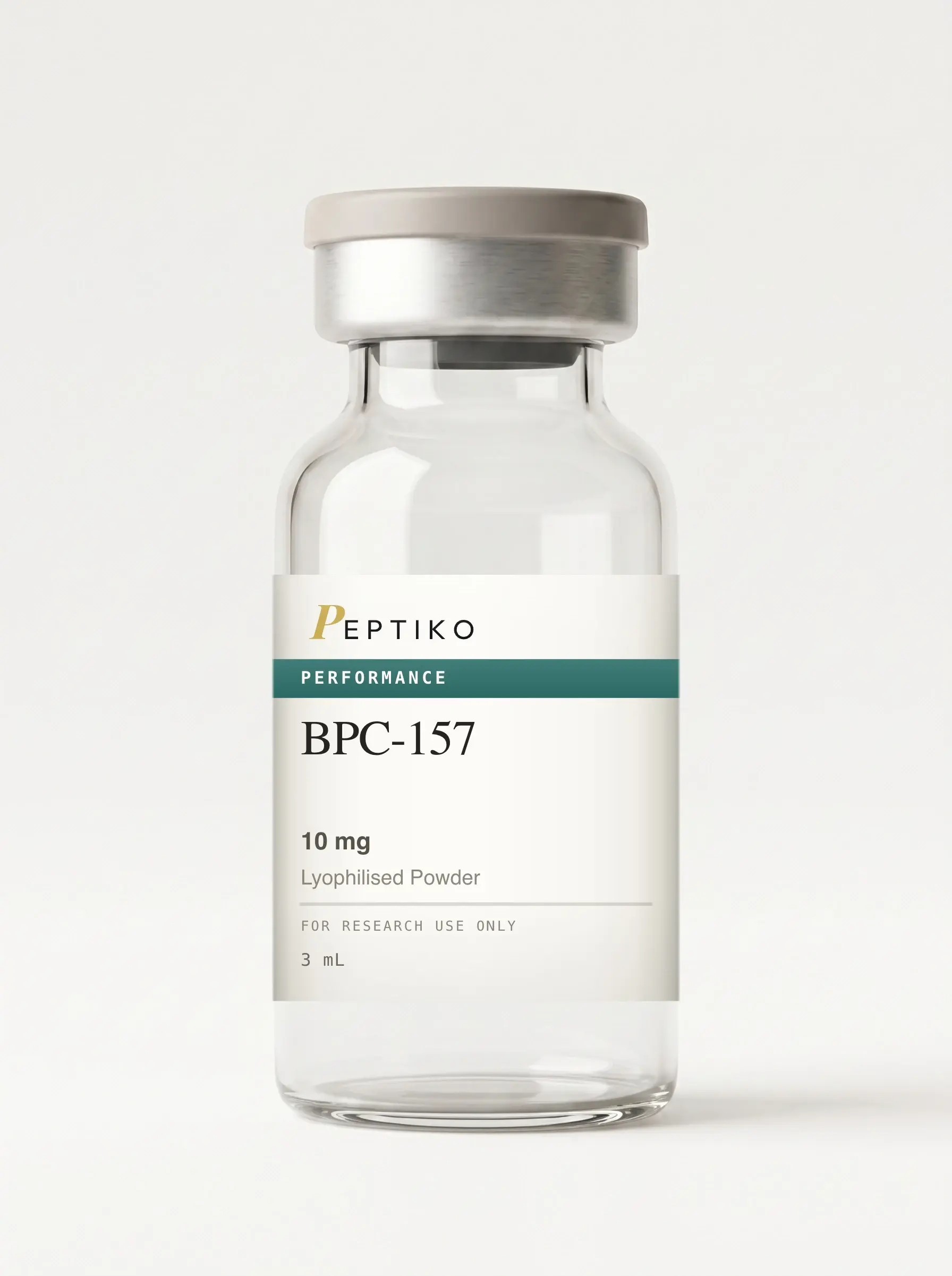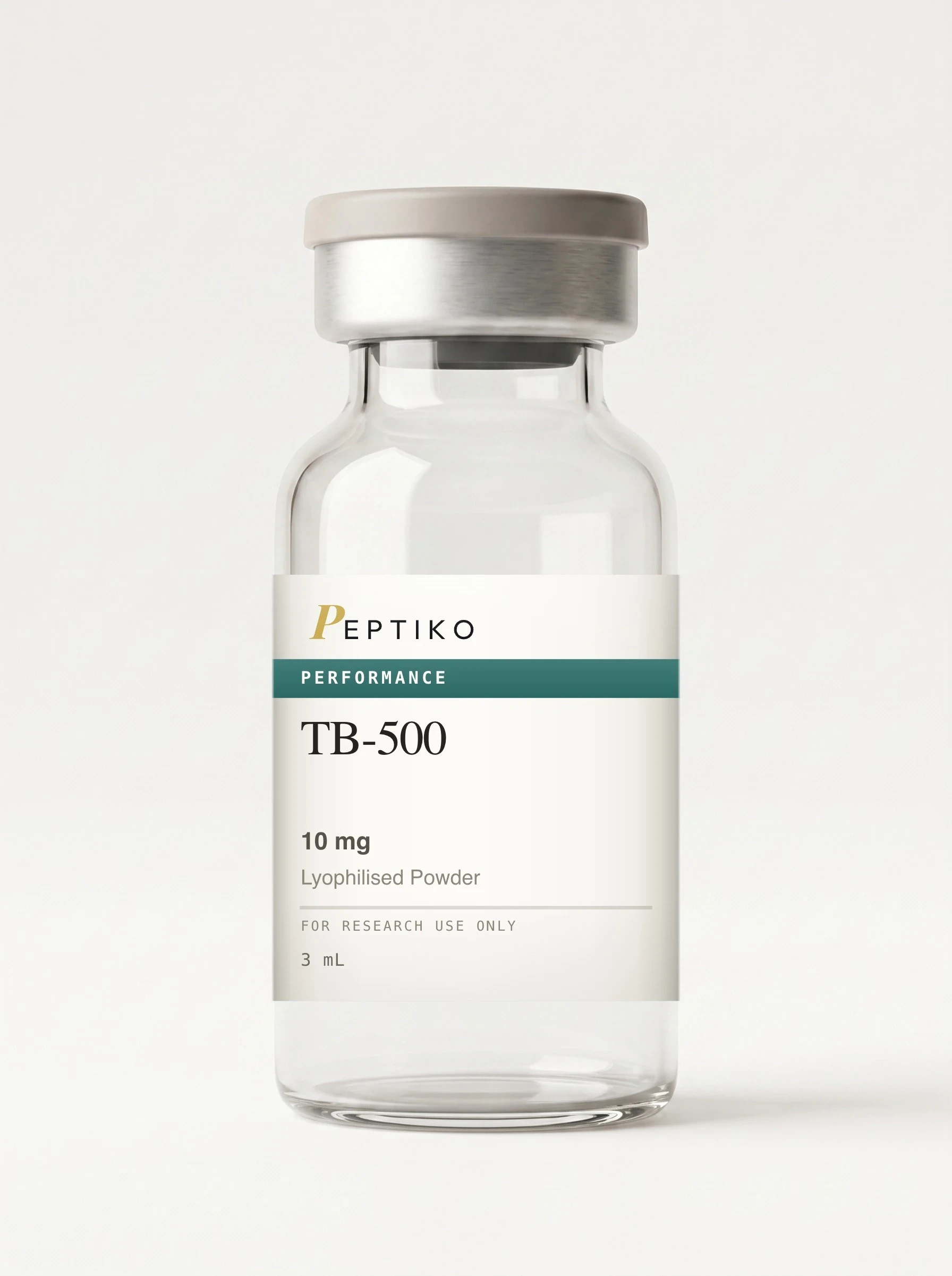
TB-500
Actin-sequestering peptide (synthetic Thymosin β-4). Studied for cell-migration and tissue-repair signalling pathways.
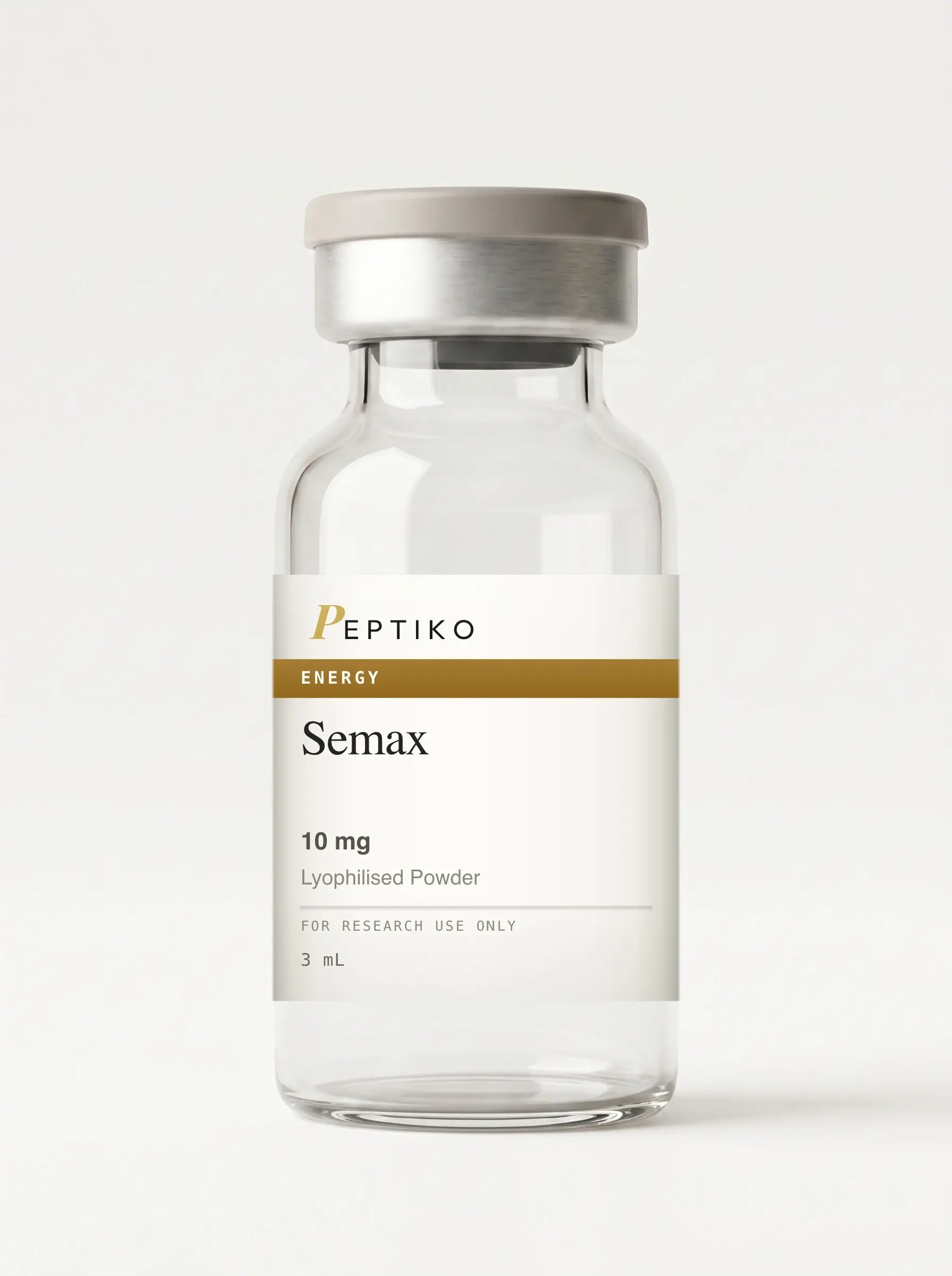
For in-vitro research and laboratory use only. Not for human or animal consumption.
- ≥99% purity by HPLC-MS · lot number on every vial
- Delivery in Moldova: 1 business day
- Cash to the courier on delivery
- + bacteriostatic water free with this order
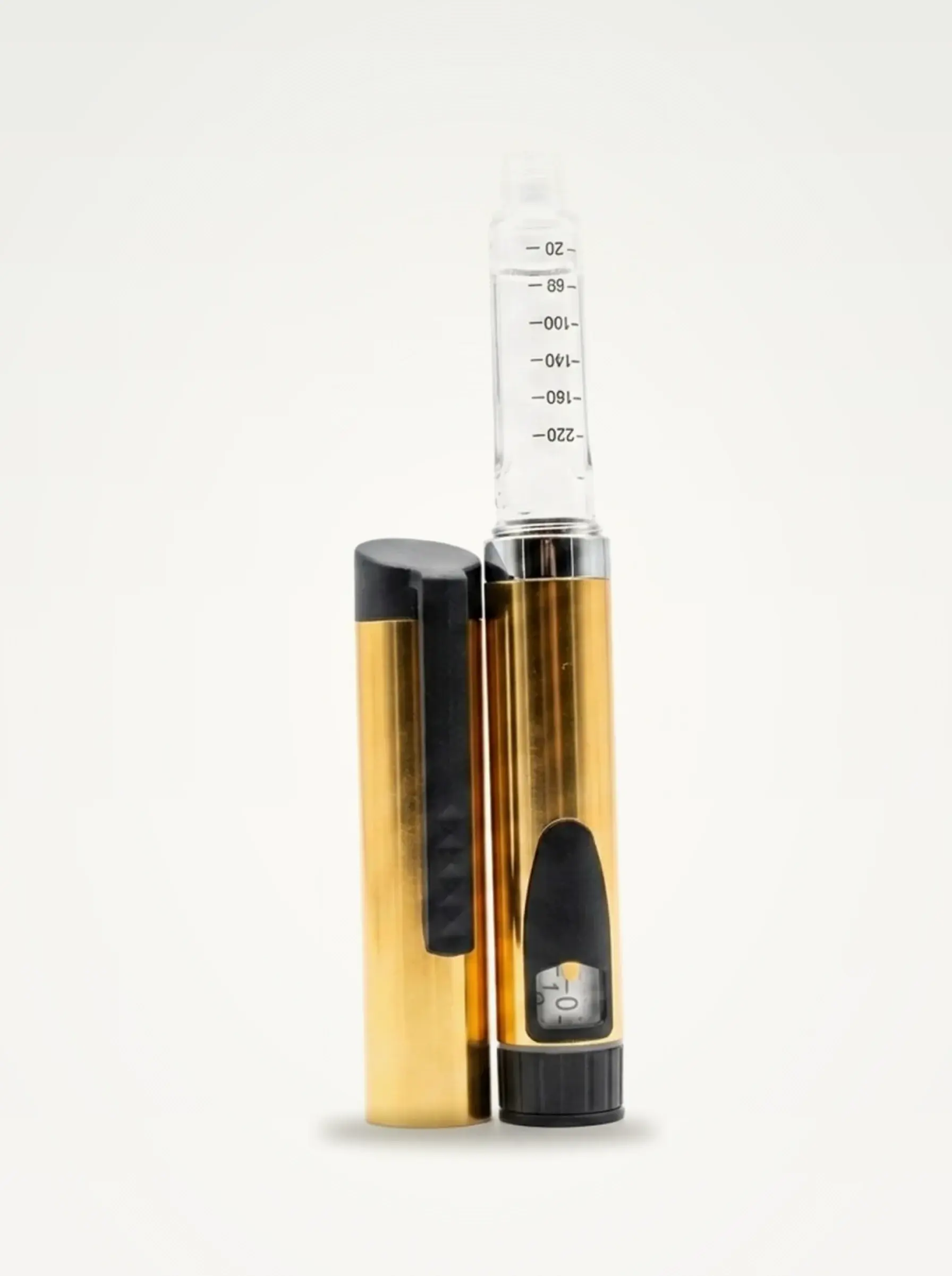 Injection Penreusable device · 800 lei
- Purity
- ≥99% HPLC-MS verified
- CAS
- 77591-33-4
- Storage
- Lyophilised: 2–8 °C, protect from light (−20 °C for long-term, ≥24 months). Reconstituted: 2–8 °C.
- Formats
- 10 mg vial
Courier delivery anywhere in Moldova. Lyophilized peptides travel at ambient temperature.
BPC-157 vs TB-500: how the two peptides differ →Overview
TB-500 is a synthetic form of Thymosin β-4, a naturally occurring 43-amino-acid peptide that binds and sequesters G-actin inside cells. In research supply the name "TB-500" commonly denotes the full-length Thymosin β-4 sequence. Laboratories study it as a reference reagent for actin regulation, cell migration, angiogenesis and tissue-repair signalling in in-vitro assays. Supplied lyophilised for in-vitro research use only.
Mechanism
Thymosin β4 is a small, intrinsically unstructured peptide of the β-thymosin family. It was isolated from thymosin fraction 5 alongside thymosin α1 and polypeptide β1 and was first proposed as a thymic hormone; the review literature is explicit that none of those isolates proved to be a genuine thymic hormone, and that its real function was pinned down only in 1990, when Safer and colleagues showed it sequesters G-actin. That is the structural logic of the molecule: it has no stable fold of its own and acquires a stable conformation only on contact with actin, binding the monomer with micromolar affinity — an affinity weak enough that it buffers the unpolymerised pool instead of locking it away. Because β-thymosins are the principal intracellular G-actin-sequestering peptides in most vertebrate cells, and are present in the nucleus as well as the cytoplasm, shifting the free-monomer concentration sets how readily filaments nucleate and elongate; that same free G-actin pool feeds the SRF–MRTF transcriptional axis, which the cardioprotection literature singles out among the peptide's many signalling interactions as the indirect route to the reported effects on motility, angiogenesis and fibrosis. Part of what is attributed to thymosin β4 in the literature is credited instead to the tetrapeptide Ac-SDKP, described as possibly generated from it, or to the oxidised form. For effects seen outside the cell there is no agreed molecular mechanism: the reviews state directly that very little is known about how extracellular β-thymosin effects are mediated, and that some cellular effects cannot be explained by monomer binding alone.
Molecular identity
- Formula
- C212H350N56O78S
- Molecular weight
- 4963 g/mol
- CAS
- 77591-33-4
- PubChem CID
- 16132341
What it acts on
- Monomeric G-actin — the reviews describe a complex with the actin monomer whose dissociation constant is in the micromolar range, an affinity low enough for fast binding and release, so the peptide buffers the unpolymerised monomer pool rather than locking it away; it is unstructured in solution and folds into a stable conformation only on binding.
- Actin polymerisation (G-actin to F-actin) — reported to inhibit filament formation by controlling monomer availability, which together with nucleating, severing and uncapping proteins is how the literature frames the cellular polymerisation response.
- The SRF–MRTF–G-actin transcriptional axis — the cardioprotection review attributes the large number of pleiotropic effects to the peptide's many interactions with cellular signalling pathways, and singles out indirect regulation of cell motility and movement through this axis.
- Ac-SDKP, a degradation fragment — several of the effects catalogued in the reviews are ascribed not to the intact peptide but to Ac-SDKP possibly generated from it, or to oxidised thymosin β4, and antifibrotic activity is reported for the degradation products as well as the parent.
- Inflammatory and redox gene programmes — the sepsis review summarises reported reductions in inflammatory mediators and reactive oxygen species alongside up-regulation of anti-oxidative enzymes, anti-inflammatory genes and anti-apoptotic enzymes.
What the studies report
Each item below summarises the paper it is numbered to, written from that paper's own abstract. The badge says how the evidence was produced.
- 1.reviewAnn N Y Acad Sci (2007)
A historical and mechanistic review of the β-thymosins. It traces thymosin β4 from its isolation out of thymosin fraction 5, where it was sought as a thymic hormone — the authors state that none of the isolated peptides really were thymic hormones — to the 1990 demonstration by Safer and colleagues that it sequesters G-actin, with a dissociation constant in the micromolar range that permits fast binding and release. It reports that β-thymosins are the main intracellular G-actin-sequestering peptides in most vertebrate cells, that the peptide is unstructured until it folds onto actin, and that it is found in the nucleus as well as the cytoplasm. It notes that several biological effects are attributed to thymosin β4, to oxidised thymosin β4, or to Ac-SDKP possibly generated from thymosin β4, and it names its own gap plainly: very little is known about the molecular mechanisms mediating the effects attributed to extracellular β-thymosins.
- 2.reviewAnn N Y Acad Sci (2007)
A review of actin dynamics in non-muscle cells, where the availability of monomers and of nucleating sites sets the polymerisation response. It reports that overexpression or addition of exogenous thymosin β4, or of its homolog thymosin β10, alters the actin cytoskeleton and has multiple effects on motility-related cell functions. Its central point is a discrepancy the authors do not resolve: some of those effects are consistent with a protein acting purely as a monomer binder and others are not, so they propose a mixture of direct and indirect effects on the cytoskeleton plus modulation of signalling pathways. Titled "the β-thymosin enigma", it documents an unsettled mechanism rather than closing it.
- 3.
A review of actin regulation in sepsis, assembled from a literature search rather than from new experiments. It reports that thymosin β4 inhibits polymerisation of G-actin into F-actin and that administration improved mortality in septic rats, and it summarises decreased inflammatory mediators, lowered reactive oxygen species and up-regulated anti-oxidative enzymes, anti-inflammatory genes and anti-apoptotic enzymes. It also notes that sepsis is accompanied by measurable circulating F-actin and reduced thymosin β4 concentrations. The authors mark their own reasoning as speculative — F-actinaemia is "speculated" to disturb laminar flow in the microcirculation — and their conclusion is that the question should be pursued in a human clinical trial, which is to say no such trial is reported here.
- 4.reviewVitam Horm (2016)
A review chapter on cardioprotection, covering preclinical models of cardiac ischaemic injury in which thymosin β4 is reported to reduce infarct volume and preserve cardiac function. The authors attribute those effects in part to decreased infarct size, with additional benefits described as likely due to specific antifibrotic and proangiogenic activities; they note increased blood-vessel growth in both small and large animal models and in transgenic animals, and report that the peptide and its degradation products have antifibrotic effects in vitro and in animal fibrosis models unrelated to cardiac injury. They ascribe the large number of pleiotropic effects to the peptide's many interactions with cellular signalling pathways, particularly indirect regulation of cell motility and movement through the SRF–MRTF–G-actin transcriptional pathway. They also record the weaknesses: effect sizes vary between animal models, potentially because distribution of the protein varies, and they state that preclinical PK/PD studies and a reliable pharmacodynamic biomarker would be needed to facilitate clinical development.
Used in research on
What this does not establish
Every source cited here is a review or overview, not a primary study, and none of them reports a controlled human trial; the cardiac, fibrosis and sepsis work they summarise is in-vitro and animal research, and the reviews themselves name what is missing — preclinical PK/PD data and a reliable pharmacodynamic biomarker in one case, an actual human trial in the other. The mechanism outside the cell is unsettled: the β-thymosin reviews state that very little is known about how extracellular effects are mediated and that some cellular effects cannot be explained by G-actin binding alone, while several observations are credited to oxidised thymosin β4 or to the Ac-SDKP fragment rather than to the intact peptide. The cited material also does not establish the sequence identity of material supplied under the trade name "TB-500", which is why no sequence is stated on this page.
Research applications
In-vitro applications centre on actin-cytoskeleton dynamics: its G-actin-sequestering activity makes it a reference tool for cell-migration and wound-healing (scratch) assays. It is also examined in angiogenesis and tissue-remodelling models, and in the research literature it is frequently co-studied with BPC-157 in tissue-repair models. All work is confined to cell-based and biochemical assays.
Reconstitution
As a handling note, the lyophilised reagent is typically reconstituted in the laboratory with bacteriostatic or sterile water added slowly down the vial wall, then swirled gently rather than shaken until fully dissolved to give a defined stock concentration for in-vitro work. Aliquot the reconstituted stock to limit freeze-thaw cycles and keep it cold. This is a solubility and handling guideline for laboratory use only, not a dosing or administration protocol.
Storage & handling
Lyophilised: 2–8 °C, protect from light (−20 °C for long-term, ≥24 months). Reconstituted: 2–8 °C.
Research literature
Selected peer-reviewed literature describing this compound. Peptiko supplies peptides for in-vitro research; these papers characterise the compound, not this product.
Frequently asked questions
What is TB-500 (Thymosin β-4)?
TB-500 is a synthetic peptide corresponding to Thymosin β-4, a 43-amino-acid actin-sequestering peptide found naturally in many cell types. In research supply the name commonly denotes the full-length sequence, and laboratories use it as a reference reagent to study actin regulation, cell migration, angiogenesis and tissue-repair signalling in vitro.
Is TB-500 for human use?
No. It is supplied strictly as a reference reagent for in-vitro and laboratory research by qualified researchers. It is not a medicine and is not intended for human or animal use, consumption, or any diagnostic or therapeutic application.
How is purity verified?
Purity is at least 99% by HPLC-MS.
What is the CAS number?
CAS 77591-33-4.
Do you ship from Moldova?
Yes. We deliver by courier anywhere in Moldova, one business day after we confirm the order, and you pay the courier in cash. Lyophilized peptides travel at ambient temperature: a freeze-dried cake needs no cold chain.
Reviews
Be the first to review TB-500.
Order on Telegram, or add it to the cart and check out on the site. Cash to the courier on delivery — nothing is paid in advance.