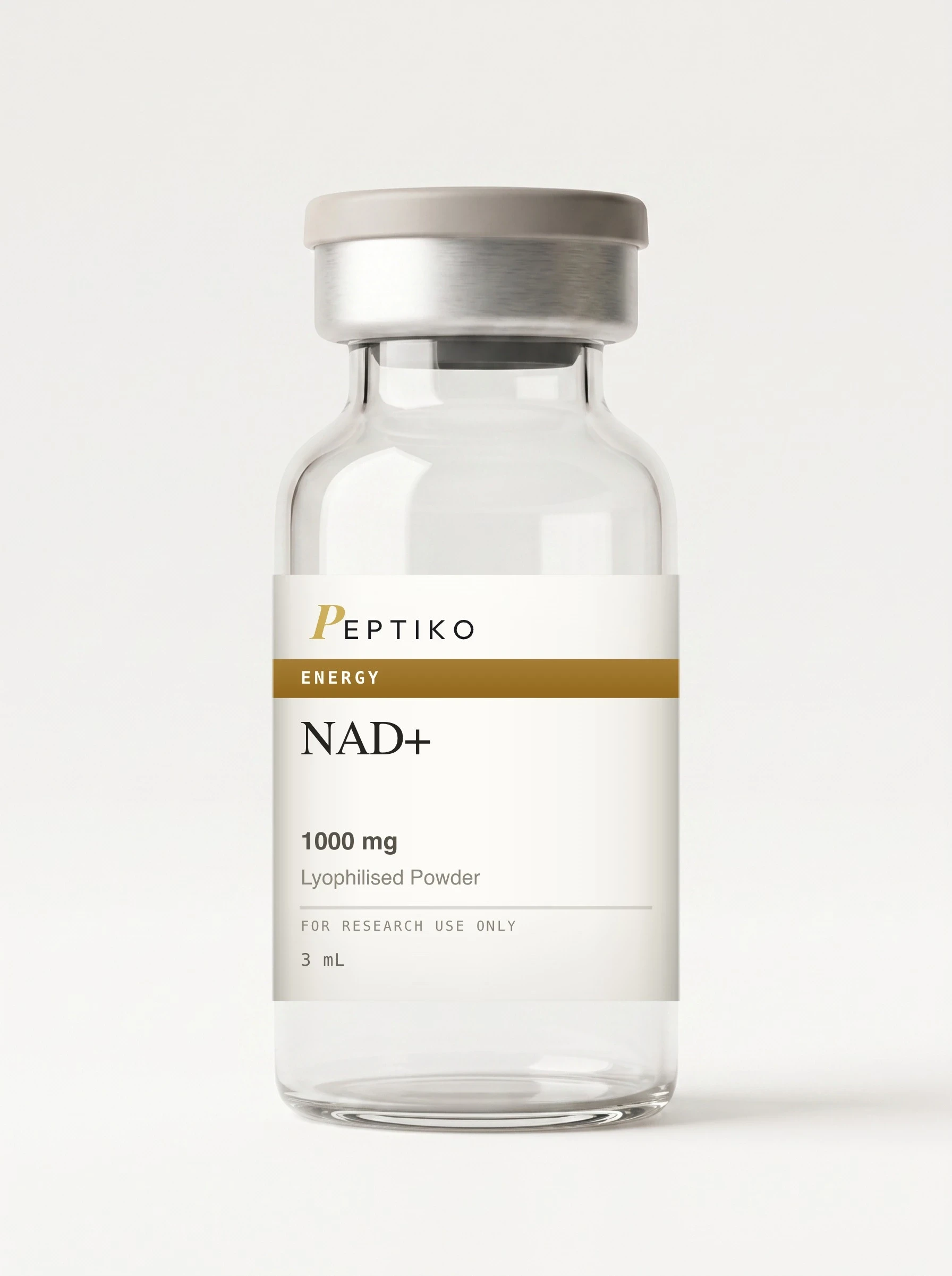
NAD+
Nicotinamide adenine dinucleotide — a redox coenzyme, not a peptide. Studied for cellular-energy, sirtuin, and NAD-metabolism pathways in vitro.
Pay on deliveryDelivered in 1 business dayFree from 1000 lei
For in-vitro research and laboratory use only. Not for human or animal consumption.
- ≥99% purity by HPLC-MS · lot number on every vial
- Delivery in Moldova: 1 business day
- Cash to the courier on delivery
- + bacteriostatic water free with this order
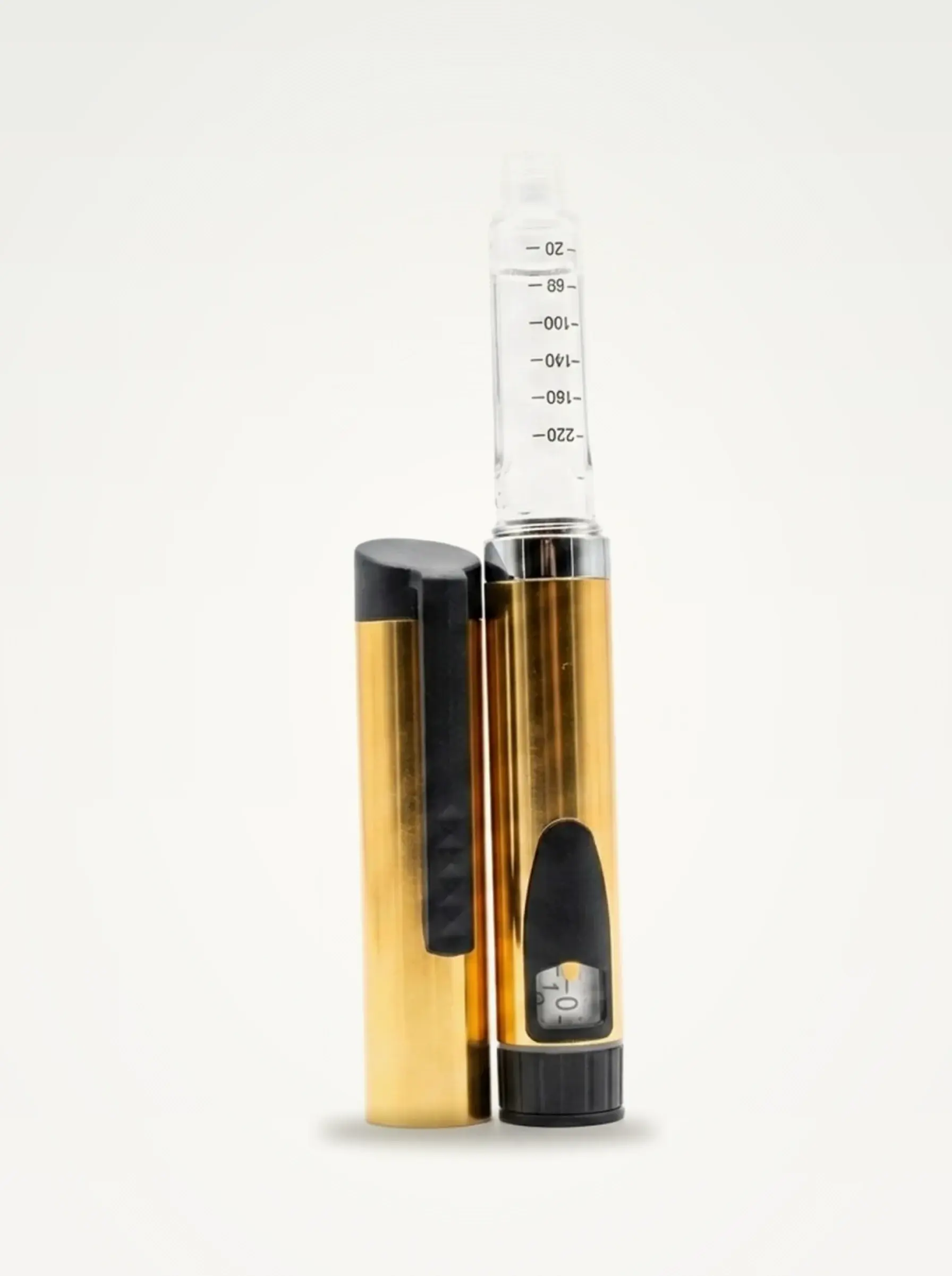 Injection Penreusable device · 800 lei
- Purity
- ≥99% HPLC-MS verified
- CAS
- 53-84-9
- Storage
- −20 °C, protect from light and moisture. ≥24 months.
- Formats
- 1000mg vial
Courier delivery anywhere in Moldova. Lyophilized peptides travel at ambient temperature.
Overview
Every cell depends on NAD+ as the coenzyme that turns food into usable energy, which is why laboratories study it for cellular vitality and healthy aging. NAD+ levels fall as the body grows older, and research links restoring them to better mitochondrial function, sharper metabolism and a slowing of the signs of aging in tissues, skin included. It is not a peptide but a redox coenzyme, and it sits right at the center of energy and longevity research.
Mechanism
NAD+ is not a peptide but a dinucleotide coenzyme found in all living cells: nicotinamide mononucleotide joined to adenosine monophosphate through a pyrophosphate bridge, so that one half of the molecule carries the redox-active nicotinamide ring and the other the adenine handle its enzymes recognise. The literature describes two quite different uses of that structure. In the first, NAD+ acts catalytically and is regenerated — the nicotinamide ring takes up and releases electrons as the molecule cycles between NAD+ and NADH, ferrying reducing equivalents between the reactions that release energy from nutrients. In the second, it is consumed: sirtuins, poly(ADP-ribose) polymerases and the CD38/CD157 ectoenzymes cleave it and use it as a cosubstrate, so their activity is limited by how much NAD+ is available rather than being returned along with the coenzyme. Against that consumption stands salvage biosynthesis, with NAMPT as the route the 2014 review emphasises; that review describes NAMPT and SIRT1 as working together to regulate metabolism and circadian rhythm. The reviews report that cellular NAD+ concentrations change over the lifespan, that the decline is associated with nuclear and mitochondrial defects, and that raising NAD+ with precursors in model organisms shifts metabolic and neurological readouts — the framework in which the compound is studied.
Molecular identity
- Sequence
- Not a peptide — a dinucleotide coenzyme: nicotinamide mononucleotide joined to adenosine monophosphate through a pyrophosphate bridge (C21H27N7O14P2, MW 663.4, CAS 53-84-9)
- Formula
- C21H27N7O14P2
- Molecular weight
- 663.4 g/mol
- CAS
- 53-84-9
- PubChem CID
- 5892
What it acts on
- Redox enzymes of energy metabolism — NAD+ cycles between its oxidised and reduced forms, carrying electrons from one reaction to the next; the cited reviews describe this as its classical coenzyme role in every living cell.
- Sirtuins — here NAD+ is not a catalyst but a consumed cosubstrate; the 2014 review describes NAMPT-driven NAD+ supply and SIRT1 acting together to regulate metabolism and circadian rhythm, and the fibroblast study attributes part of its readouts to increased sirtuin activation.
- Poly(ADP-ribose) polymerases (PARPs) — a second family of NAD+-consuming enzymes, named in the reviews alongside the sirtuins and drawing on the same cellular pool.
- CD38/CD157 ectoenzymes — a further NAD+-consuming family; the 2024 fibroblast study reports that suppressing CD38 expression with a quercetin and enoxolone complex increased the measured effects of exogenous NAD+.
- NAMPT and the salvage biosynthetic route — the pathway the 2014 review singles out; NAD+ availability is set by the balance between this synthesis and the consuming enzymes, and all three reviews report that cellular NAD+ concentrations change with age.
What the studies report
Each item below summarises the paper it is numbered to, written from that paper's own abstract. The badge says how the evidence was produced.
- 1.reviewEndocr Rev (2023)
A 2023 critical appraisal in an endocrinology review journal, covering the clinical pharmacology and the preclinical and clinical evidence for NAD+ precursors in age-related conditions, with a cardiometabolic focus. In model organisms given NAD+ precursors it reports improved glucose and lipid metabolism, attenuated diet-induced weight gain, diabetes, diabetic kidney disease and hepatic steatosis, reduced endothelial dysfunction, protection of the heart from ischaemic injury and increased health span. Early human work is reported to raise NAD+ in blood and some tissues through oral precursors, with suggested effects on blood pressure and lipid profile in older adults with obesity or overweight, on kidney injury in at-risk patients, and on inflammation. The authors state plainly that clinical pharmacology, metabolism and therapeutic mechanisms remain incompletely understood, and frame the whole body of findings as a rationale for adequately powered randomised trials that have not yet been run.
- 2.reviewScience (2015)
A 2015 Science review of NAD+ in aging, metabolism and neurodegeneration. It sets out the dual role — coenzyme for the enzymes that fuel reduction-oxidation reactions, cosubstrate for the sirtuins and PARPs — reports that cellular NAD+ concentrations change during aging, and states that modulating NAD+ production or usage can prolong both health span and life span in the systems reviewed. The paper is explicitly framed as a survey of the factors regulating NAD+ and of precursor supplementation as a possible therapeutic opportunity, particularly in neurodegenerative disease; it is a discussion of an opportunity, not a demonstration of one.
- 3.reviewTrends Cell Biol (2014)
A 2014 review centred on the NAD+-consuming enzymes — sirtuins, PARPs and the CD38/157 ectoenzymes. It describes NAMPT-driven NAD+ biosynthesis and SIRT1 as acting together to regulate metabolism and circadian rhythm, reports that NAD+ levels decline during aging with consequent nuclear and mitochondrial defects and age-associated pathology, and states that supplementing NAD+ intermediates ameliorates those defects in the models reviewed. The authors' own wording is conditional at the load-bearing steps — the decline 'may be' the weak point, and combined sirtuin activation with NAD+ intermediates 'may be' an effective intervention — so the conclusion is a proposal resting on preclinical work rather than a demonstrated result.
- 4.in vitroCells (2024)
The only primary study in this reference set: human fibroblasts in culture, testing exogenous NAD+ on its own and combined with a phytochemical complex of quercetin and enoxolone that suppresses CD38 expression. Exogenous NAD+ is reported to protect the cells against both ultraviolet-induced extrinsic aging and intrinsic aging, with the effect significantly increased by the co-treatment, and the authors attribute the readouts to improved sirtuin activation, autophagy and mitochondrial functionality. They open by stating that the pharmacological activity of NAD+ on skin, and even its mechanism, had not been elucidated, and the work does not go beyond cultured cells — no intact tissue was tested.
Used in research on
What this does not establish
Three of the four cited papers are reviews and the only primary study is human fibroblasts in culture, so this reference set contains no controlled human trial of NAD+ itself. The animal and human data the reviews summarise concern NAD+ precursors — oral ones in the human work — rather than the coenzyme as supplied here, and the 2023 review states outright that clinical pharmacology, metabolism and therapeutic mechanisms remain incompletely understood and that adequately powered randomised trials have yet to be run. The 2014 review states its load-bearing claims conditionally by its own wording. The fibroblast study needed co-treatment with CD38-suppressing phytochemicals for its larger effect and notes that the mechanism of NAD+ in skin had not previously been elucidated, so how exogenous NAD+ behaves in intact tissue is not established by these references.
Research applications
In vitro, NAD+ serves as a reference redox coenzyme for cellular-energy and NAD-metabolism research rather than as a peptide reagent. Laboratories use it to study the NAD+/NADH redox couple that shuttles electrons through the reactions releasing energy from substrates, and as a cofactor in assays of the two enzyme families tied to longevity research: sirtuins, examined for their role in DNA repair and gene regulation, and PARP enzymes, examined for DNA-repair activity. It is applied in mitochondrial-function studies, metabolic-pathway panels and cell-culture models of NAD decline, anchoring in-vitro work on metabolism, cellular energy and the pathways of cellular aging.
Reconstitution
Supplied lyophilised. For laboratory preparation, reconstitute the lyophilised powder with sterile bacteriostatic water to a working stock, protect the vial from light, keep the reconstituted solution at 4 degrees C, and prepare assay dilutions in the buffer specified by your protocol. For in-vitro research use only, not for human or animal administration.
Storage & handling
−20 °C, protect from light and moisture. ≥24 months.
Research literature
Selected peer-reviewed literature describing this compound. Peptiko supplies peptides for in-vitro research; these papers characterise the compound, not this product.
- 1.Nicotinamide Adenine Dinucleotide in Aging Biology: Potential Applications and Many Unknowns. Endocr Rev (2023)
- 2.NAD⁺ in aging, metabolism, and neurodegeneration. Science (2015)
- 3.NAD+ and sirtuins in aging and disease. Trends Cell Biol (2014)
- 4.Novel Approach to Skin Anti-Aging: Boosting Pharmacological Effects of Exogenous Nicotinamide Adenine Dinucleotide (NAD(+)) by Synergistic Inhibition of CD38 Expression. Cells (2024)
Frequently asked questions
What is NAD+?
NAD+ (nicotinamide adenine dinucleotide) is a redox coenzyme — not a peptide — supplied as a lyophilised research reagent. In vitro it is studied as a reference compound for cellular-energy, sirtuin and NAD-metabolism pathways, cycling between its NAD+ and NADH forms to carry electrons through energy-releasing reactions.
Is it for human use?
No. It is a research-use-only reagent for in-vitro laboratory study. It is not a pharmaceutical, supplement, or medicine, and not for human or veterinary use.
How is purity verified?
Purity is at least 99% by HPLC-MS.
What is the CAS number?
CAS 53-84-9.
Do you ship from Moldova?
Yes. We deliver by courier anywhere in Moldova, one business day after we confirm the order, and you pay the courier in cash. Lyophilized peptides travel at ambient temperature: a freeze-dried cake needs no cold chain.
Reviews
Be the first to review NAD+.
Order on Telegram, or add it to the cart and check out on the site. Cash to the courier on delivery — nothing is paid in advance.